By Andre Blythe-Smith
African Guyanese must rekindle the spirit of resistance. Not as a slogan, not as a fleeting sentiment on Emancipation Day, but as a lived, breathing commitment to justice. The African people of Guyana dug the network of canals and trenches that holds back the Atlantic Ocean from our rich coastlands. Historical records show that enslaved Africans installed an estimated 2.58 million miles of drainage canals, trenches and inter-bed drains along with 3,500 miles of dams, roads, and footpaths—moving 100 million tons of earth by hand. They sacrificed their lives to build the plantations that made this colony economically viable, dying in untold numbers to transform swampland into a nation.
But after 30 years of PPP rule and especially after the extrajudicial killings that exterminated the lives of hundreds of African Guyanese—our people have been cowed. A “criminalised state” emerged under the PPP, according to political activist Dr. David Hinds, where “political assassinations and extra-judicial killings of mostly African Guyanese men became normative” and African Guyanese were effectively disenfranchised from the power structures of the country.
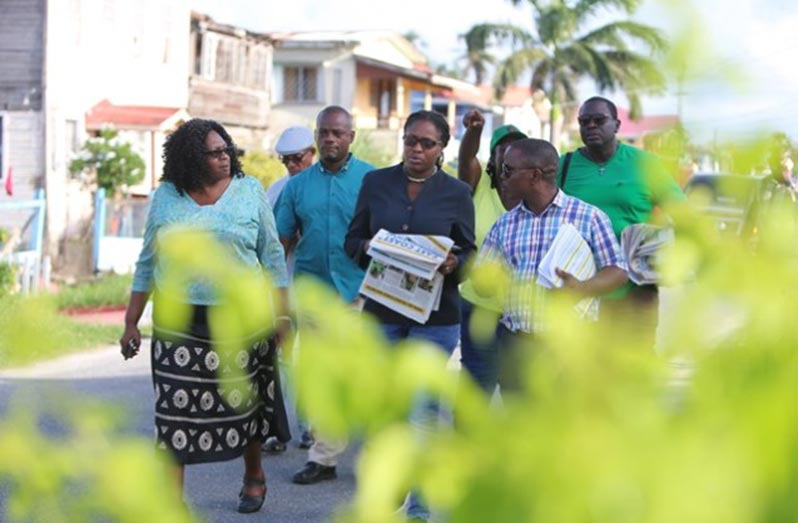
Too many of our leaders have failed us. Too often they opt for symbolic appearances and photogenic photo-ops while a comprehensive organization of national resistance remains absent. Instead of building a movement, we have become spectators to our own decline. Our people are being punished—one by one, case by case. Land taken. Jobs terminated. Low wages in public service. Discrimination in contract allocations. Discrimination in the justice system.
Mocha families were abused, evicted, livelihoods destroyed and yet there was no massive nation movement of resistance on their behalf.
Two retired Afro-Guyanese judges, Justices Brassington Reynolds and Franklyn Holder, were forced to file lawsuits against the State to recover pension and salary increases they argued were unlawfully withheld. The Attorney General dismissed claims of racial bias, but the fact that two former judges had to resort to litigation—with one receiving only partial relief—raises serious questions.
And in a move that shocked the community, the State-run nursing program in the predominantly African community of Linden was abruptly closed—with enrolled students ousted without explanation—only to be brazenly re-opened for students of another ethnicity.
Adrianna Younge, the Henry boys, Courtney Crum-Ewing, the Linden martyrs and so many more murders of our people– cases improperly handled, justice delayed, justice denied, making all of us unsafe in this land of our birth.
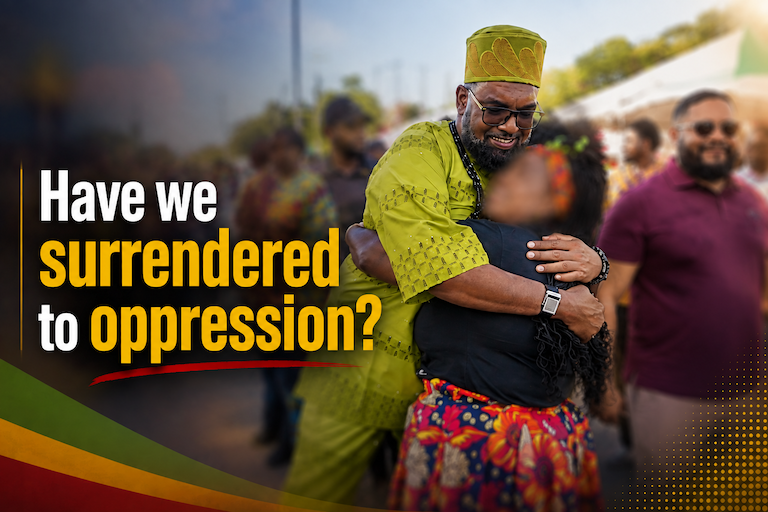
Consequently, a sickening obsequiousness has evolved. The President uses Black people as props and they are willing. Nothing changes. The schools their children attend are terrible, yet they embrace the hapless minister Sonia Parag. Their children have no proper playground facilities, yet they stand next to the “beautiful” Charles Ramson. Priya Manickchand has extricated herself from the ministry she destroyed and the lives she has ruined but Black people rush to post smiling photos of her.
The International Decade for People of African Descent Assembly–Guyana (IDPADA-G) has documented “widespread experiences of marginalization and unequal access to public opportunities among African Guyanese,” including underrepresentation in public sector jobs, exclusion from land and housing allocations, limited access to financing, and unfair treatment by law enforcement. The organization has renewed calls for an Ethnic Disparity Audit—but the government has failed to act.
African Guyanese students are among those heavily affected by a secondary school dropout rate above 50 percent—among the highest in the Caribbean. Students leave school early not out of choice, but to work and contribute to family income. Without qualifications, they are locked out of the emerging oil and gas economy, trapped in a cycle of poverty and limited opportunity.
When they look back on this era—when Guyana struck oil, when wealth was generated beyond imagination—will they say we fought for them? Or will they say we stood silent while our lands were taken, our children’s futures squandered, our community’s dignity traded for crumbs from the table of power?
History has a verdict for those who remain silent in the face of injustice.
It is not enough to gather on Emancipation Day and remember the heroism of our ancestors. We must honor their legacy with action. The resistance they began on the plantations must continue in the streets, in our communities, in the education of our children, and in the uncompromising demand for equality.
We cannot leave this fight to our children. They will ask us; “What did you do when they took our lands? When our children had no schools? When discrimination was the law of the land? When your leaders sold you out for a photo?”
Let us have an answer worthy of those who came before.