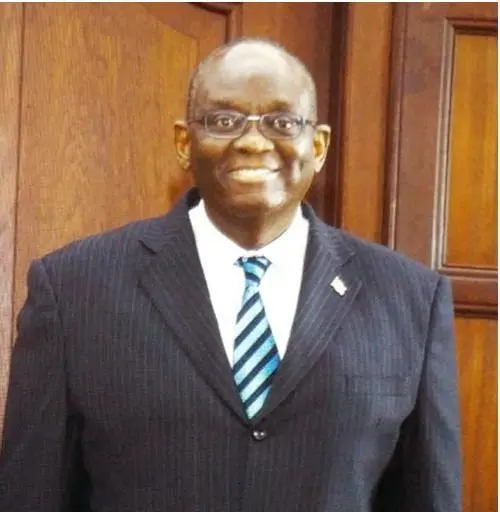
As Guyana continues to mourn the victims of the country’s worst maritime disaster, former Ambassador and Professor Dr. C. Kenrick Hunte has issued a scathing indictment of the Government’s stewardship of public transportation, declaring that the sinking of the MV Barima represents a “catastrophic failure of Government” to fulfill its most fundamental duty—protecting the lives of its citizens.
In a letter published in Village Voice News last Sunday, Dr. Hunte said the tragedy should not only be remembered for its devastating loss of life but also as a turning point that compels sweeping reforms in the management of government-owned services.
His comments come as the nation continues to grapple with the fallout from the July 18 sinking of the 87-year-old state-owned ferry while en route from Georgetown to Port Kaituma. Authorities have confirmed 73 deaths, while 30 people remain missing and are feared dead, bringing the estimated death toll to 103. Seventy-six passengers survived.
The disaster has triggered a Commission of Inquiry and criminal proceedings against Captain Kevin Price, Chief Mate Rondel Dwayne Roberts and Transport and Harbours Department Goods Superintendent Delon Granderson, who each face 73 counts of murder in connection with the tragedy.
Dr. Hunte began by extending condolences to the families whose lives have been permanently altered by the catastrophe.
“Given the ill-fated destruction of MV Barima and the tragic loss of life to many fathers, mothers, and children, I join with the many heartbroken Guyanese and extend my deepest sympathy to the relatives and friends, whose lives have been forever upturned.”
He reflected on the vessel’s decades of public service, lamenting that a ferry which had faithfully served Guyana for more than six decades ended its life in disaster.
“Meanwhile, it should be stated that after more than 60 years of safe and reliable service, the MV Barima, which should have been retired as a national monument, has been transformed into a historical memory of negative proportions.”
Describing the sinking as a national tragedy, Dr. Hunte argued that the Government’s responsibility extends far beyond expressions of sympathy.
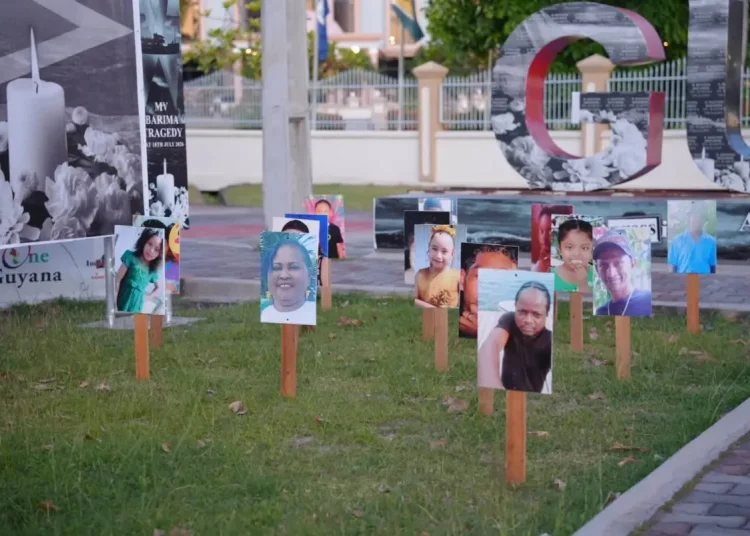
He said the State must engage individually with every family that lost a loved one to determine both the emotional and financial assistance required to help them rebuild their lives.
“The Government must engage with each family that has lost a family member and ascertain what they have lost, and how the Government can assist in closing the breach by providing emotional and financial support to surviving family members.”
Calls for systemic reform
Dr. Hunte also used his letter to outline what he believes should become the minimum standard for every government-owned and managed service.
He called for guaranteed safety and reliability, adequate funding for maintenance, transparent management and reporting systems, real-time auditing of public infrastructure and transport assets, and continuous training, certification and recognition of personnel responsible for operating public services.
His recommendations come amid growing scrutiny of the Government’s maintenance of the national ferry fleet, the inspection regime governing state vessels, and the decision-making process that kept the aging MV Barima in service.
Those issues are expected to be examined by the Commission of Inquiry, while the criminal courts determine whether the three accused bear criminal responsibility for the disaster.
Dr. Hunte reserved his strongest words for the Government’s constitutional and moral obligation to safeguard the public.
“In closing, it must be stated that since the first responsibility of any Government must be to protect its citizens; therefore, this case of the MV Barima has been a catastrophic failure of Government not providing a safe and reliable service. Wake-up Guyana!”
His intervention adds to growing demands for accountability that extend beyond individual prosecutions and toward the broader systems responsible for ensuring the safety of public transportation.
The central question for many Guyanese is no longer simply how the MV Barima sank, but whether the tragedy will finally compel the structural reforms needed to prevent another national catastrophe.