
Attorney-at-law Darren Wade has launched a blistering attack on the Government’s decision to charge three Transport and Harbours Department employees with murder over the MV Barima disaster, arguing that the prosecution is legally unsustainable and risks diverting attention from those who may bear greater responsibility for Guyana’s deadliest maritime tragedy.
In a strongly worded statement, Wade questioned both the legal basis for the charges and the broader implications for accountability, suggesting the prosecution may have the effect of shielding senior officials from scrutiny while focusing public outrage on the captain and crew.
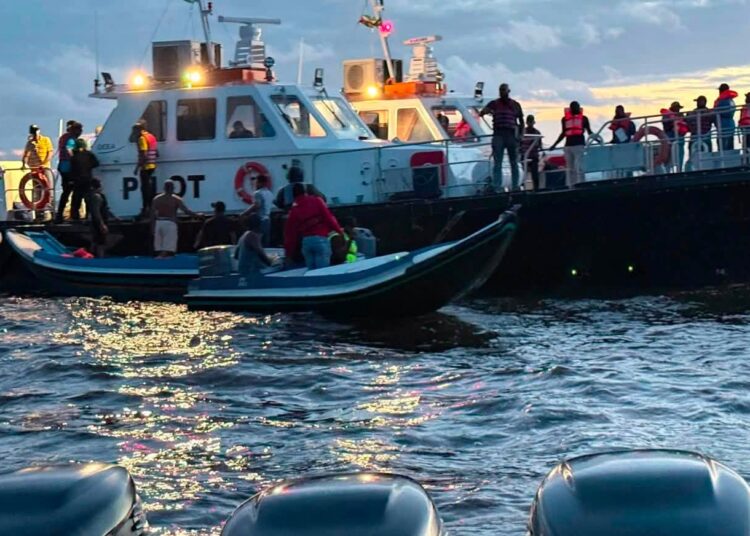
The July 18 sinking of the 87-year-old state-owned MV Barima claimed at least 74 lives, with another 30 people still missing and presumed dead. The ferry, travelling from Georgetown to Port Kaituma, reportedly had 179 people aboard, though discrepancies in the passenger manifest have raised persistent questions about the true number of passengers.
On Tuesday, Captain Kevin Price, Chief Mate Rondel Dwayne Roberts and Transport and Harbours Department Goods Superintendent Delon Granderson were each charged with 73 counts of murder. Because murder is an indictable offence, the men were not permitted to enter pleas before being remanded to prison pending further court proceedings.
The charges were instituted even as the Government prepares to launch a Commission of Inquiry into the disaster, while calls for an independent maritime casualty investigation—an internationally recognised technical inquiry designed to determine the causes of marine accidents and identify systemic failures to prevent future tragedies—remain unanswered.
‘Malice Aforethought’ Is the Legal Hurdle
Wade argued that the murder charges ignore one of the most fundamental principles of the criminal law.
“The laying murder charges against the Captain and others in relation to the MV Barima tragedy is legally unsustainable,” he said.
“When one examines the essential elements of the offence of murder, particularly the requirement of malice aforethought, serious questions arise as to whether those charges can withstand judicial scrutiny.”
Quoting the classic common law definition by Sir Edward Coke, Wade noted:
“Murder is when a man of sound memory, and of the age of discretion unlawfully killeth within a county of the realm any reasonable creature in rerum natura under the King’s peace, with malice aforethought, either expressed by the party or implied by law, so as the party wounded or hurt dies of the wound or hurt.”
“The requirement of malice aforethought is what distinguishes murder from other forms of unlawful homicide,” he added.
Why Not Manslaughter?
Wade said many Guyanese have questioned why prosecutors chose murder instead of manslaughter or criminal negligence.
“Many have asked, ‘Why not manslaughter?’ That offence may well be the more appropriate consideration, depending upon the evidence,” he said.
“I do not yet have all of the facts, and I cannot speak to matters that remain under investigation. However, one thing is clear: if the evidence supports manslaughter or criminal negligence, liability would not necessarily have been limited to the Captain and crew. It could also have extended to senior Government officials, public officers, regulators, executives and others whose acts or omissions may have materially contributed to this tragedy.”
He questioned whether the decision to file murder charges before the investigations have been completed serves another purpose.
“Why were murder charges instituted instead of allowing the investigation to determine whether manslaughter or other offences were more appropriate?” he asked.
“Is the institution of murder charges having the effect of shielding senior officials from closer scrutiny by focusing public attention almost exclusively on the Captain and crew? That is a question the Guyanese people are entitled to ask.”
‘The Families Deserve Genuine Accountability’
According to Wade, if the murder prosecution ultimately collapses because prosecutors cannot prove the legal ingredients of the offence, the consequences could extend well beyond the courtroom.
“The public discourse would have centred on charges that were never capable of being sustained, while the broader issues of systemic negligence, regulatory failures and the potential criminal and civil liability of those responsible for the management, maintenance, inspection and continued operation of the ferry may receive less attention than they deserve,” he warned.
He also renewed concerns about the composition of the Commission of Inquiry, saying the country deserves “a Commission that is independent, impartial and capable of examining every level of responsibility without fear or favour.”
Wade argued that investigators must look beyond those who operated the vessel on the day it sank.
“We must not lose sight of the real issue. The question is not only who was operating the vessel on the day of the tragedy. The question is who made the decisions, who ignored the warnings, who permitted the vessel to continue operating, and whether those persons should also be held accountable under the civil and criminal law.”
He ended with a scathing assessment of the prosecution.
“Make no mistake: these murder charges are legally nonsensical. They are an insult to the criminal law, an affront to justice, and a disservice to the families who deserve genuine accountability.”