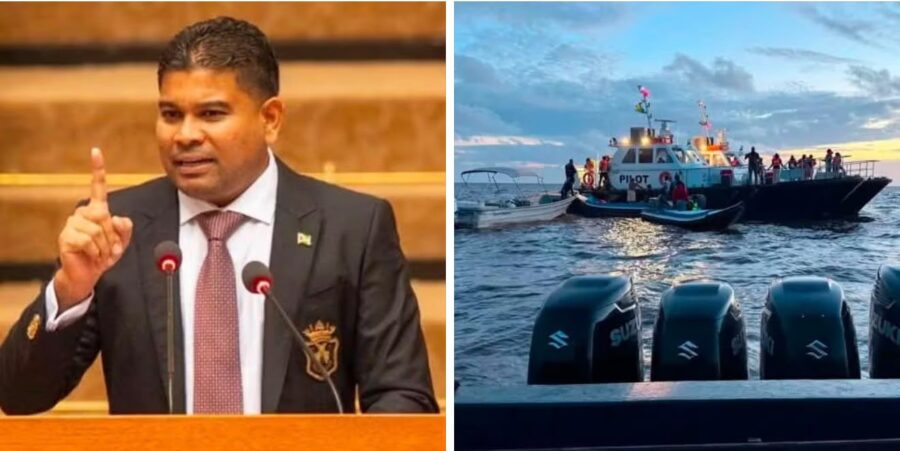
Declaring that Public Works Minister Juan Edghill “must go” and warning that “it won’t be business as usual” once public attention fades, Opposition Leader Azruddin Mohamed over the weekend intensified pressure on the Government after hearing firsthand accounts from families devastated by the MV Barima disaster, including allegations of neglect, inadequate support and years of ignored safety concerns.
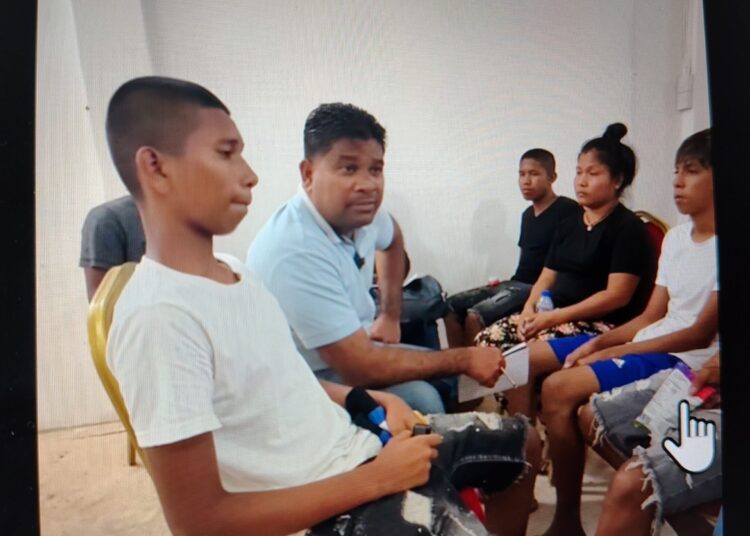
Continuing his outreach in Port Kaituma, where many of the victims lived, Mohamed met with grieving relatives and survivors still struggling to come to terms with Guyana’s deadliest maritime tragedy in decades.
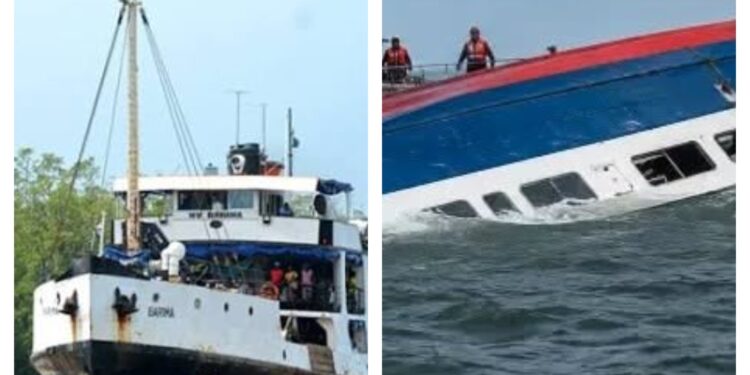
The July 18 sinking of the state-owned MV Barima has left communities across the North West District shattered. As of Saturday, July 26, authorities reported that 73 bodies had been recovered, 76 people rescued and 30 people remained missing. Investigators now estimate that approximately 179 passengers and crew were aboard the ferry when it capsized, significantly more than the original official manifest, which listed only 116 passengers and 16 to 17 crew members. The revised figures emerged after investigators determined that dozens of unlisted persons had also boarded the vessel.
Citing the mounting loss of life and suffering, Mohamed said those responsible must be held accountable.
“[Minister of Public Works Juan] Edghill must go… and he must not feel it is business as usual when things go quiet,” Mohamed declared as residents gathered around him.
Recalling his earlier call for nationwide demonstrations over the tragedy, he urged residents to stand with him when the time comes.
“I want when they come, all y’all stand up with me,” he said.
Family’s unimaginable loss
One of the most emotional moments came during Mohamed’s visit with the Bovell family, who lost seven relatives in the disaster.
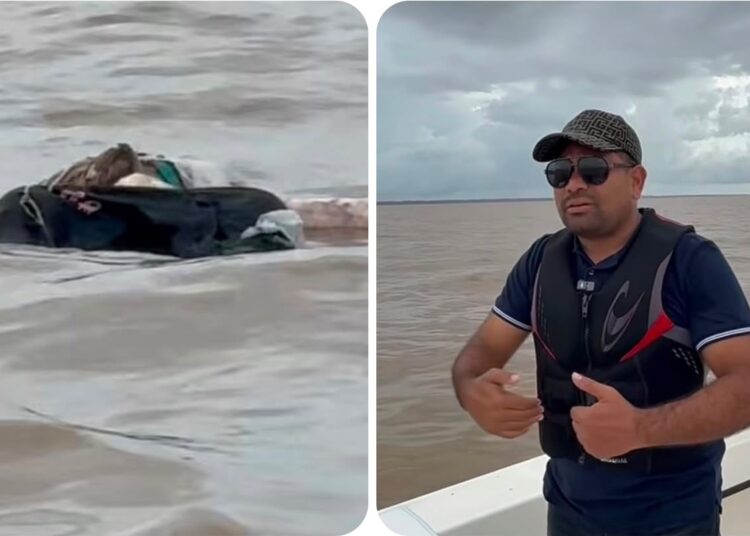
Through tears, Kevin Bovell described the agony of constructing a tomb while still waiting for the return of his mother, Thelma Bovell. Her coffin has been recovered. Her body has not.
The family also lost six other relatives, including young children and a baby.
Bovell recounted the harrowing experience of travelling to the Charity and Suddie mortuaries to identify the bodies of loved ones.
He said grieving relatives were confronted with decomposing remains and treated in a manner they considered deeply disrespectful.
According to the family, bodies were placed in plywood boxes for burial. They said gloves were not provided, and when coffins leaked, relatives were forced to use plastic bags while handling them.
The family expressed anger and disappointment over what they described as the Government’s handling of the dead and the lack of dignity afforded to victims.
Offering his condolences, Mohamed acknowledged that no words could ease such profound grief.
“It is a big loss,” he told the family.
“Only when you are in that position can you know how you feel. Who knows it feels it.”
Residents reject official narrative
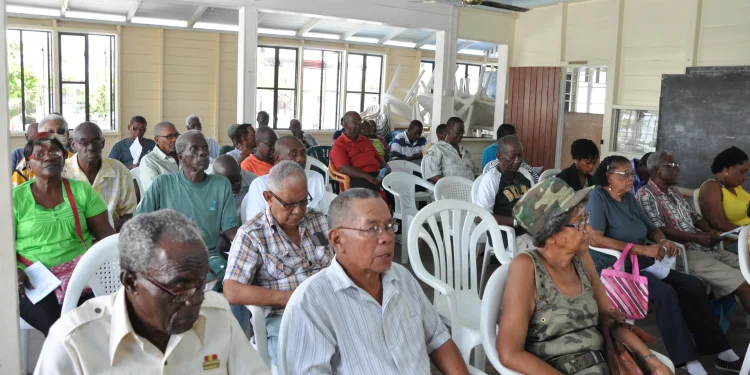
Throughout the visit, residents challenged the Government’s version of events and disputed Minister Edghill’s repeated assertions that the ferry had not been overloaded.
Several residents claimed the MV Barima had been operating with only one functioning engine and alleged the vessel was riding dangerously low in the water before it departed.
Others pointed to the hull sitting below the waterline as evidence the vessel was carrying an excessive load.
Residents also recalled longstanding problems aboard the ferry, saying cargo and dry goods routinely became soaked because seawater entered the vessel during voyages.
They said repeated complaints to authorities produced no meaningful action.
For many in Port Kaituma, they argued, the tragedy was not an unforeseeable accident but the culmination of years of ignored warnings.
‘These people need counselling’
Beyond the search for accountability, residents repeatedly told Mohamed they have been left to cope with unimaginable trauma with little psychological support.
Many said government officials contacted them only once following the tragedy and that no sustained counselling services have been provided, despite many of the victims being children.
Mohamed described that as unacceptable and issued a direct appeal to Human Services and Social Security Minister Dr. Vindhya Persaud.
“Minister of Human Services, you need to come to Port Kaituma,” he said.
“You need to come here and spend some days. Bring your staff. You need counselling every day. These people need counselling.
Questions over compensation
The Opposition Leader also raised concerns over financial assistance reportedly being distributed to bereaved families.
Kevin Bovell told Mohamed that after obtaining death certificates for six deceased relatives, he received $600,000.
When Mohamed asked whether he had signed documentation acknowledging receipt of the funds, Bovell replied that he had not and said he was unsure what the payment represented.
Mohamed described the reported amount as unconscionable given the scale of the family’s loss.
“No amount of money can bring them back,” he said.
“There ain’t no money. No amount of money.”
He urged families not to sign any government documents until they had received legal advice.
“Do not sign anything that the Government gives you,” Mohamed warned, adding that he has assembled a team of lawyers willing to assist affected families in pursuing what he believes should be fair compensation.
Still, he stressed that while compensation is important, the immediate priority remains providing mental health support to grieving families.
Mohamed’s latest visit forms part of a continuing series of meetings with survivors and relatives of those killed in the MV Barima tragedy. During previous visits, he called for nationwide protests over the sinking, the Government’s handling of the disaster and what he has described as the mistreatment of victims and their families.
Meanwhile, a Commission of Inquiry has been established to investigate the circumstances surrounding the catastrophe as families, survivors, opposition parties and civil society groups continue to demand accountability, transparency and sweeping reforms to Guyana’s river and maritime transportation system.