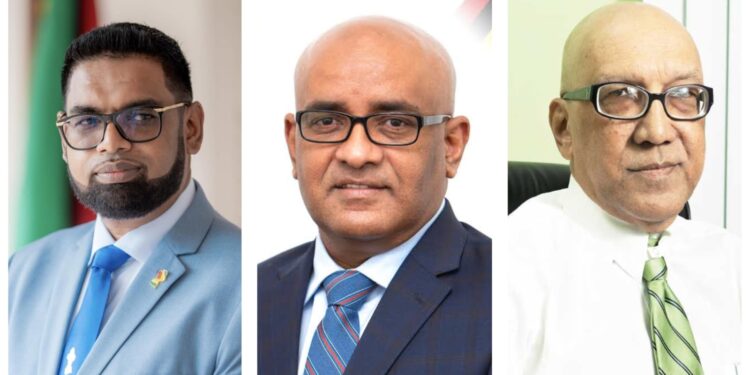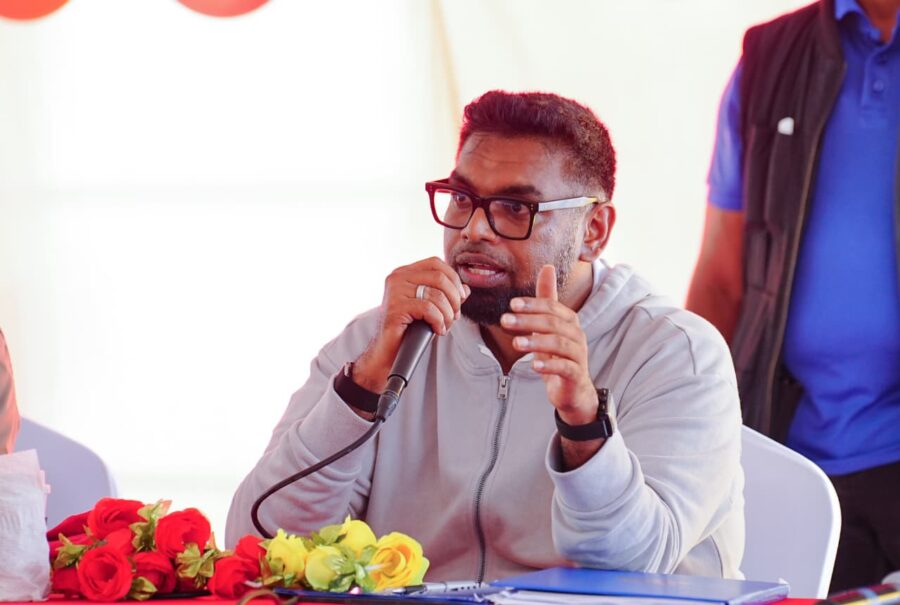
President Irfaan Ali has announced what he describes as an independent international Commission of Inquiry (COI) into the MV Barima tragedy, but the process has already come under scrutiny after the Head of State unilaterally selected the inquiry without consulting the parliamentary Opposition, victims’ families, trade unions or civil society.
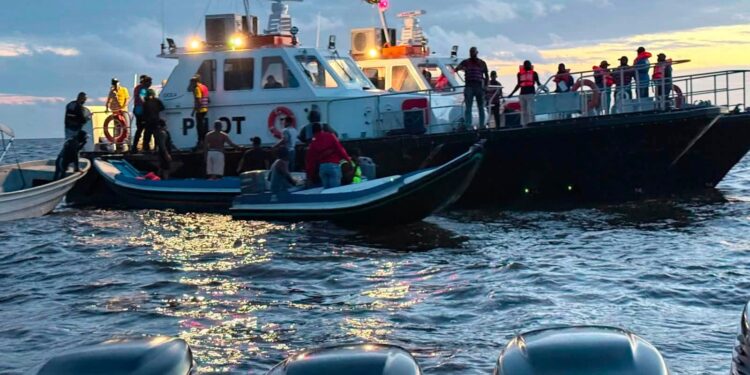
The announcement, made on Saturday, comes after sustained national pressure for an independent investigation into the July 18 sinking of the 87-year-old MV Barima, one of the deadliest maritime disasters in Guyana’s history. The ferry capsized while sailing from Georgetown to Port Kaituma with an estimated 179 passengers and crew aboard. Seventy-three bodies have been recovered, 76 people rescued, while dozens remain missing.
Yet, despite repeatedly calling for national unity, the President chose to establish the Commission behind closed doors, bypassing the very groups that have spent the past week demanding transparency, accountability and public confidence in the investigative process.
The five-member commission, which President Ali said will be unveiled on Sunday, will include local and international experts in law, marine engineering, maritime safety and disaster investigation.
According to the President, the commissioners were selected for their “independence, technical expertise and proven ability.”
What remains unanswered, however, is who decided they were independent and why the process excluded every major stakeholder outside of government.
Neither Opposition Leader Azruddin Mohamed, opposition political parties, trade unions, maritime professionals, the Guyana Bar Association, nor representatives of the victims’ families appear to have been consulted on the commission’s composition or terms of reference.
For many observers, that omission strikes at the heart of the inquiry’s credibility.
An investigation is judged not only by the qualifications of its members but also by the transparency of the process that appoints them. Where government ministries, regulatory agencies and state-owned entities are themselves likely to come under scrutiny, critics argue that allowing the Executive alone to appoint the investigators creates an unavoidable perception of conflict.
Over the past week, opposition parties, the Guyana Trades Union Congress (GTUC), maritime lawyers and civil society advocates have repeatedly called for an inquiry insulated from political influence. Several urged the Government to involve the Opposition and independent organisations in selecting commissioners to ensure the process commands national confidence rather than government confidence alone.
Those appeals appear to have gone unanswered. Instead, the Executive—which oversees the ministries and agencies expected to feature prominently in the investigation—has retained exclusive control over who investigates, what is investigated and under what terms.
According to President Ali, the Commission will examine the vessel’s loading procedures, passenger manifest, seaworthiness, maintenance history, compliance with maritime laws, crew competency, lifesaving equipment, weather conditions and the emergency response.
It will also determine whether negligence, misconduct, dereliction of duty or institutional failures contributed to the tragedy and recommend legislative, regulatory and operational reforms.
“The commission will comprise distinguished experts and professionals with extensive knowledge and experience in relevant fields, including law, marine engineering, maritime safety, and disaster investigation,” President Ali stated.
While those terms appear comprehensive, they do not resolve the fundamental issue now confronting the Government: Can an inquiry truly inspire public confidence when the Executive alone decides who will investigate the Executive?
That question has become even more pressing given the mounting calls for ministerial accountability, including demands for Public Works Minister Juan Edghill and Deodat Indar to step aside while investigations proceed.
Rather than broadening ownership of the process through consultation with Parliament and civil society, the Government has chosen a model in which trust is expected rather than earned.
President Ali concluded by urging Guyanese to unite in support of victims and survivors.
“As we continue to navigate this difficult period in our history, I ask for our continued prayers, our continued love, unconditional love, and support for the families, survivors, as a nation, as a people. Let us rise on this occasion together in love, unity, prayers, and faith,” he said.
But for many grieving families, prayers alone cannot answer the questions that continue to haunt the nation. They are demanding more than expressions of sympathy—they are demanding an inquiry that is not only independent in name, but visibly independent in its creation, its composition and its work. In a tragedy of this magnitude, critics argue, public confidence cannot be proclaimed; it must be earned.