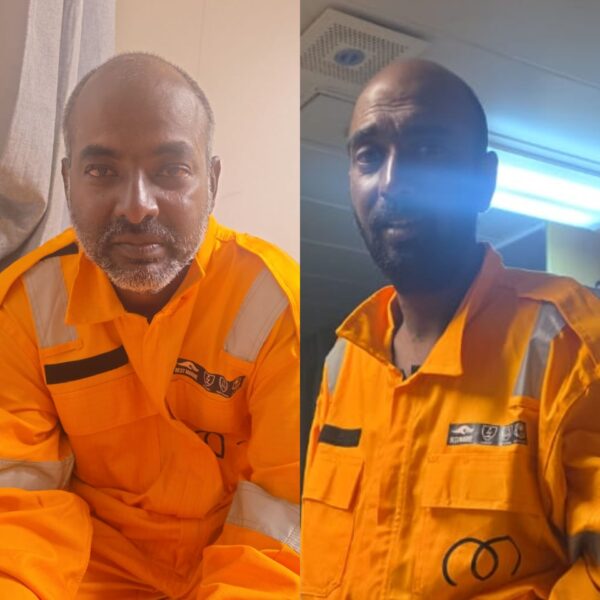
The successful rescue of all six crew members aboard the Trinidad and Tobago fishing vessel St Vincent VII has drawn attention across the Caribbean, not only because the fishermen were found alive after days adrift at sea, but also because of the stark contrast with Guyana’s ongoing MV Barima tragedy, where dozens have died and questions continue to swirl over maritime safety and emergency preparedness.
The Trinidad and Tobago Ministry of Defence confirmed Wednesday that all six fishermen had been rescued alive after the distressed vessel was spotted by the MV Marvel Kite, a commercial ship bound for the United States. The cargo vessel altered course after observing what appeared to be a vessel in distress approximately 349 nautical miles east of Galeota and found the missing crew aboard.
The Ministry said the identities of the rescued men matched those of the crew members who had previously been reported missing and that they were found in “reasonably good health” with no significant injuries.
Following confirmation of the rescue, Trinidad and Tobago’s Maritime Operations Command Centre directed a Coast Guard vessel to rendezvous with the MV Marvel Kite to transfer the fishermen and return them safely to Trinidad and Tobago.
Defence Minister Wayne Sturge thanked the crew of the commercial vessel for their decisive actions, saying the Government appreciated the assistance that led to the successful rescue and that further updates would follow.
The rescue brought relief to anxious relatives after days of uncertainty following the vessel’s disappearance.
However, the story took a tragic turn hours later when Trinidad’s Ministry of Defence confirmed that 66-year-old Anthony Murray, one of the rescued fishermen, died aboard the MV Marvel Kite after his condition deteriorated during the voyage to meet the Coast Guard. Officials said he initially appeared stable before developing breathing difficulties.
The contrast with Guyana has become difficult to ignore.
On July 18, the 87-year-old MV Barima capsized while travelling from Georgetown to Port Kaituma, becoming one of Guyana’s deadliest maritime disasters. Authorities now believe approximately 179 people were aboard the ferry after acknowledging that the original passenger manifest significantly understated the number of passengers. Search and recovery operations have since involved the Guyana Defence Force Coast Guard, local fishermen, private-sector vessels, and specialist diving teams from French Guiana and Trinidad and Tobago.
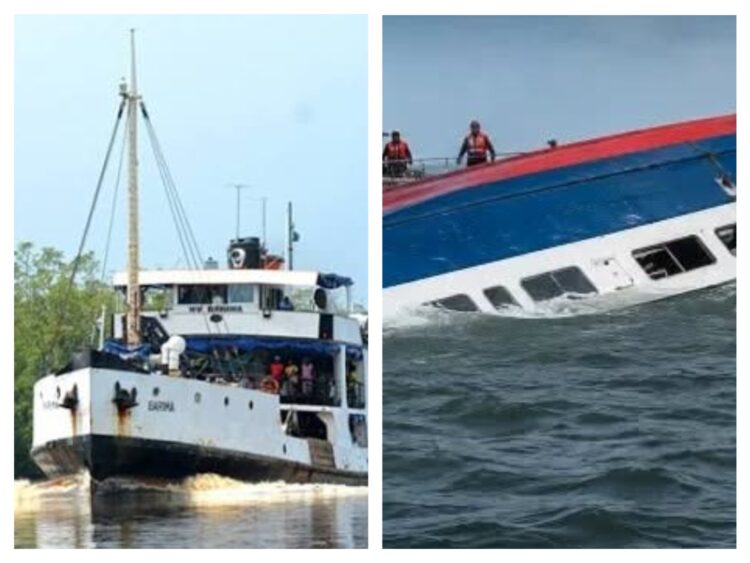
Unlike the Trinidad incident, where a passing commercial vessel immediately altered course and all six fishermen were rescued alive, the Guyana disaster has evolved into a prolonged recovery operation, with dozens of bodies recovered and families still awaiting answers about missing relatives.
The MV Barima tragedy has also ignited intense public scrutiny over the vessel’s age, maintenance history, loading procedures and inspection regime. Prime Minister Mark Phillips has acknowledged there appeared to have been a “breakdown” in the inspection system before the ferry departed Georgetown, while the government has promised a full investigation into the circumstances surrounding the sinking.
The disaster has further fuelled criticism after it emerged that Public Works Minister Juan Edghill announced in 2023 that a replacement ferry for the North West route was on its way to Guyana. Three years later, that replacement had not materialised before the 1939-built MV Barima sank.
Although the circumstances surrounding the two incidents differ—one involving a fishing vessel that reportedly caught fire and another a passenger ferry that capsized—the outcomes have highlighted the importance of rapid emergency response, vessel safety and maritime preparedness in a region where thousands depend on the sea for transportation and livelihoods.
For many across the Caribbean, the rescue of the St Vincent VII crew stands as a testament to effective maritime coordination and the willingness of commercial mariners to respond to distress calls. For Guyanese families still grieving the victims of the MV Barima, it also underscores the difficult questions that remain about whether more could have been done before, and after, disaster struck.