Just days after the MV Barima disaster devastated Guyana’s predominantly Amerindian Region One, the government’s announcement of a $3 billion housing programme for Indigenous communities has sparked a wave of public criticism, with many accusing the administration of attempting to shift attention from the country’s worst maritime tragedy in decades.
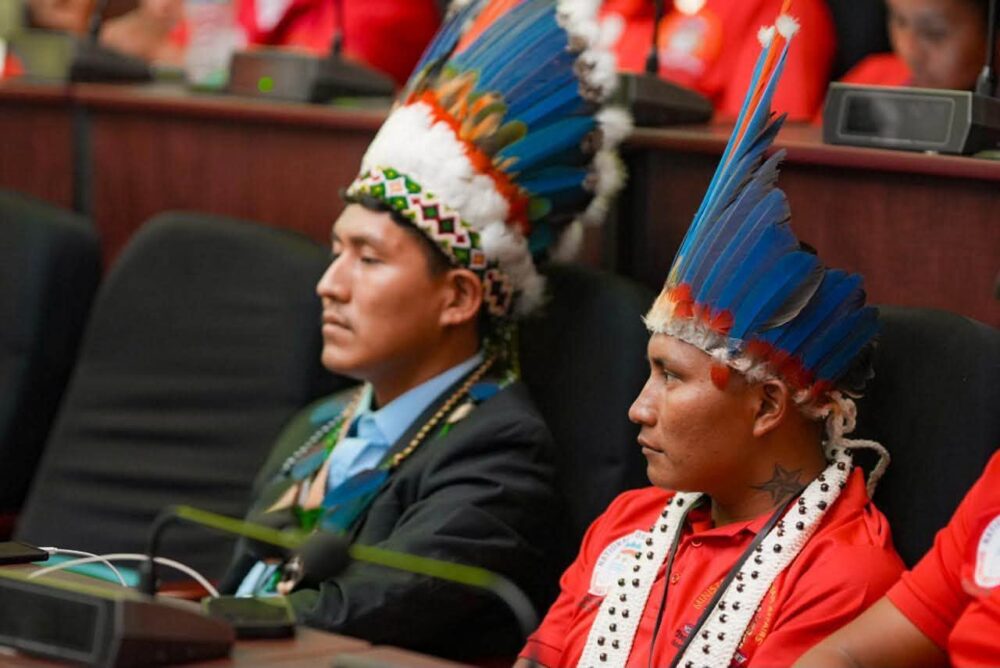
The housing initiative was announced Tuesday by Vice President Bharrat Jagdeo during the National Toshaos Conference at the Arthur Chung Conference Centre, where he said the government would invest $3 billion this year to assist Amerindian families in constructing new homes and repairing existing ones in hinterland villages.
Jagdeo said the programme would be implemented through the Ministry of Amerindian Affairs in partnership with village councils, with oversight committees established to ensure transparency and fairness in the distribution of funds. He added that allocations would be based on factors such as village population, with further consultations to determine the implementation framework.
But the announcement came while search and recovery teams were still retrieving bodies from 87-year-old MV Barima, -whose seaworthiness is now under intense scrutiny- which sank Saturday night while travelling from Georgetown to Port Kaituma. The ferry was the principal passenger and cargo link serving Region One (Barima-Waini), where Amerindians comprise the overwhelming majority of the population.
The tragedy has claimed dozens of lives and left families across Indigenous communities mourning loved ones who were returning home after seeking medical care, conducting business, attending school or visiting relatives on the coast.
Against that backdrop, the government’s housing announcement was met with a torrent of criticism after it was published by the state-owned Guyana Chronicle, with many readers questioning both the timing of the announcement and the government’s priorities.
One commenter wrote:
“Don’t use this time to distract us from the loss we suffered.”
Another was even more blunt:
“And the distraction begins.”
Others questioned whether the latest promise would ever materialise.
“Saying it and doing it is two different things!!!!”
Another commenter expressed deep skepticism.
“Just because they announce it doesn’t mean they have intentions of fulfilling it!”
Some accused the government of attempting to win political favour while communities were still grieving.
“Try to bribe them now.”
Others argued that the government’s immediate priority should be fixing the transportation system that serves hinterland residents.
“Please invest some money in building proper stellings/wharves and acquiring sea-worthy ferries. There should be a ferry specifically fitted for cargo and another for passengers and light baggage.”
The public reaction reflects growing frustration over what many view as misplaced priorities following the MV Barima catastrophe.
The sinking has intensified scrutiny of the government’s management of Guyana’s maritime infrastructure, particularly after it emerged that Public Works Minister Juan Edghill announced in 2023 that a replacement vessel was on its way to replace the ageing MV Barima. Three years later, the promised ferry had not arrived, and the 1939-built vessel remained in service until it sank with scores of passengers aboard.
For many Guyanese, especially those in Region One, the debate is no longer simply about housing. It is about whether the government first failed to provide safe transportation to the country’s Indigenous communities before unveiling yet another development initiative.
With recovery operations still underway and families awaiting the return of loved ones, the reaction to the housing announcement suggests that, for many citizens, promises of future investment cannot eclipse unanswered questions about a tragedy that has left an entire region in mourning