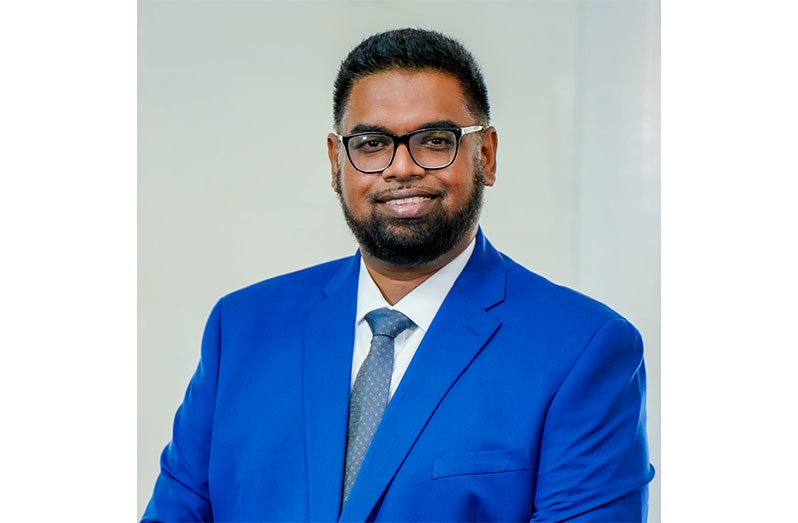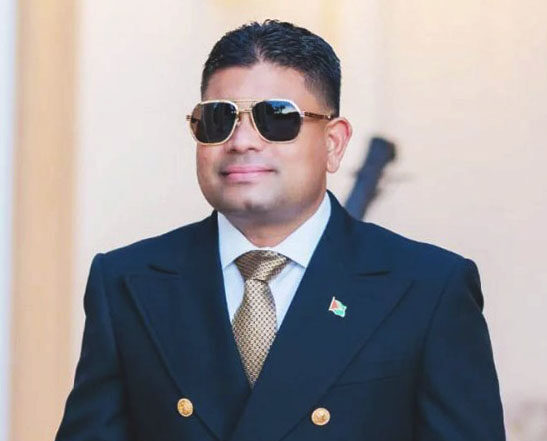
Opposition Leader Azruddin Mohamed is urging the government to provide fuel assistance to local fisherfolk so they can join the search for victims of the MV Barima disaster, arguing that the country’s limited search resources should be strengthened by those who know Guyana’s rivers and coastal waters best.
Mohamed made the appeal on Tuesday, July 21, after spending three days at sea assisting with search efforts alongside volunteers.
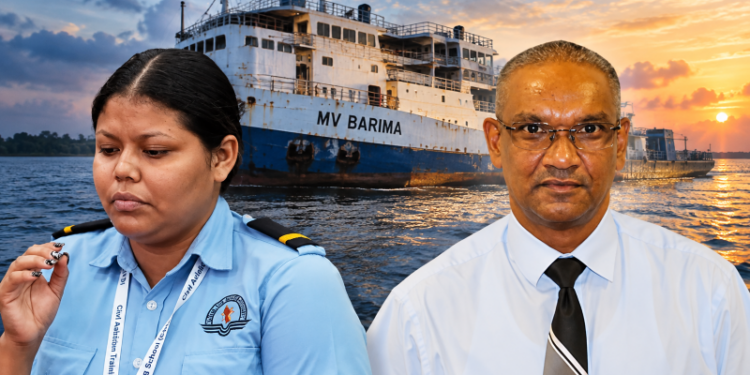
His proposal comes as the scale of the tragedy continues to grow. Authorities now believe 179 people were aboard the state-owned ferry when it capsized late Saturday while sailing from Georgetown to Port Kaituma, far exceeding the 133 people listed on the official manifest. As of Tuesday afternoon, 77 people had been rescued, 41 bodies recovered, and 61 remained unaccounted for, underscoring the enormity of the search effort.
In his statement, Mohamed said the government should tap into the experience of fishermen who spend their lives navigating Guyana’s rivers and coastal waters.
After three days of searching the Atlantic and river channels, he noted that the sheer size of the search area presents a formidable challenge for the State’s existing resources.
Rather than relying exclusively on government vessels, Mohamed proposed that the government subsidise fuel for local boat operators already working the waters so they can become an organised extension of the national search effort.
He argued that fisherfolk possess an intimate knowledge of local currents, river mouths, mud flats and remote waterways that could prove invaluable in locating victims or evidence connected to what has become one of Guyana’s worst maritime disasters.
The suggestion introduces a new dimension to the ongoing operation by seeking to formally integrate local maritime communities into the recovery effort.
Search operations have steadily expanded since the ferry capsized on Saturday night. Government agencies, the Guyana Defence Force, the Civil Defence Commission, volunteers and private-sector vessels have been combing a vast search area by sea and air. According to the government, 16 vessels are now involved in the operation.
The response has also become an international effort. Rescue teams from Trinidad and Tobago and French Guiana are already participating, while additional resources from Brazil and French Guiana are expected to further strengthen the search fleet.
Even before Mohamed’s proposal, many local fishermen had voluntarily joined the search, using their own boats to scour sections of the coastline and river mouths in hopes of finding survivors or recovering victims.
Mohamed, who has been participating in the operation since shortly after the disaster, said those same fishermen could do even more if the government helped offset the significant fuel costs associated with prolonged searches.
The MV Barima tragedy has also intensified scrutiny of Guyana’s maritime safety system. Authorities have launched investigations into discrepancies between the official passenger manifest and the actual number of people believed to have boarded the vessel, while questions continue to mount over operational oversight, emergency response times and the circumstances that led to the ferry’s capsizing.
Against that backdrop, Mohamed’s proposal reflects a growing recognition that recovering every missing person will require not only government and international resources, but also the expertise of the coastal communities that know Guyana’s waters better than anyone.