The capsizing of the MV Barima off Guyana’s northwest coast has become one of the country’s worst maritime disasters in decades, leaving families anxiously awaiting news of missing loved ones while exposing troubling questions about the safety and oversight of the nation’s ageing ferry fleet.
The vessel, carrying 116 passengers and 17 crew members from Georgetown to Port Kaituma, capsized near Iron Punt off the Pomeroon River late Saturday night after distress signals were issued, triggering a massive search-and-rescue operation. As authorities continue efforts to account for everyone aboard, the tragedy has ignited calls for full transparency over the ferry’s maintenance history, operational safety, previous repairs and the government’s continued reliance on ageing vessels.
What began as a desperate rescue mission has rapidly evolved into a national demand for accountability, with growing concerns that the disaster may have been preventable.
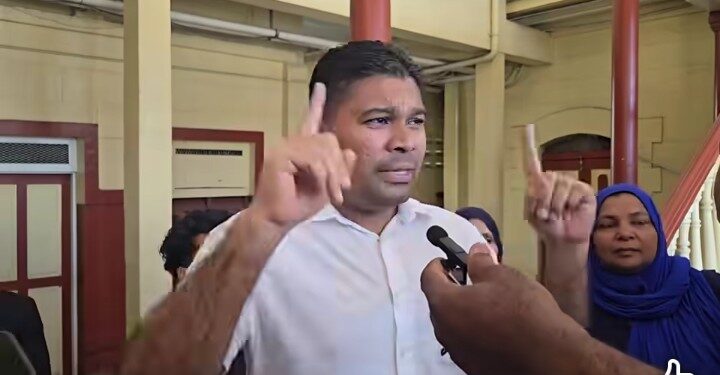
Against this backdrop, social activist and host of Straight Up With Mark Benschop, Mark Benschop, has issued a blistering condemnation of what he described as political grandstanding in the aftermath of the tragedy, insisting that the country needs accountability—not “crocodile tears and social media sound bytes.”
“Now is not the time for crocodile tears and social media sound bytes. The Guyanese people deserve facts, transparency and accountability.”
Benschop said the focus must now shift from public expressions of sympathy to determining how an 87-year-old passenger ferry, entrusted with carrying hundreds of Guyanese across the country’s waterways, remained in active service until disaster struck.
“This is no longer just about mourning the victims,” he argued. “It is about finding out whether this tragedy could have been prevented.”
He said every aspect of the vessel’s operation must immediately be subjected to public scrutiny, beginning with its maintenance history.
Among the questions he said the government must answer are how frequently the MV Barima underwent scheduled maintenance, whether it had recently been inspected, what repairs were carried out over the years, and whether recommendations arising from previous incidents were fully implemented before the vessel returned to service.
Particular attention, Benschop said, must be given to the 2021 engine fire aboard the ferry.
“The public deserves to know what caused that fire, what investigators recommended, and whether every one of those recommendations was carried out before this vessel continued transporting passengers.”
The activist’s demands come amid renewed scrutiny of reports that approximately $100 million was spent on repairs to the ferry in September 2024. He said the government must disclose exactly what work was undertaken, whether the repairs addressed any structural, mechanical or navigational deficiencies, and whether the vessel was independently certified seaworthy afterward.
Benschop is also demanding the immediate publication of the MV Barima’s complete maintenance records, together with those of every other government-operated ferry.
“The maintenance logs must be released—not only for the Barima, but for every ferry in the fleet. The public has a right to know whether these vessels are being maintained to acceptable standards.”
He is further calling for the release of the ferry’s manufacturer-recommended passenger, vehicle and cargo capacities, along with the actual number of passengers, vehicles and total cargo weight carried on the ill-fated voyage.
Additionally, Benschop wants authorities to publish operational logs for at least the previous month detailing every trip undertaken, the number of passengers transported, vehicles carried and the total cargo weight loaded on each voyage.
“The issue isn’t simply how many people were onboard. Weight matters. Cargo distribution matters. Balance matters. The public deserves to know exactly what this vessel was carrying and whether it was operating within its certified limits.”
He also wants government to disclose the condition and certification of the ferry’s navigation and communication systems, together with the qualifications, years of service and training of the captain, chief engineer and personnel responsible for loading passengers, vehicles and cargo.
According to Benschop, transparency must also extend to the ongoing emergency response.
He is urging authorities to reveal whether international or regional assistance has been requested to support search-and-rescue and recovery operations, identifying when those requests were made, to which countries or agencies they were directed, and what assistance has been received.
Beyond the investigation, the activist is calling for comprehensive support for survivors and grieving families, including medical treatment, trauma counselling, mental health services, funeral expenses for those who perished and compensation for affected families.
“The trauma doesn’t end when people are pulled from the water. Families will need psychological support, financial assistance and justice.”
He is also demanding an independent and impartial investigation into every aspect of the disaster and the immediate procurement of a modern replacement vessel for the North West District.
The tragedy has reignited broader concerns about Guyana’s ageing transport infrastructure.
Observers point to what they describe as a glaring contradiction: the government retired the 47-year-old Demerara Harbour Bridge in 2025, citing the need to replace ageing infrastructure, while the 87-year-old MV Barima continued transporting passengers across some of Guyana’s most challenging waterways.
For Benschop, the issue extends far beyond a single vessel.
“This is about whether lives were placed at unnecessary risk. The Guyanese people deserve the truth—not public relations.”
As search-and-rescue operations continue, public pressure is mounting for complete transparency. For many Guyanese, restoring confidence will require far more than official condolences or social media statements. It will require the release of maintenance records, inspection reports, operational logs and the findings of an independent investigation that answers one fundamental question: Could this tragedy have been prevented?