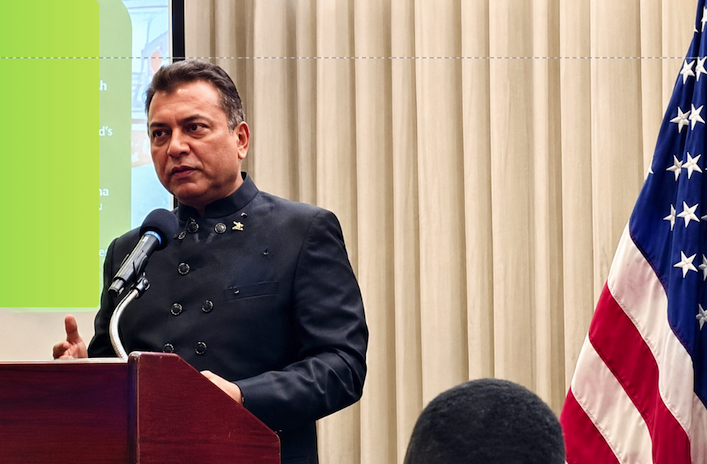
WASHINGTON D.C. – Guyana’s Chief Investment Officer, Dr. Peter Ramsaroop, spent much of his presentation to members of the Guyanese diaspora painting an optimistic picture of the country’s economic future, highlighting food security, tourism, infrastructure, energy, climate resilience and regional connectivity. Missing from the discussion, however, were many of the governance and institutional issues that investors often cite as equally important when deciding where to place their money.
During the presentation, Ramsaroop urged members of the diaspora to view Guyana as an emerging investment destination rather than simply a country to visit or send remittances to. Slides titled “Why Buy Guyana Stock?” showcased economic indicators, government development projects, investment opportunities and growth sectors including agriculture, renewable energy, tourism, biodiversity and the creative economy.
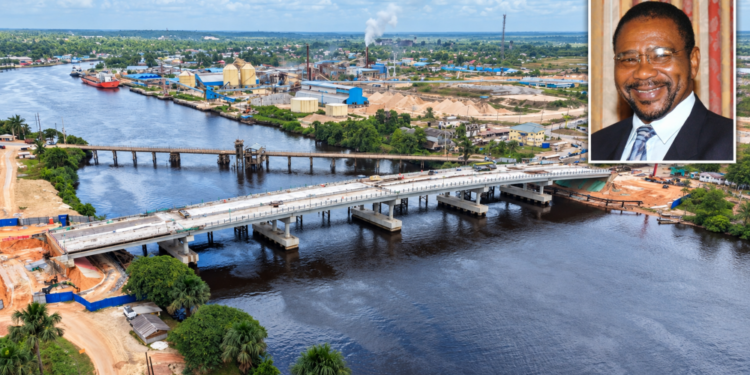
Ramsaroop touted “Guyana’s Economic Connectivity Arc,” and emphasized Guyana’s strategic location as a gateway linking northern Brazil, the Caribbean and international markets through expanding road, port and energy infrastructure.
The message was unmistakable: Guyana is growing rapidly, government is investing heavily in infrastructure, and the diaspora should become active investors in the country’s future.
But while the presentation devoted considerable attention to opportunity, it offered little discussion of the risks that many investors routinely evaluate before committing capital.
There was no apparent discussion of judicial independence, contract enforcement, civil unrest, procurement transparency, dispute resolution mechanisms, anti-corruption safeguards, regulatory certainty or broader institutional reforms that help protect private investment. These issues often feature prominently in international investment assessments and are frequently cited by investors as key determinants of long-term confidence.
Similarly absent was any discussion of political polarization, governance challenges or the broader institutional environment in which investments operate.
Instead, the presentation focused almost exclusively on the country’s alleged economic transformation. Ramsaroop highlighted sectors ranging from food security and climate resilience to tourism, biodiversity and energy development, while emphasizing Guyana’s rapid economic expansion (albeit focused on Oil and Gas) and the government’s touted vision for regional integration.
For many in the diaspora, however, investment decisions extend beyond projections of economic growth. Potential investors often ask practical questions: How efficiently are commercial disputes resolved? How predictable are government policies? How transparent are procurement processes? What safeguards exist if governments change? How independent are regulatory institutions? How are allegations of corruption investigated and addressed? Those questions were not addressed during the presentation.
While Guyana’s economic growth remains among the fastest in the world, investment experts generally note that sustainable private investment depends on both economic opportunity and institutional confidence. High growth may attract attention, but long-term capital often follows countries where investors believe contracts will be honoured, regulations will remain predictable and legal protections are consistently applied.
For members of the diaspora considering investing savings accumulated over decades abroad, those governance questions may prove just as important as projections of GDP growth, infrastructure maps and investment opportunity charts.
As Guyana continues its campaign to attract diaspora investment, many prospective investors may welcome future forums that pair discussions of economic opportunity with candid conversations about the institutional reforms and investor protections that underpin lasting confidence.