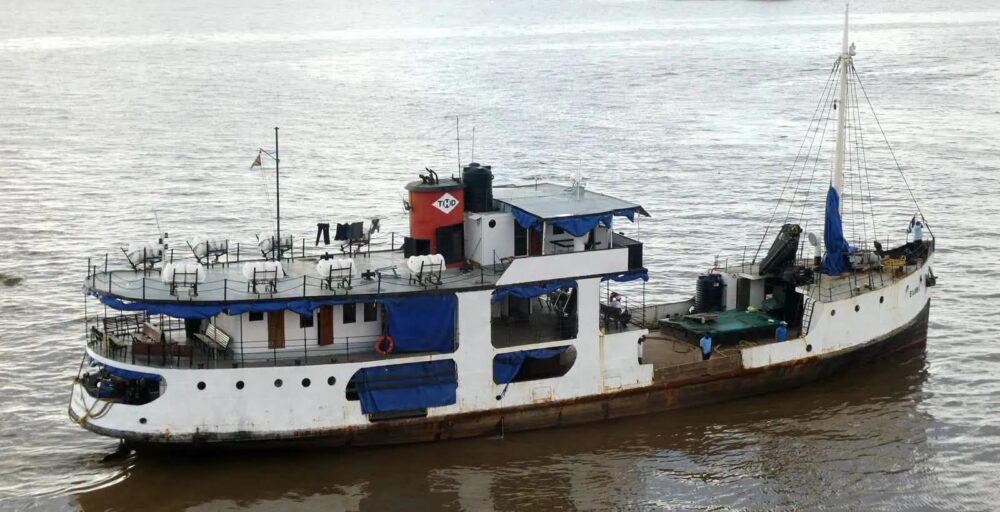
By Mark DaCosta-The Alliance For Change has expressed profound sorrow over the capsizing of the MV Barima, while simultaneously injecting a sharp political dimension into the national emergency by demanding that ExxonMobil’s state-of-the-art search-and-rescue assets be pressed into service for the rescue effort. The party’s statement, issued from its Railway Line Embankment headquarters in Kitty, Georgetown, captures both the human anguish of the tragedy and a pointed critique of resource allocation in our oil-rich nation.
The MV Barima, a passenger ferry built in 1939 and carrying 116 persons on its regular Georgetown-to-Port Kaituma route, sent a distress signal late Saturday night near Iron Punt in the Pomeroon River. At least 53 people had been rescued by Sunday morning, with search operations continuing under the direct supervision of Prime Minister Mark Phillips. The vessel, despite its advanced age, was reportedly equipped with 250 life jackets and multiple life crafts, though investigators will examine how effectively these functioned during the emergency.
In its statement, the AFC praised the “courageous efforts of the Guyana Defence Force, the Maritime Administration Department, emergency responders, medical personnel, and the many volunteers” mobilised for the rescue. However, the party’s most striking intervention was its insistence that “the advanced and Guyanese-bought, Search and Rescue equipment and facilities, including state-of-the art helicopters, that are currently available for Exxon’s operations in the Stabroek Block, will be made available to assist the authorities.” This demand reframes the disaster as not merely a maritime accident but a test of whether our nation’s oil wealth translates into tangible benefits for citizens in moments of crisis.
The AFC further called for “a comprehensive and transparent investigation into the circumstances surrounding the incident, and just as importantly, the response to it, so that lessons can be learned and appropriate measures implemented to further strengthen safety on our waterways.” The party urged the nation to “keep those affected in their prayers and to allow the rescue teams the space and support they need to carry out this critical mission.”
As families across our nation await news of loved ones, the tragedy has exposed urgent questions about maritime safety standards, the adequacy of our emergency response capabilities, and whether the prosperity generated from beneath our waters is being harnessed to protect those travelling upon them.