Digital transparency advocates warn that coordinated bot networks can effectively “rig” the public conversation—not by altering election results, but by manufacturing the illusion of widespread public support while drowning out authentic voices.
Bots are automated software programmes capable of posting, liking, sharing and commenting at a speed and scale impossible for ordinary users. While many serve legitimate purposes, others are used in what cybersecurity experts call coordinated inauthentic behaviour—the use of bots, fake accounts or coordinated networks to amplify messages, suppress criticism and manipulate online engagement.
By flooding comment sections with repetitive messages, coordinated likes and shares, and attacks on critics, these campaigns can distort public perception, sidetrack substantive national debate and discourage meaningful public participation.
Those concerns have drawn increasing attention in Guyana, where commentators and members of the public have questioned whether online engagement surrounding government policies reflects genuine public sentiment or coordinated amplification.
The scrutiny stems from recurring patterns of identical comments and rapid waves of responses beneath posts by the Government of Guyana, government ministers and the governing party. Similar concerns have also been raised by opposition politicians, independent commentators and civil society figures, who say their online platforms are frequently inundated with coordinated responses.
This publication has reviewed material that it believes warrants further scrutiny regarding the authenticity and coordination of some online engagement. Those findings have not been independently verified, and the Government has not publicly responded to the specific concerns raised in this report.
The impact extends beyond promoting political messaging. Around the world, journalists, opposition politicians and civil society leaders have reported being targeted by coordinated online campaigns designed to distract from substantive issues, intimidate critics and shape public narratives.
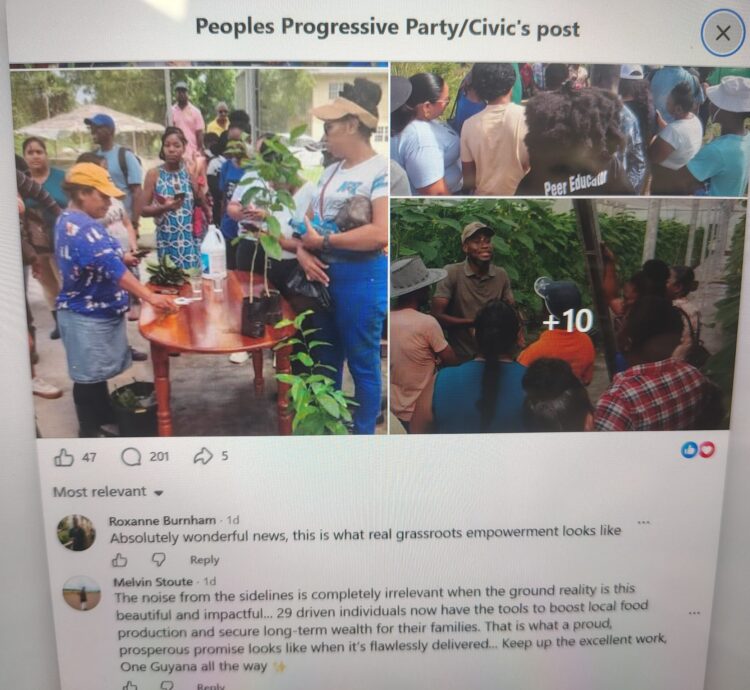
Major technology companies, including Meta and X, have dismantled networks engaged in coordinated inauthentic behavior in numerous countries, describing them as attempts to manipulate public discourse rather than foster genuine civic engagement.
According to this publication’s analysis, the online activity identified extends beyond isolated fake profiles. The accounts examined displayed patterns consistent with coordinated amplification, suggesting a level of organisation that, if confirmed through independent forensic analysis, could have a substantially greater impact on public discourse than the actions of a handful of individual users.
Democracy advocates argue that when online conversations are artificially amplified or suppressed, citizens may struggle to distinguish authentic public sentiment from manufactured consensus. They say protecting democratic debate requires greater transparency from political actors, stronger platform enforcement and independent digital forensic investigations where credible concerns arise.