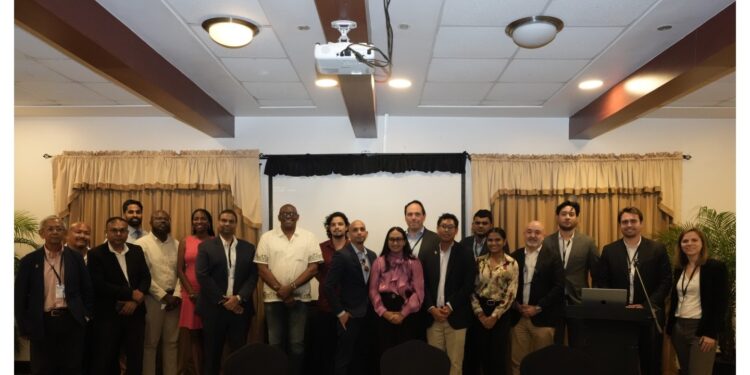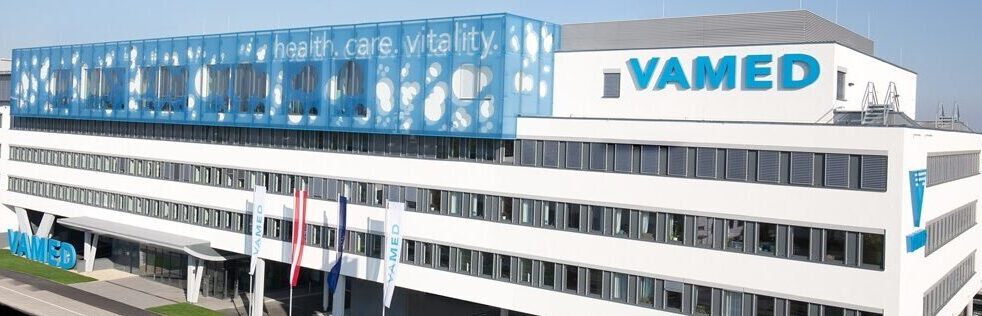
By Mark DaCosta- On July 16, 2026, VAMED Engineering GmbH, the Vienna-based healthcare builder, convened a press conference in Georgetown at which company representatives interfaced with members of the media. Following that engagement, its legal representative, C.A. Nigel Hughes, who heads the Georgetown law firm Hughes, Fields and Stoby, released a statement setting out the company’s stance and the reasoning behind its decision to haul the Government of Guyana before an international arbitral tribunal. At stake are two of our nation’s most keenly awaited public health undertakings: the Guyana Paediatric and Maternity Hospital at Goedverwagting, East Coast Demerara, and the New Amsterdam Hospital Campus in Region 6.
Both projects were sold to the Guyanese people as transformative. The 256-bed mothers’ and children’s facility — born of a 2018 understanding between Guyana and Austria and underpinned by roughly €160 million in United Kingdom export finance — was billed at its July 2022 sod-turning as the largest public health investment our country has ever seen . The Berbice project promised a modern 150-bed replacement for the ageing New Amsterdam institution. VAMED’s undertaking, Hughes reminded the nation, was to design, construct and equip these facilities; its payment, the attorney-at-law contended, has been silenced by the paymaster.
At the heart of the grievance, as VAMED’s attorney framed it: “substantial works have been performed, certified, and remain unpaid.” More damning still, Hughes asserted that “the Government’s own appointed Engineer has certified amounts due to works already carried out,” yet those sums remain outstanding. In construction practice, certification by the employer’s own engineer is the gold standard of debt; to sit upon such certificates, the lawyer implied, is to repudiate one’s own scrutiny.
Equally troubling, in the company’s telling, is the collapse of the financing architecture underpinning the Georgetown project. Hughes disclosed that the loan extended to our Government by UniCredit, the Austrian bank, lapsed in November 2025, and with it Britain’s export credit guarantee. That guarantee, from UK Export Finance — a ministerial department in London which pays exporters when an overseas buyer defaults — had secured the contractor’s payment while letting our nation borrow at roughly one per cent per annum, a rate anchored in deep ties between London and Georgetown. The loan, VAMED’s counsel maintained, died of neglect: both UniCredit and UKEF repeatedly pressed the authorities to renew it, to no avail. Its expiry, the statement charged, “materially undermined the payment security upon which VAMED relied.”
Nor is the quarrel confined to money and paperwork. The attorney-at-law pointed to shipping containers of project equipment sitting uncleared at the wharf, racking up storage charges while the certified debt went unsettled and the financing unravelled — a portrait, he suggested, of costly administrative inertia.
Hughes was careful to insist that his client does not intend to try the case through media headlines. Since the contracts stipulate recourse to arbitration, and since his client believes that, in his words, “the rule of law and contractual accountability require these issues to be determined in a formal and impartial process,” the company has chosen the tribunal over the court of public opinion.
Even so, he maintained, ordinary Guyanese deserve to know what is at issue, since the quarrel reaches beyond unpaid certified debts to collapsed sovereign-backed financing and pledges to mothers, children and the people of Region Six. The company, he stressed, would rather have settled matters amicably. But with no payment forthcoming, no revived financing and no adequate assurance, the attorney-at-law concluded, “VAMED has been left with no viable alternative but to commence arbitration.”
The Government’s side remains to be heard; the tribunal will decide who is right. But the announcement alone raises uncomfortable questions for our nation. At a time of unprecedented petroleum revenues, how does a one-per-cent loan for a children’s hospital lapse for want of renewal? What might arbitration — with its legal costs and any eventual award — extract from the public purse? And what does a sovereign payment dispute of this order signal to the very foreign partners our country is courting for its development? The firm professes continued respect for our Government and our people. We must now wait to learn whether our mothers, newborns and Berbicians will receive their hospitals, or whether the cranes over Goedverwagting and New Amsterdam will stand idle while lawyers argue in a faraway forum.