Nearly 62 years after a bomb ripped through the passenger vessel MV Son Chapman, killing 43 people and sending shockwaves across British Guiana, the tragedy remains one of the country’s most devastating and unresolved acts of political violence. The perpetrators were never identified, no one was charged, and the attack continues to cast a long shadow over Guyana’s collective memory.
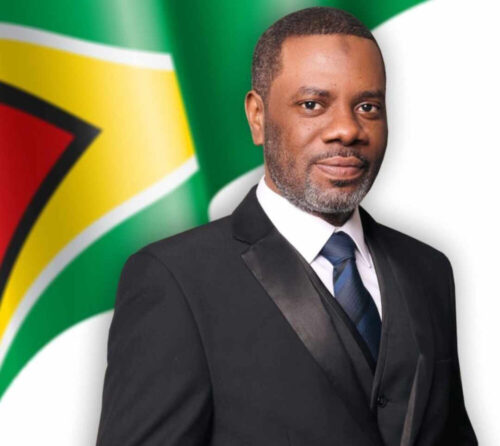
With one month remaining before Linden’s annual commemoration of the July 6, 1964 disaster, the A Partnership for National Unity (APNU) Member of Parliament and former Region Ten Chairman Sharma Solomon is urging Guyanese to revisit not only the Son Chapman tragedy, but the wider cycle of violence that engulfed the country during the turbulent years preceding Independence.
In a series of social media statements, Solomon called for what he described as an honest and evidence-based examination of the events of 1964, cautioning against selective interpretations of history and attempts to elevate one community’s suffering above another.
“History should not become a contest over whose pain mattered most,” Solomon wrote. “The dead belong to no one group. The dead belong to the nation.”
The intervention comes amid renewed debate over the violence that erupted in Wismar, Christianburg and Mackenzie in May 1964 following the publication of historian Professor Baytoram Ramharack’s book, The Wismar Massacre: A Case of Ethnic Cleansing of Indians in Guyana.
Ramharack argues that attacks against Indians in the mining community amounted to ethnic cleansing and deserve greater national recognition. Solomon, while acknowledging the suffering, displacement and loss experienced by Indian families, questioned whether the historical record supports the use of such terminology.
“I am particularly interested in understanding how Professor Ramharack reconciles the findings of the official Commission of Inquiry with his decision to title his book ‘The Wismar Massacre: A Case of Ethnic Cleansing Of Indians In Guyana’,” Solomon stated.
He further disclosed that he met with Ramharack and researcher Malcolm Harripaul more than a year ago to discuss the events of 1964. According to Solomon, Ramharack acknowledged during that discussion that the disturbances in Wismar could not properly be classified as a massacre.
The exchange goes to the heart of a long-running national dispute over how Guyana remembers one of the darkest periods in its history.
The years leading to Independence were marked by political confrontation, labour unrest, racial polarization, bombings, riots, arson attacks and Cold War intrigue. British Guiana became a focal point of international geopolitical interests while ordinary citizens bore the consequences of escalating tensions between rival political forces.
The disturbances in Wismar, Christianburg and Mackenzie formed part of that upheaval. Homes and businesses were destroyed, families were displaced and lives were lost.
Just six weeks later came the Son Chapman bombing.
The vessel, carrying passengers from Georgetown to Mackenzie, exploded and sank in the Demerara River near Hurudaia. Forty-three people were killed and many others injured. Investigators concluded that the explosion was most likely caused by a bomb hidden aboard the launch, but despite an extensive inquiry and public inquest, the crime remains unsolved.
The attack devastated Linden and became a lasting symbol of the human cost of political extremism. Entire families lost breadwinners, parents never returned home, and generations grew up with memories of a tragedy that remains deeply woven into the town’s identity.
Solomon noted that as Regional Chairman he supported the establishment of a memorial site for the victims and later, as Mayor, continued efforts to ensure annual observances were maintained.
While stressing that the victims of Son Chapman must never be forgotten, he argued that the suffering experienced during the May 1964 disturbances also deserves recognition.
Referring to the findings of the official Commission of Inquiry, Solomon said the historical record identified five fatalities linked to the disturbances: Richard Khan, Paul Mirgin, Gussie English, Isaac Bridgewater and Byron Wharton.
“The significance of this observation is not to diminish the suffering of any individual, family or community,” he wrote. “Rather, it underscores the importance of grounding public discussion in the documented findings of the Commission of Inquiry.“
He argued that while the Commission documented deaths, injuries, destruction of property and displacement, it did not characterize the events as a massacre or conclude that they amounted to ethnic cleansing.
“That distinction matters. Recognising that distinction does not minimize suffering. It preserves the integrity of the historical record.“
Solomon also pointed to other victims of the era, including Permanent Secretary Arthur Abraham and members of his family who died after their Hatfield Street home was attacked and set on fire, arguing that the violence extended far beyond any single community.
As Guyana approaches another Son Chapman anniversary, Solomon is calling for a national remembrance that transcends political and ethnic divisions.
“The victims of May 1964 deserve remembrance. The victims of the Son Chapman tragedy deserve remembrance. Arthur Abraham and his seven children deserve remembrance. The many victims of violence throughout Guyana during that era deserve remembrance,” he wrote.
His broader message is that neither history nor reconciliation can be built on selective memory.
“The truth of our history is not diminished by careful examination,” Solomon said. “It is strengthened by it.“