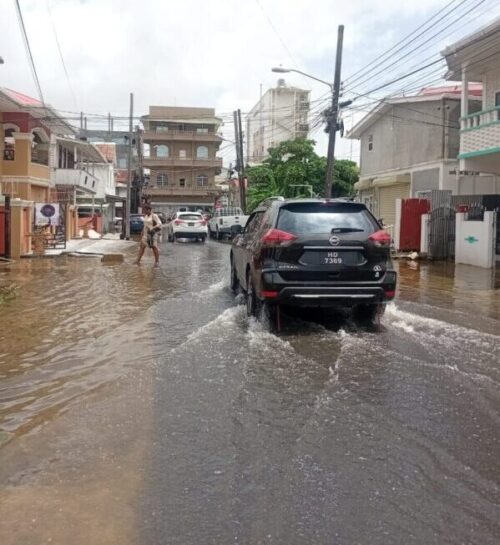
By Mark DaCosta- As the capital city and other communities such as Linden grapple with an almost unprecedented flooding crisis, the juxtaposition between raging waters on the streets and dry taps in homes continues to reveal the failures of governance and infrastructure in our country.
The recent heavy rains have cast a long shadow over Georgetown, with many residents facing dire conditions reminiscent of the catastrophic floods of 2005. This situation has laid bare the inadequacies of our drainage systems and the urgent need for political accountability, as citizens find themselves caught in a paradox of abundance and deprivation.
The ongoing Main/June rainy season has unleashed torrential downpours on Georgetown, intensifying the already alarming flooding crisis. Many parts of the city have transformed into muddy rivers, with the volume of rain overwhelming outdated drainage systems not equipped to handle such ferocity.
Recent reports indicate a staggering accumulation of 3.8 inches of rainfall in just four hours, an alarming statistic that underscores the dire need for an overhaul of our water management systems. Once designed during colonial times for sugar plantations, our drainage infrastructure has become antiquated, unable to cope with the increasing challenges posed by climate change and urbanisation.
In stark contrast to the flooded streets, residents often find their taps running dry. This paradox highlights not only the mismanagement of resources but also the critical inadequacies of governance. With floodwaters lapping at doorsteps and forming contaminated pools in the streets, residents face a twin horror of sanitation risks and a lack of potable water. The erosion of public trust is palpable, as the government seems unprepared to tackle the looming health threats posed by standing water teeming with disease-carrying agents.
The People’s National Congress Reform (PNCR) and A Partnership for National Unity (APNU) have rallied to express their collective dismay at the government’s apparent inaction in the wake of this crisis. Their calls for immediate assistance reflect a growing frustration with the ruling party’s neglect of infrastructure and essential services. In the wake of comments from municipal authorities that only serve as empty assurances, the pleas for urgent action resonate deeply among Georgetown’s beleaguered residents who are keen to see real, tangible change.
Patients in our healthcare system are particularly vulnerable to the implications of this flooding. The stagnant water acts as a breeding ground for waterborne diseases, such as cholera and leptospirosis, posing an imminent threat to the health of our communities. Those suffering from ailments exacerbated by these conditions face overwhelming challenges given the current deficiencies in our healthcare infrastructure. The situation raises critical questions regarding the responsibility of the government to safeguard public health, a duty that has been glaringly neglected.
Historically, our nation has allocated significant funds — over G$240 billion — towards flood management efforts from 2020 to 2025. Unfortunately, much of this expenditure has failed to address the root causes of our infrastructure crisis. A lack of civic responsibility, compounded by administrative inefficiencies and badly managed revenue streams, has resulted in a failure to maintain and upgrade critical drainage systems. Blockages from refuse and neglect have rendered our drainage infrastructure ineffective, leading to widespread flooding that threatens the very fabric of urban life.
The burden of the flooding crisis weighs heavily on local businesses and the economy, with many forced to shutter their doors while the waters rise. As Georgetown’s economic resilience dwindles, an urgent call for action to support affected families reverberates through the community. The realities of living under such conditions — where going about daily life has become an exercise in endurance — serve as a stark reminder of the government’s failures to prioritise the welfare of its citizens above political expediency.
As the rains continue to fall, the outlook remains grim. The government’s failure to act decisively in response to previous flooding events has left residents vulnerable and frustrated, feeling as though their voices are falling on deaf ears. With each passing day, the health implications grow more severe, and the situation becomes increasingly untenable.
Our nation’s leaders must be held accountable for their stewardship of vital resources and their role in safeguarding public health and safety. The time for action is now, and the urgent need for comprehensive reforms to restore confidence and well-being in our communities has never been clearer.