A Nairobi judge halts construction, two protesters lie dead, and President Ruto scrambles to defend a secret deal he made with Donald Trump — while U.S. military aircraft reportedly defy the court order entirely.
Calvin G. Brown – Let us be precise about what is happening in Kenya, because the diplomatic euphemisms being deployed by both Washington and Nairobi are designed to obscure a straightforward and deeply troubling reality: the United States government has decided that its own citizens potentially exposed to Ebola will not be isolated on American soil.
They will be flown — on C-130 military transport aircraft — to Africa. To a country that has never recorded a single Ebola case in its history. And when a Kenyan court said no, the planes reportedly kept coming anyway. That is not a partnership. That is a power imbalance masquerading as one.
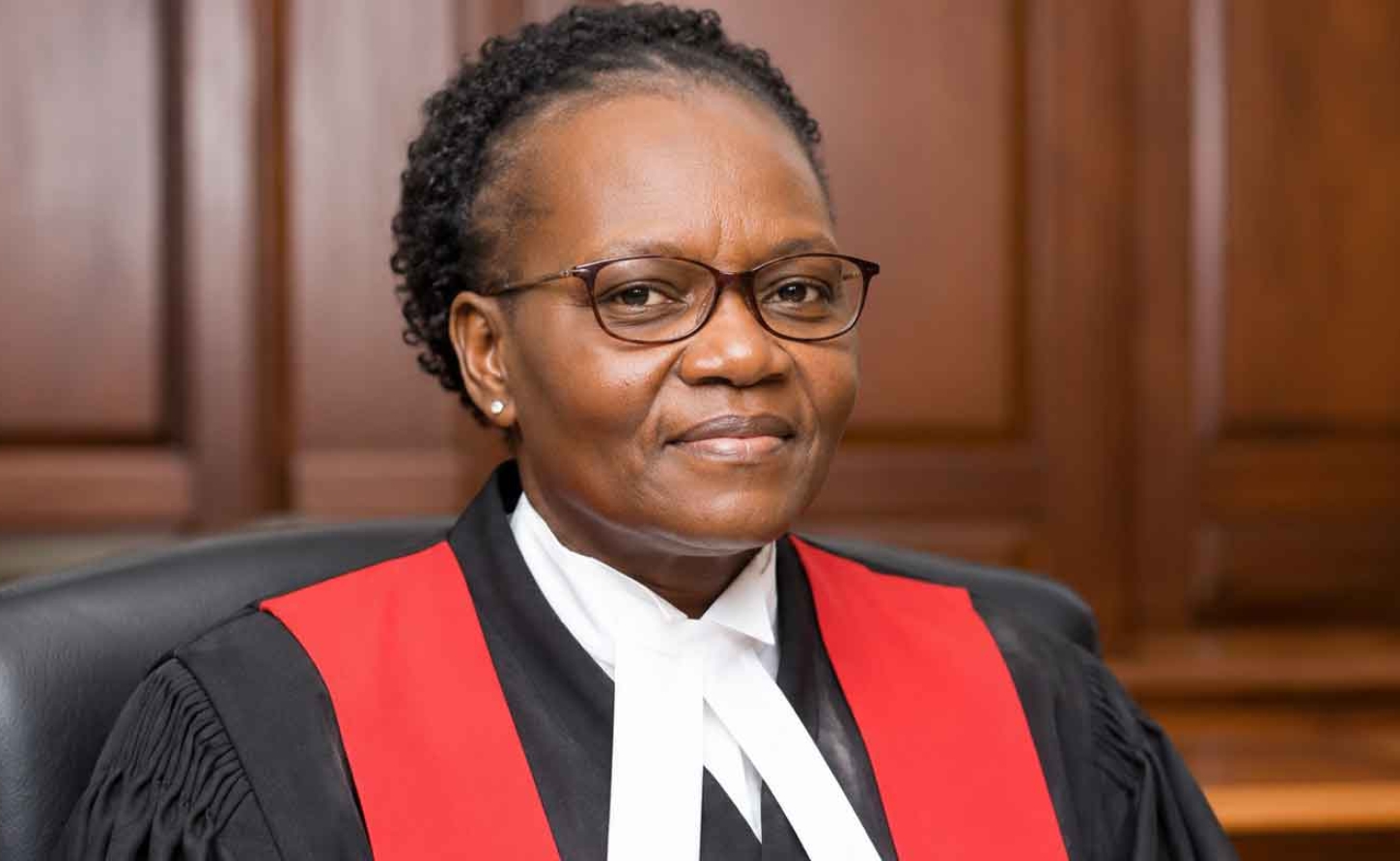
On Monday, Justice Patricia Nyundi of the Kenyan High Court extended interim conservatory orders blocking construction of a proposed 50-bed U.S.-backed Ebola quarantine facility at the Laikipia Air Base — halting work and explicitly prohibiting the entry, transfer, or admission of foreign nationals exposed to Ebola into Kenyan territory.
The court also issued a transparency mandate, giving the Cabinet Secretary for Health seven days to disclose the full terms of the agreement, including biosafety protocols and regulatory approvals — details the government had conspicuously withheld from the public.
The suit was brought by the Katiba Institute and the Law Society of Kenya, who argued that Kenya’s health infrastructure is simply too fragile to safely manage patients carrying one of the world’s most lethal hemorrhagic viruses. Their argument requires no elaborate legal reasoning — it is common sense dressed in a courtroom.
Kenya is being asked to bear the biosafety risk of a disease it does not have, contracted by citizens of a country that has the wealth and infrastructure to manage it at home but has politically decided not to.
That political decision is the crux. The Trump administration has been explicit: Americans exposed to Ebola will not be permitted to return to U.S. soil. Instead, they will be quarantined in Kenya — a country currently untouched by the outbreak localized in the Democratic Republic of Congo and Uganda.
The optics, for anyone willing to see them clearly, are colonial in their architecture: the Global North exporting its health crisis management costs to the Global South, wrapped in the language of bilateral partnership and preparedness funding.
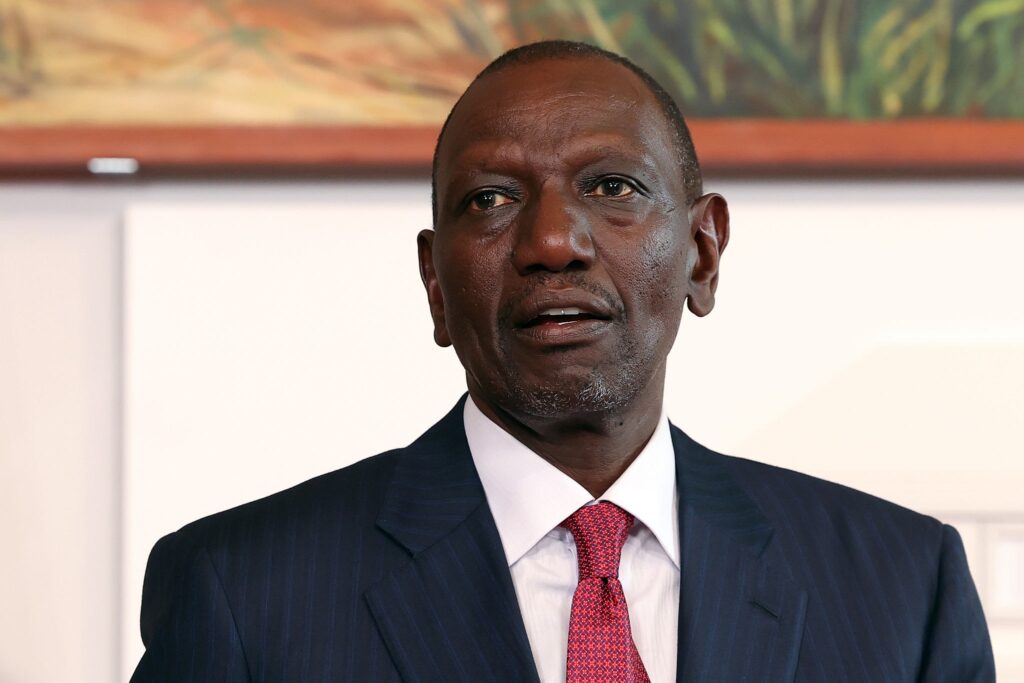
President William Ruto, for his part, chose defensiveness over accountability. Publicly confirming for the first time that he had personally approved the deal at the personal request of President Donald Trump, Ruto framed the facility as one of 24 planned national preparedness centres, insisting it would serve Kenyans and foreign partners alike. “We know what we are doing,” he told reporters, dismissing public anxiety and blaming politicians for stoking fear.
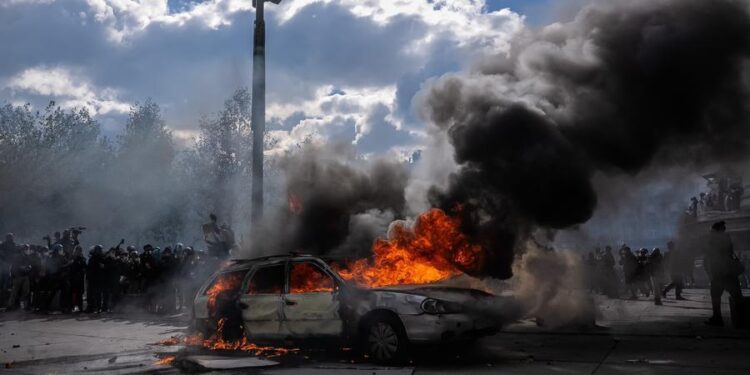
What he did not explain was the secrecy. No public consultation. No parliamentary disclosure. No biosafety framework made available to the citizens in whose backyard the facility was being built. In Nanyuki, the town nearest Laikipia Air Base, that secrecy was not received as administrative discretion — it was received as contempt. Severe protests erupted. Security forces responded. At least two demonstrators were shot dead.
“Two Kenyans are dead — not because of Ebola, but because their government cut a secret deal and expected the public to swallow it quietly.”
Two Kenyans are now dead — not because of Ebola, but because their government cut a secret deal with a foreign power and expected the public to swallow it quietly. That distinction matters enormously. The threat to Kenyan lives in this story did not arrive in a C-130 cargo hold. It arrived in the form of a government that believed it could bypass democratic transparency and public consent when dealing with a superpower ally.
And then — in the most brazen dimension of this entire affair — those C-130s reportedly kept flying into Laikipia even after the court issued its block. If accurate, this represents not merely a diplomatic controversy but a direct challenge to Kenyan judicial authority on Kenyan soil. It raises a question every sovereign nation must eventually answer: at what point does a bilateral agreement become a bilateral imposition?
The Katiba Institute and the Law Society did not go to court to block international health cooperation. They went to court because in a functioning democracy, the public has a right to know the terms under which their territory is being used, their health infrastructure is being tested, and their sovereignty is being calibrated against the preferences of a foreign government. That is not fear-mongering. That is constitutionalism.
For the Caribbean — a region intimately familiar with the experience of being told that arrangements made elsewhere, by others, for others, are nonetheless in our best interest — Kenya’s moment carries a resonance that cannot be ignored.
The language is always the same: partnership, preparedness, mutual benefit. The architecture is always the same too: the risk stays south, the decisions are made north, and the protests are branded as the product of ignorance or political manipulation.
Justice Nyundi’s courtroom offered a different framing. She said, in effect: show us the agreement, show us the protocols, justify this to the people whose consent you bypassed. That is not obstruction. That is precisely what courts are for.
The Kenyan High Court has bought three weeks. In those three weeks, President Ruto must decide whether his administration stands on the side of transparency and democratic accountability — or on the side of a deal made quietly, defended poorly, and enforced by aircraft that do not appear to have read the order.
Africa is watching. The Caribbean is watching. The Global South is watching.
The question is not whether Ebola is dangerous. Of course it is. The question is who bears the burden of that danger — and who gets to decide. WiredJA