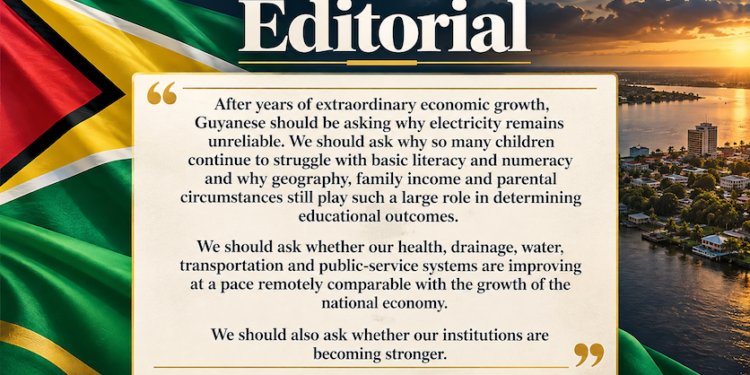
In our beloved Guyana, the recent boom in the oil sector has been touted as a pivotal moment for economic growth, yet this prosperity has largely failed to translate into tangible benefits for the average citizen. The crux of our dilemma lies not in a deficit of financial resources but in a glaring absence of effective governance that prioritises the well-being of its people. As oil revenues surge, the reality for many remains harsh and unyielding, raising urgent questions about the socio-economic landscape and the efficacy of our current political leadership.
The recent oil discoveries off the coast of our country have drawn attention from the global stage, positioning us as one of the fastest-growing economies in the world. However, this economic progress is overshadowed by a stark disconnect between prosperity and the daily struggles of ordinary citizens.
For countless families, the cost of living is escalating, with basic necessities becoming increasingly unaffordable, while children still go hungry and the elderly grapple with inadequate pensions. This paradox is not a by-product of a lack of resources; instead, it reveals significant flaws in governance that have, time and again, prioritised grand infrastructure projects over human-centred approaches to development.
In recent years, we have seen the government focusing primarily on high-profile construction projects. While these projects do contribute to a long-term vision for infrastructure, they fail to address pressing social issues like food security and poverty alleviation. Vulnerable populations find themselves grappling with the dual burdens of inflation and insufficient social safety nets.
As oil wealth floods into the economy, the absence of targeted support systems, like nutritional programmes for children or pension reforms for the elderly, becomes glaringly apparent. The rise in living costs due to inflation associated with an influx of oil revenue disproportionately affects those at the margins of society.
A look at the plight of our youth reveals an urgent crisis. Teenagers, increasingly disillusioned by the lack of opportunities, are turning to criminal activities as viable means of survival. The failure to align education and vocational training with the new demands of an oil-rich economy leaves young people at a loss, unable to secure legitimate employment and feeling increasingly excluded from economic progress. As lucrative opportunities largely remain within elite networks — often political or familial in nature — many young people feel trapped in a vicious cycle of despair that breeds criminality.
This governance crisis stems from a fundamental institutional deficit, exacerbated by political polarisation. Our country’s history of ethno-political divisions has resulted in a short-sighted, clientelist approach to politics, wherein strategic policymaking is oriented towards securing votes rather than facilitating genuine development. This approach fosters an environment ripe for corruption and inefficiency, leading to decisions that cater to the interests of the few rather than the needs of the many.
The centralisation of power within the executive branch has hampered the establishment of independent institutions tasked with managing the wealth generated from our natural resources. This lack of institutional autonomy means oil revenues are not effectively channelled into comprehensive social programmes that could uplift the vulnerable segments of our society.
The road ahead is plentiful with challenges, and the dissonance between oil-induced wealth and the persistent socio-economic hardships faced by citizens is not a random coincidence. It stems from deliberate choices made by those at the helm of government, emphasising infrastructure over basic human rights.
To reclaim our nation’s future, we must advocate for a governance model that prioritises human development. This involves indexing pensions to real inflation rates, establishing school-based nutritional initiatives to combat hunger, and reforming education systems to create pathways for youth into the formal economy.
The true measure of our nation’s success cannot simply hinge on economic indicators but must extend to the life quality of our citizens. In an era where our country is confronting the dual realities of unprecedented oil wealth and chronic social disenfranchisement, we must demand an urgent shift towards governance that is transparent, inclusive, and grounded in the principles of equity and dignity for all. Without addressing these foundational issues, we risk transforming our natural wealth into a legacy of missed opportunities, deepening social divides, and enduring struggles for survival.