The Caribbean Community’s foreign ministers met in Paramaribo and canvassed the globe for new partnerships. Yet the island nation that fed our doctors, buried our dead, and shares our sea went unmentioned — while Washington tightens a noose around its neck.
MONTEGO BAY, Jamaica, Calvin G. Brown| Read the closing statement from CARICOM’s Council for Foreign and Community Relations — all of it — and you will find Saudi Arabia. You will find Austria. You will find the United Arab Emirates and Singapore and Japan. You will find Bermuda’s membership application and French Guiana’s bid for associate status.
What you will not find, not in a single sentence, not even in a subordinate clause, is Cuba.
Cuba: which sits ninety miles from Florida and a boat-ride from half the Caribbean. Cuba: whose doctors have stood in our clinics when we had no one else to call. Cuba: whose sugar lands built the bloodlines of thousands of Caribbean families, including countless Jamaicans who are the sons and daughters of men and women who crossed the water to cut cane and never fully came home.
That Cuba. The one currently being strangled by an American energy blockade, unable to keep its lights on, its hospitals running, or its children fed — while Washington rattles its sabre and speaks of war.
CARICOM’s silence on this is not an oversight. Silences of this magnitude are decisions.
A Debt Too Long Unpaid
The Caribbean’s relationship with Cuba predates CARICOM itself. When Trinidad had no petroleum engineers and Jamaica had no ophthalmologists and the Eastern Caribbean had no disaster response capacity to speak of, Cuba sent them. Not on commercial terms. Not as a loan to be repaid with interest. It sent them because it understood what solidarity among small, historically exploited nations actually demands — that you show up when it costs you something.
In 1972, Jamaica’s Michael Manley, Eric Williams of Trinidad, Errol Barrow of Barbados, and Forbes Burnham of Guyana collectively recognised Cuba diplomatically — four leaders who understood that Caribbean solidarity demanded more than rhetoric.
Washington made clear the price. They paid it without flinching. The rest of the Caribbean followed, building relationships that have endured through every shift in the geopolitical weather. Today those same nations sit in Paramaribo’s meeting rooms and discuss joint collaboration mechanisms with Riyadh — and say nothing while Havana goes dark.
“Cuba is the closest thing to a member state the Caribbean has never officially claimed. And when it needed us to simply speak its name, we could not manage even that.”— Calvin G. Brown
The Standard CARICOM Cannot Apply Selectively
Ministers in Paramaribo found language — firm, unambiguous language — to defend Belize’s sovereignty against Guatemala, and Guyana’s territorial integrity against Venezuela’s claims on the Essequibo. The COFCOR statement declared the Community’s “absolute support” for the security and sovereignty of both member states. That language is right and proper. But sovereignty, if it means anything, cannot be a principle applied only to CARICOM passport holders.
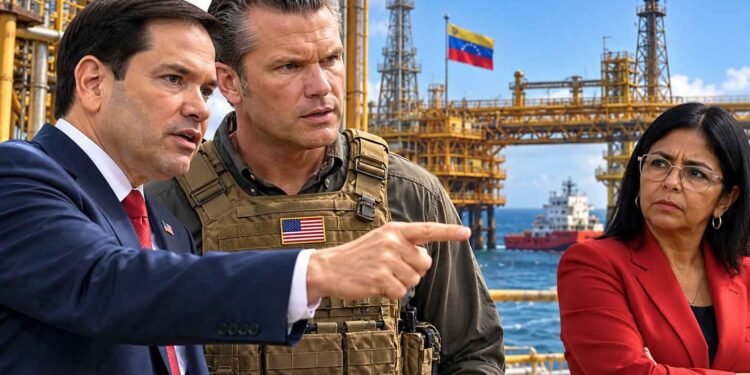
The United States is not merely pressuring Cuba. It is deliberately engineering an energy crisis in a civilian population. It has cut off fuel supplies, maintained and tightened a decades-long embargo that the United Nations General Assembly has voted to condemn for more than thirty consecutive years, and now layers threats of military action on top of economic warfare.
If CARICOM ministers can voice concern about border disputes adjudicated in international courts, they can surely voice concern about a neighbour being pushed toward famine and darkness by a superpower.
Unless, of course, the calculation is that speaking Cuba’s name in 2026 is too costly — that new partnership agreements with Washington-adjacent financial systems, and the prospect of UAE trade deals, and the warmth of Vienna’s diplomatic offices, make it prudent to keep quiet while a people suffer.
Who Speaks for the Caribbean?
COFCOR Chair Melvin Bouva of Suriname closed Thursday’s meeting with words that were, in isolation, admirable: “unity and collective action are no longer optional — they are strategic imperatives.” He is correct. But unity that cannot extend to a dying neighbour is not unity. It is a club membership — and a selective one at that.
CARICOM comprises fifteen member states and is home to approximately sixteen million citizens. Cuba’s population is larger than all of them combined. Its history is woven into ours through migration, through medicine, through music, through the sweat of our grandparents’ labour in its fields. The Cuban people are Caribbean people. And right now they are hungry, they are in the dark, and they are being threatened with war.
If CARICOM cannot find a single sentence for that — if the foreign ministers of the Caribbean Community can spend two days discussing Saudi collaboration mechanisms and an Austrian office and still have no words for Cuba — then we must ask plainly: what exactly is this Community for? Because it does not appear to be for the Caribbean.
About CARICOM:
The Caribbean Community (CARICOM) was established on 4 July 1973 with the signing of the Treaty of Chaguaramas, which was revised in 2001 to allow for the establishment of a single market and economy. CARICOM comprises fifteen Member States and six Associate Members and is home to approximately sixteen million citizens, 60% of whom are under 30 years old. CARICOM’s work rests on four main pillars: economic integration; foreign policy coordination; human and social development; and security cooperation.
The members of CARICOM work together to create a Community that is integrated, inclusive and resilient; driven by knowledge, excellence, innovation and productivity; a Community which is a unified and competitive force in the global arena, where every citizen is secure and has the opportunity to realise his or her potential with guaranteed human rights and social justice, and contributes to, and shares in, its economic, social and cultural prosperity.
WiredJA