Former Public Infrastructure Minister and former A Partnership for National Unity and Alliance for Change (APNU+AFC) Member of Parliament, Annette Ferguson, has criticised the government’s handling of the transportation sector, arguing that recent announcements on minibus fares fail to address the broader cost-of-living crisis confronting Guyanese families.
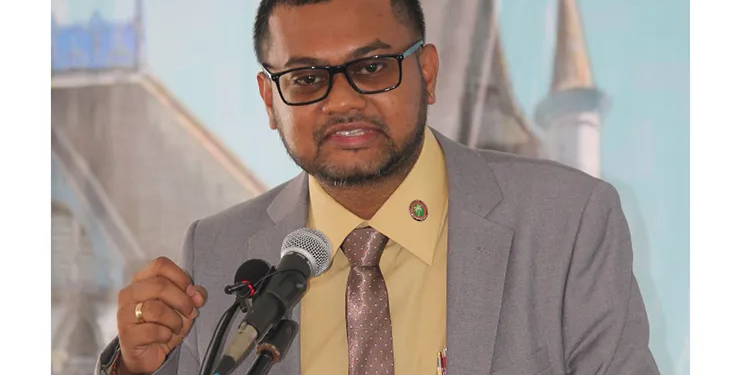
In a letter to the media, Ferguson questioned recent public statements by Public Works Minister Juan Edghill concerning a proposed fare structure for minibus operators, while raising concerns about whether transportation stakeholders were adequately consulted before the announcement.
“While any discussion aimed at easing the burden on citizens is important, several serious questions arise which the government must answer honestly and transparently,” Ferguson wrote.
She asked whether the Minibus Association, route representatives and operators were “properly consulted” and whether stakeholders were given “a genuine opportunity to engage in dialogue on the realities affecting the transportation sector today.”
“Or was this another unilateral decision made by the government without meaningful consultation with those directly impacted?” she questioned.
The former minister noted that transportation operators, like many Guyanese businesses and households, continue to face increasing costs associated with fuel, spare parts, tyres, maintenance, insurance and permits.
“The transportation sector, like every other sector in Guyana, has been severely affected by the rising cost of living. Fuel prices remain high. The cost of spare parts, tyres, maintenance, insurance, permits, and general operational expenses continues to increase,” she stated.
Ferguson argued that while the government appears prepared to pressure minibus operators over fares, it has remained largely silent on rising prices elsewhere in the economy.
“Has the government called on shop owners to reduce the prices of groceries and basic food items? Have farmers been instructed to lower their prices at markets? Have utility providers, contractors, supermarkets, or other service providers been publicly pressured to reduce their charges considering the economic hardships facing citizens? The answer is clearly no,” she said.
Her comments come as concerns persist about affordability despite Guyana’s unprecedented oil revenues. Across communities, many families continue to struggle to meet basic needs. Some consumers have reported purchasing individual slices of bread rather than an entire loaf, while others rely on credit, commonly referred to as “trust,” to buy a single tennis roll from neighbourhood shops—visible signs of financial hardship among low-income households.
The concerns are underscored by findings from the Inter-American Development Bank (IDB), which reported in 2025 that approximately 58 percent of Guyana’s population lives in poverty and 32 percent in extreme or abject poverty. While those figures have been widely debated, some local analysts argue that poverty levels may be considerably higher, citing longstanding concerns about weaknesses in national data collection systems and the reluctance of some citizens to disclose their full economic circumstances to survey enumerators.
“The reality is that the cost of living in Guyana continues to rise under the current administration. Ordinary citizens are paying more for transportation, food, rent, utilities, healthcare, and education-related expenses,” Ferguson stated.
She contended that the government’s focus on transportation fares is misplaced and accused the administration of singling out one sector while ignoring broader economic pressures.
“Yet, instead of addressing the broader economic pressures affecting all Guyanese, the government seems focused on selectively targeting one sector. This approach is neither balanced nor fair,” she said.
Ferguson also turned her attention to the pace of public infrastructure projects, arguing that Minister Edghill should focus on delayed works and accountability for contractors.
“What Minister Edghill should truly be concerned about is the slothful pace at which several government construction projects are progressing across the country,” she wrote.
She specifically referenced incomplete works at Princess Street and called on the government to explain how it intends to recover taxpayers’ money paid to contractors who have failed to fulfil contractual obligations.
“He should address the incomplete works at Princess Street and other locations, and explain to the Guyanese people how his government intends to recover taxpayers’ money paid to delinquent contractors who have failed to honour their contractual obligations; many of whom appear to be closely aligned with the PPP/C,” Ferguson stated.
Calling for a wider policy response, Ferguson said the government must move beyond fare discussions and implement measures to address inflation and affordability across the economy.
“If the government is genuinely concerned about the welfare of citizens, then there must be a comprehensive national strategy to address inflation and the rising cost of living across all sectors, not selective pronouncements aimed at minibus operators alone,” she said.
She concluded by defending public transportation operators, stating that they are “not enemies of the people” but citizens facing the same economic pressures affecting households nationwide.
“The people of Guyana deserve transparency, consistency, and meaningful engagement — not political optics,” Ferguson added.