A lethal Ebola strain with no approved treatment has broken containment in the DR Congo and crossed into Uganda. The World Health Organisation has declared a global health emergency — and the Caribbean, with its porous borders and fragile health infrastructure, cannot afford to look away.
By Calvin G. Brown (WiredJA)- The alarm bells are ringing from Ituri Province in the Democratic Republic of Congo, and they are loud enough to be heard in Kingston, Bridgetown, Port of Spain, and Georgetown — if only our health ministries are listening.
On May 16, 2026, the World Health Organisation declared the Ebola outbreak caused by the Bundibugyo virus a Public Health Emergency of International Concern (PHEIC) — and in an unprecedented move, did so without even convening an expert committee first. That urgency is not bureaucratic theatre. It is a distress signal.
As of that declaration, 246 suspected cases and 80 suspected deaths had been reported across at least three health zones in Ituri. But here is what should send a chill through every Caribbean health official: only eight of those cases had been laboratory-confirmed — because standard rapid field tests could not detect the Bundibugyo strain.
They were only built to catch Ebola-Zaire. Weeks of undetected community transmission had already slipped through the cracks before the world even knew the fire was burning.
“We know that transmission and community spread of the virus was probably happening for weeks before this was recognized. The virus is already a few steps ahead of the response.”— Dr. Boghuma Titanji, Infectious Disease Physician, Emory University
The Strain That Science Has No Answer For
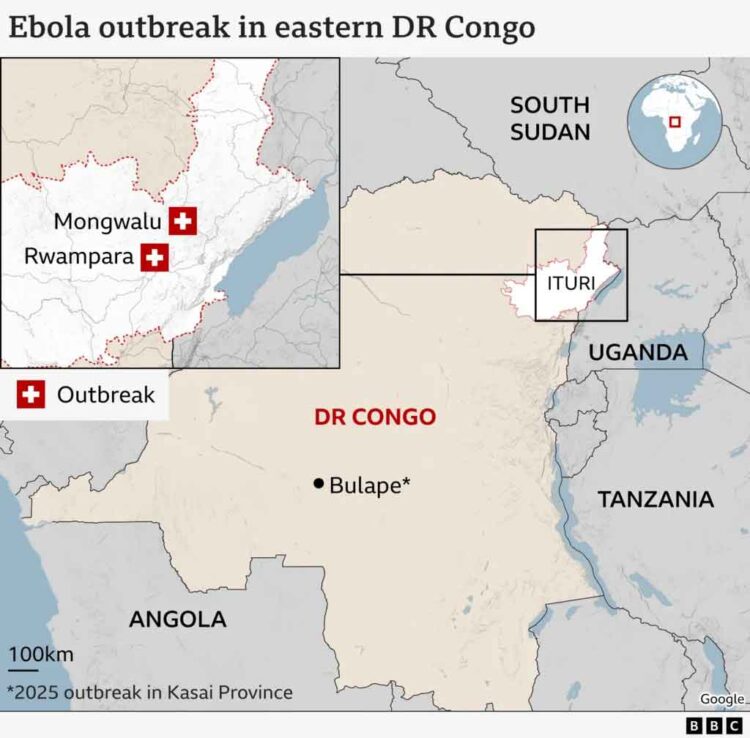
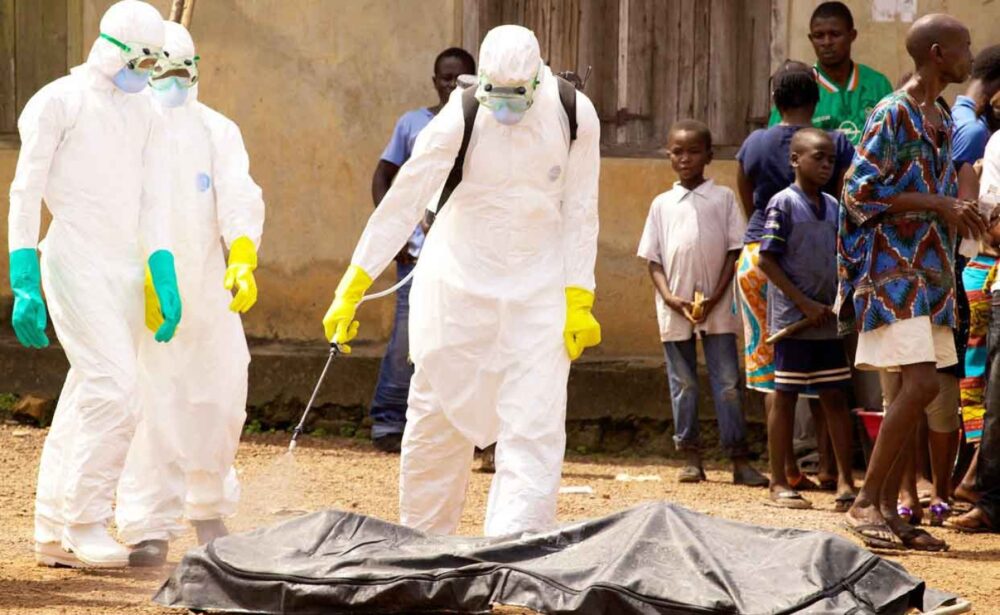
This is not the Ebola the world mobilised against in West Africa between 2014 and 2016. The Bundibugyo strain is rarer, less understood, and — most critically — has no licensed vaccine and no approved specific treatment. The drugs that exist against Ebola target the Zaire strain. For Bundibugyo, clinicians are reduced to supportive care. An experimental vaccine candidate exists but has only been tested in monkeys, with roughly a 50 percent efficacy rate and no human trials completed. The region is, in effect, fighting a deadly hemorrhagic fever with its hands tied.
Case fatality rates in previous Bundibugyo outbreaks have ranged from 30 to 50 percent. The virus spreads through direct contact with bodily fluids — blood, vomit, other secretions — from infected persons or the bodies of those who have died. It has already reached Kampala, Uganda’s capital, where two confirmed cases with no apparent link to each other were reported within 24 hours. That pattern of independent importations is not reassuring. It suggests multiple lines of transmission, not a single traceable chain.
A Warning That Reaches the Caribbean Shore
The Caribbean is not Ituri Province. But complacency would be as lethal as the virus itself. The region’s lifeblood is tourism — millions of international arrivals annually, connecting our airports to every corner of the globe. A single traveler with undetected Ebola symptoms transiting through a Caribbean hub does not need to be a statistic from central Africa to become one here. Our health systems — chronically underfunded, understaffed, and still recovering from the battering of COVID-19 — are not equipped to absorb an Ebola incursion with any margin for error.
Caribbean health authorities must act now, before the geography of an outbreak forces their hand. That means mandatory enhanced screening protocols at all international ports of entry for travellers from Central and East Africa. It means immediately auditing the availability of personal protective equipment in hospitals and health centres across the region. It means convening urgent CARICOM health ministerial consultations to align surveillance protocols and establish clear cross-border communication channels. It means ensuring that laboratory diagnostic capacity — which currently cannot detect the Bundibugyo strain in most regional facilities — is rapidly upgraded or that referral pathways to qualified laboratories are formalized and tested.
The Caribbean’s greatest vulnerability is not geography. It is the institutional habit of responding to crises only after they arrive.
CARICOM Cannot Wait for a Case to Mobilise
The WHO has been explicit: it is not recommending border closures or trade restrictions for nations beyond those sharing land borders with the DRC. But that measured guidance comes with an equally firm expectation — that every member state must be prepared to detect, investigate, and manage Bundibugyo virus disease cases. That is not a suggestion. It is a directive embedded in the International Health Regulations that every Caribbean nation has signed.
There is a bitter irony here. This is the 17th Ebola outbreak in the DRC since the virus was first identified there in 1976. The world has had nearly half a century to build the infrastructure, the vaccines, and the coordinated response systems that could stop Bundibugyo before it boards a plane. It has failed to do so. The Caribbean cannot now compound that global failure with regional negligence.
The volcanoes of Ituri are not ours. But the virus does not read a map. While health ministers across CARICOM consult their calendars for convenient meeting dates, a pathogen with a 50 percent kill rate and no pharmacological defense is moving. The Caribbean must move faster.