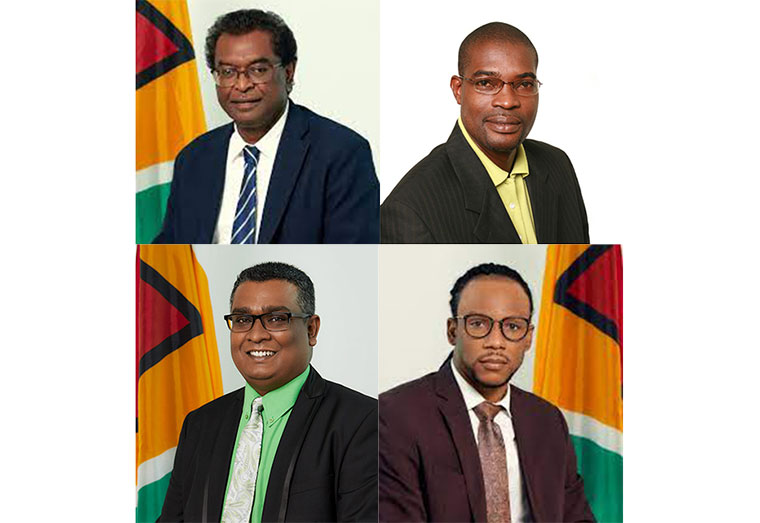
Minister of Labour and Manpower Planning, Keoma Griffith, outlined Guyana’s transformative efforts to modernise the labour system.
In an address to delegates at the RIAL Meeting of Ministers of Labour organised by the Organisation of American States (OAS) in Asunción, Paraguay, Minister Griffith shed light on the use of artificial intelligence, digitisation, and data-driven manpower planning in his ministry.
He explained that the process of filing and finding a resolution to labor complaints previously took weeks because of multiple administrative processes. This, he stated, prompted the ministry to introduce an AI-assisted case management system.
“At the centre of my ministry’s digital transformation is the Ministry’s Labour Assistant, an AI-assisted case management system currently being tested across the board,” the minister explained.
Given Guyana’s rapidly evolving labour environment, Minister Griffith noted that the ministry has recognised the need for modern data systems, which will aid in a better management of the expanding labour market.
“The Ministry of Labour and Manpower Planning is currently advancing the development of a Manpower Strategic Planning Framework, inclusive of a Labour Market Observatory which will generate critical labour market information relating to skills gaps, labour demands, wage trends, migration patterns, and workforce participation inter alia,” he disclosed.
The labour minister pointed out that outdated paper systems have in the past limited the ministry’s ability to effectively monitor workplace safety and enforce occupational safety standards.
“We have introduced a Recording and Notification of Occupational Accidents and Diseases System (R-NOAD). This modern, web-based platform replaces outdated paper processes… [it] establishes, for the first time, a national Employers Register across all ten administrative regions in Guyana,” Griffith shared.
Minister Griffith made clear to the delegates at the meeting that the government is not implementing AI use as a replacement for existing human resources, but instead, its implementation is to build on efficiency in service to citizens.
“An officer who can resolve a complaint in one week instead of one month has not been replaced; rather, that officer has ultimately been empowered, and remains as the key decision-maker at every stage. Therefore, the goal of incorporating AI into our labour administration services is to improve efficiency and strengthen service delivery, not supplant human judgment.”
TAGS | labour ministry guyana, keoma griffith, ministry of labour and manpower planning, labour modernisation guyana, artificial intelligence in guyana, guyana labour sector, labour ministry digital transformation, occupational safety and health guyana, R-NOAD system, labour assistant AI system, manpower planning guyana, labour market observatory, guyana workers rights, labour administration services, OAS labour meeting, IACML, RIAL meeting, government digitisation guyana, labour complaints system guyana, board of industrial training guyana