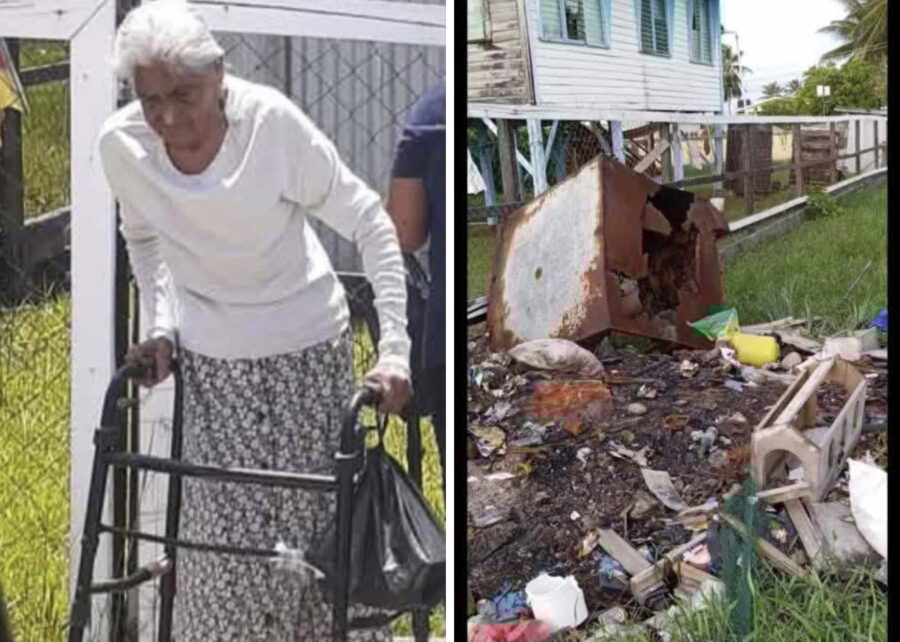
The We Invest in Nationhood (WIN) party has drawn attention to the plight of 84-year-old retired teacher Carmin Singh, highlighting her repeated appeals for intervention over ongoing garbage dumping and burning beside her Bee Hive, East Coast Demerara home. In a statement posted on the party’s social media page, WIN said Singh has been forced to endure years of smoke, foul odors and fire hazards despite numerous complaints to authorities.
According to the statement, repeated reports were made to the Ann’s Grove and Nabaclis Neighbourhood Democratic Councils (NDCs), the Clonbrook Police Station and, more recently, the Environmental Protection Agency (EPA). However, the family says little has been done to address the situation.
The matter was formally reported to the EPA approximately two months ago, but despite weekly follow-up calls and emails seeking updates, no action has been taken, the family claims.
“Each time they were told that someone will call back or that action will be taken ‘this week’ or ‘next week.’ To date, nothing,” a relative stated.
The continued dumping and burning of garbage have created increasingly difficult living conditions for the elderly woman, who lives alone in an aging wooden house.
Family members say the smoke generated by the fires makes it difficult for Singh to breathe and poses a serious health risk. They also expressed concern about the possibility of a major fire.
On one occasion, they said, flames from the burning rubbish spread and ignited part of her fence.
“Given that the house is old and the woman lives alone, there are concerns that a future fire could have devastating consequences,” the relative noted.
Singh is described as a pensioner and retired teacher who dedicated decades of service to educating Guyanese children. According to the statement, among her former students was former President and current Vice President Bharrat Jagdeo during his time at Unity School.
“A woman who spent her life serving her community is now being forced to live beside a growing garbage dump, enduring smoke, foul odors, and the constant fear that her home could catch fire,” the family said.
The case also shines a spotlight on longstanding weaknesses in Guyana’s waste-management system. Despite years of government promises, public awareness campaigns and commitments under international environmental agreements such as the Paris Agreement on Climate Change, illegal dumping and the burning of garbage remain common features in many communities. Residents across the country continue to complain about inadequate waste-collection services, insufficient disposal infrastructure, weak enforcement of environmental laws and delayed responses to complaints.
While the government frequently promotes its environmental credentials internationally through initiatives such as the Low Carbon Development Strategy (LCDS), environmental advocates have argued that investment in waste-management infrastructure and enforcement has failed to keep pace with the growing problem. The persistence of illegal dumpsites, roadside garbage accumulation and open burning in communities across the country has raised questions about whether sufficient resources are being allocated to address a problem that directly affects public health, environmental quality and climate resilience.
The EPA has previously warned that the burning of household waste poses serious health and environmental risks, including respiratory illnesses and exposure to toxic pollutants. Yet incidents of backyard burning and illegal dumping continue to be reported regularly, highlighting what critics say is a gap between environmental policy and enforcement.
Singh’s family is now making a fresh appeal to the EPA and other relevant agencies to intervene before the situation escalates further.
“The family is once again appealing to the EPA and the relevant authorities to take immediate action before the situation worsens,” the statement said.
For the elderly teacher, the hope is that after years of complaints and months of waiting for a response, authorities will finally act to remove the hazard and restore a safe living environment.