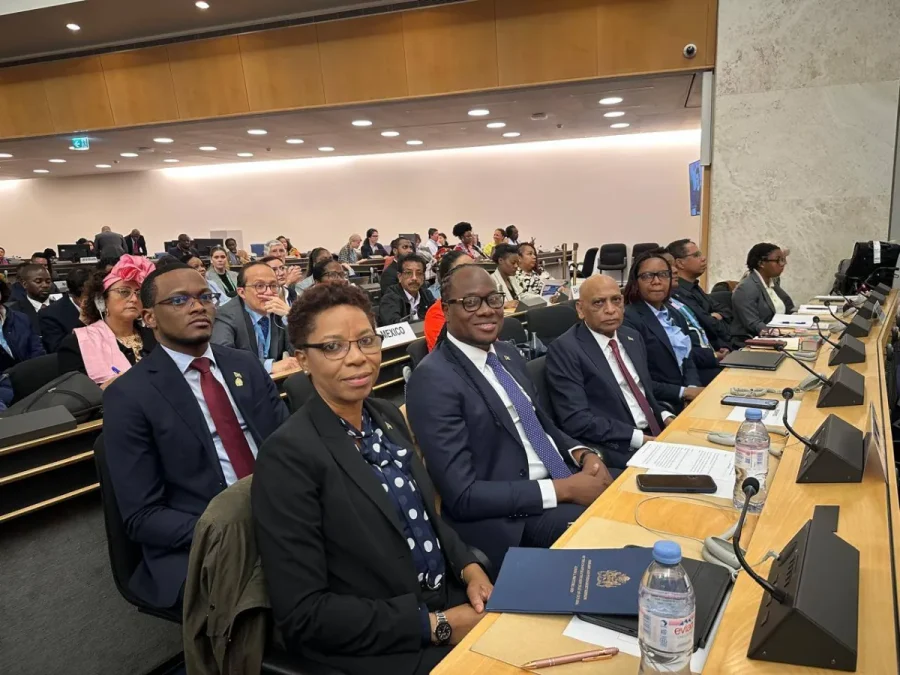
Statements delivered on April 14, 2026 by two Guyanese ministers at the Permanent Forum of People of African Descent Fifth Session in Geneva have drawn heightened scrutiny locally, as policy analysts, civil society stakeholders, and opposition voices question whether the government’s international advocacy reflects conditions on the ground.
Speaking on behalf of CARICOM, Minister Steven Jacobs—who serves within the Ministry of Culture, Youth and Sports—told the forum that “acknowledgment alone does not resolve injustice” and called for “measurable progress in the lives of people of African descent.”
In a separate address also delivered on April 14, Minister Vanessa Benn—who serves within the Ministry of Housing and Water—reaffirmed Guyana’s commitment to equity, stating that the government remains “steadfast in our commitment to fostering fair, equitable and sustainable development for all Guyanese.” She cited housing allocations as evidence, asserting that “47.1% [of] Guyanese of African descent were beneficiaries of the 51,756 house lots allocated nationwide in the last 5 years.”
Government officials maintain that these initiatives form part of a broader “One Guyana” development strategy aimed at expanding access to housing, water, and economic opportunity across all communities.
Global Commitments, Local Questions
The statements were made within the framework of the International Decade for People of African Descent (2015–2024), proclaimed by the United Nations to address the lasting effects of slavery, colonialism, and systemic inequality. Built on the pillars of recognition, justice, and development, the Decade was intended to move beyond acknowledgment toward measurable improvements in the lives of people of African descent, including expanded access to economic opportunity, legal protections, and full participation in national development.
The United Nations has since extended the Decade, noting that limited progress was made by many countries, including Guyana. The body has renewed its call for concrete action under the pillars of recognition, justice, and development for people of African descent.
It is against this benchmark of “measurable progress” that Guyana’s domestic record is now being assessed.
Data and Disparities
Recent data has intensified calls for independent verification of government claims.
Stakeholders say these findings raise questions about whether the country’s rapid economic growth—driven by its emergence as one of the world’s fastest-growing economies—has translated into equitable outcomes.
Additional concern has been raised regarding income levels among public servants, teachers, and members of the disciplined services—groups widely understood to be predominantly Afro-Guyanese—who continue to operate within wage structures that do not reflect Guyana’s upper-middle-income status.
Access and Opportunity
Beyond income disparities, attention has also turned to access to economic opportunity.
Business advocates and community representatives have pointed to what they describe as barriers in accessing government contracts, raising concerns about equitable participation in national development. While these claims remain contested, they have fueled broader calls for transparency in procurement and contracting systems.
Observers also note the absence of a clearly articulated affirmative action or targeted equity policy aimed at addressing historical imbalances. They argue that if such a policy exists, it should be publicly disclosed and open to national scrutiny.
Institutional Concerns
The government’s engagement with African-focused institutions during the first International Decade has also come under renewed examination.
Observers point to strained relations with the International Decade for People of African Descent Assembly Guyana (IDPADA-G), including the withdrawal of subventions and limited engagement, as developments that appear inconsistent with the collaborative principles promoted at the international level.
Demand for Evidence
The housing figures presented on April 14 remain a central point of contention.
Independent observers and public policy commentators are calling for:
- Disaggregated data on house lot allocations
- Transparent methodology for determining beneficiary demographics
- Independent verification of the 47.1% claim
In the absence of such data, questions persist regarding the accuracy and context of the figures cited.
A Defining Moment
As Guyana enters the Second International Decade for People of African Descent, the focus is increasingly shifting from commitments to measurable outcomes.
Analysts say the central issue is whether policies and programmes can demonstrate real impact in line with the principles of recognition, justice, and development.
Until clear evidence is presented, the gap between Guyana’s advocacy on the international stage and concerns at home is likely to remain a defining issue in the national conversation on equity and inclusion.