MONTEGO BAY, Jamaica – The Caribbean welcomes more cruise passengers than anywhere else on Earth—43% of the global total—yet earns less per visitor than any other cruise destination worldwide.
This startling paradox, laid bare by World Bank Caribbean Director Lilia Burunciuc at the recent Wider Caribbean Regional Risk Conference in Barbados, exposes a tourism model that increasingly resembles economic colonialism in paradise.
“The Caribbean is the largest region for cruise ship tourism, but gets the least per passenger,” Burunciuc stated bluntly.
Her revelation that cruise passengers generate 24 times less revenue than nature-based tourists should send shockwaves through island economies that have bet their futures on floating cities.
A Race to the Bottom

The numbers tell a story of systematic undervaluation. While the cruise industry celebrated record-breaking revenues of $4.27 billion across Caribbean and Latin American ports in 2023-24, the reality beneath the surface is sobering.
Caribbean cruise passengers spend an average of just $104.36 per port visit—with some destinations like the Windward Islands seeing a pitiful $22 per person.
Meanwhile, stay-over tourists pump 11.5 times more money into local economies than their cruise counterparts, despite roughly equal arrival numbers.
This disparity isn’t accidental. It’s the predictable outcome of what Burunciuc calls “a race to the bottom” driven by the region’s failure to negotiate collectively.
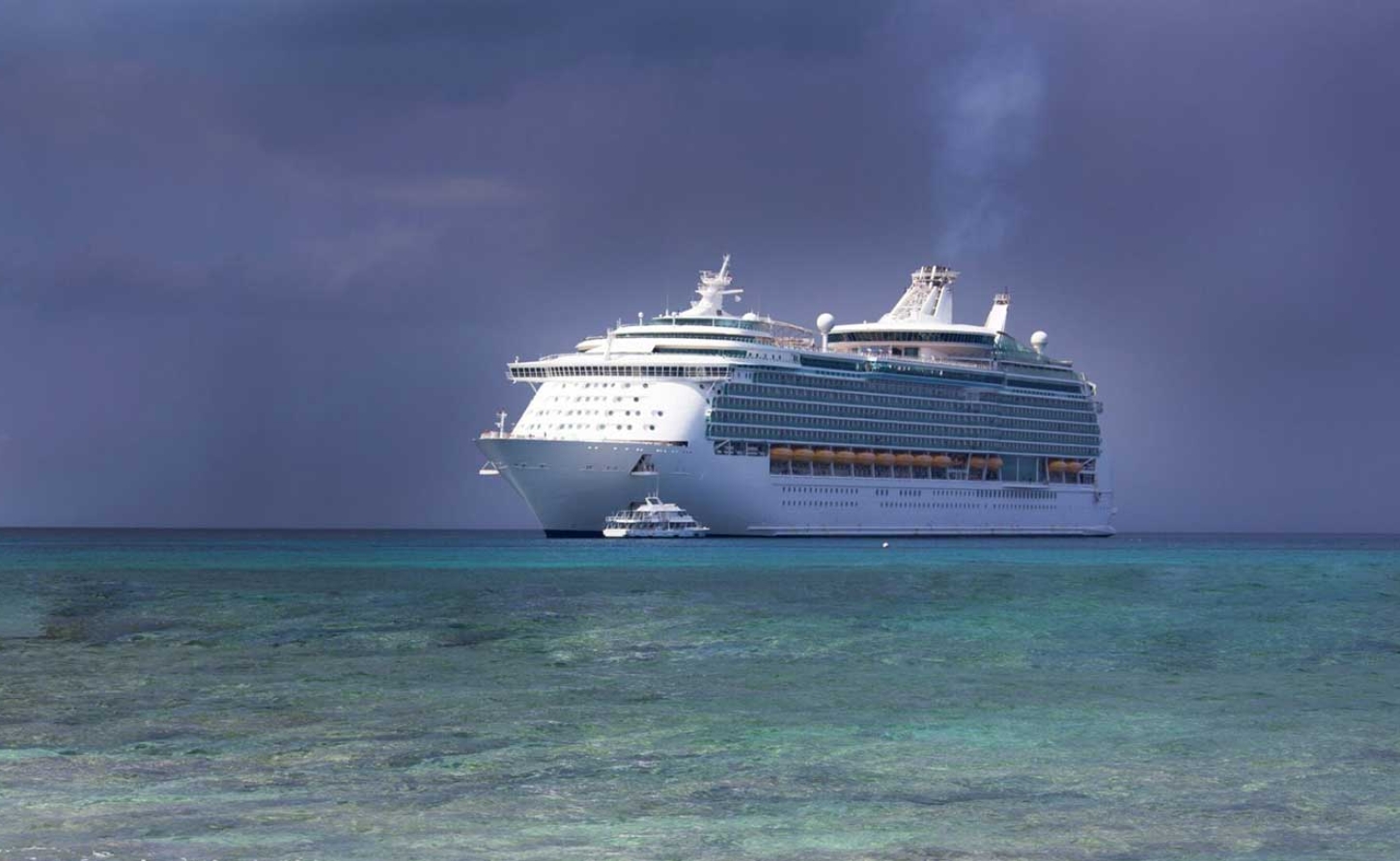
While cruise lines deploy increasingly massive vessels marketed as destinations unto themselves, Caribbean nations undercut each other for the privilege of hosting passengers who may never venture beyond the port gates.
The industry’s own data reveals the exploitation. In 2024, 14.98 million cruise passengers visited the Caribbean, generating billions for cruise companies while local businesses scramble for scraps.
As much as 80% of tourism spending in the Caribbean ultimately leaves the region, funneled through foreign-owned cruise lines and resorts rather than circulating through local economies.
Environmental Devastation as Business Model
The economic injustice is compounded by environmental destruction. Living corals in the Caribbean have declined over 60% in just three decades, with cruise ships directly contributing through anchor damage, waste discharge, and carbon emissions equivalent to millions of cars.
A single cruise ship generates the same pollution in one day as a million automobiles—yet Caribbean nations absorb these environmental costs while cruise companies sail away with the profits.
The irony is bitter: Caribbean nations depend on pristine environments to attract tourists, yet the cruise model systematically degrades the very assets that make these destinations valuable.
When one cruise passenger generates 24 times less revenue than an eco-tourist while causing exponentially more environmental damage, the equation becomes economically irrational.
The Solution Nobody Wants to Discuss
Burunciuc’s proposed Caribbean-wide environmental tax on cruise ships represents more than revenue generation—it’s about fundamentally rebalancing an exploitative relationship.
World Bank research shows cruise passengers themselves support such measures, with tourists willing to pay more if funds are transparently used for environmental protection.
Yet implementation faces a harsh reality: individual nations fear losing cruise traffic to neighbors, perpetuating the very fragmentation cruise lines exploit. The model of tourism that powered Caribbean growth for decades has, in Burunciuc’s assessment, “probably reached its limit.”
Breaking the Chains
The Caribbean’s cruise dependency reflects a broader crisis of imagination and courage. For two decades, the region has been the world’s slowest-growing, even as it hosts the planet’s busiest cruise routes.
This isn’t development—it’s extraction disguised as tourism.
The path forward demands uncomfortable choices. Nations must choose between the illusion of prosperity—measured in passenger arrivals—and genuine economic development that keeps wealth circulating locally.
They must decide whether to remain playgrounds for foreign corporations or become destinations where tourism enriches communities rather than exploiting them.
Burunciuc isn’t calling for an end to cruise tourism, but for its fundamental transformation. The Caribbean can no longer afford to be the world’s cheapest cruise destination. The true cost—economic, environmental, and social—has become too high to ignore.
The question isn’t whether change will come, but whether Caribbean nations will shape it collectively or continue racing each other to the bottom of an increasingly empty ocean. WiredJA