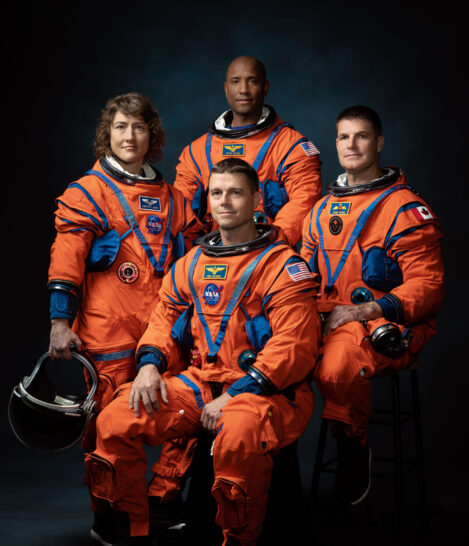
Artemis II successfully concluded its landmark journey around the Moon on Friday evening, with the Orion capsule splashing down in the Pacific Ocean, marking a major milestone in humanity’s return to deep space exploration.
The spacecraft touched down at approximately 8:07 p.m. ET off the coast of San Diego, completing a high-speed reentry that saw the capsule travel at more than 24,000 miles per hour before deploying parachutes for a controlled descent into the ocean. NASA officials described the landing as highly precise, with the capsule coming down less than a mile from its intended target.
More than five decades after Apollo 17, Artemis II represents a full-circle moment—humans venturing into deep space and returning home, paving the way for sustained exploration beyond Earth. It is also a symbol of a new era, as the mission includes the first woman and first person of color to travel beyond low Earth orbit.
Aboard were astronauts Reid Wiseman, Victor Glover, Christina Koch and Jeremy Hansen, all of whom were reported to be in excellent condition following the mission. Recovery teams quickly secured the capsule and transferred the crew to the USS John P. Murtha for medical evaluations before their return to Houston.
“This is not luck — that is 1,000 people doing their job,” said NASA Associate Administrator Amit Kshatriya, praising the precision of the mission’s navigation and landing.
The Orion capsule, visibly scorched from the intense heat of reentry, was retrieved for detailed analysis as engineers seek to refine systems for future missions. The successful return of Artemis II represents the first crewed journey beyond low Earth orbit in more than five decades and lays critical groundwork for upcoming lunar landings and long-term exploration.
The mission has been widely hailed as a defining moment in modern spaceflight, signaling renewed momentum in efforts to return humans to the Moon—and eventually venture onward to Mars.