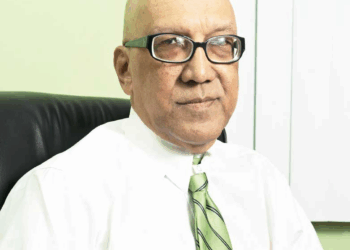
Yesterday morning, while travelling to Parika to perform funeral rites, I was stopped by police officers at the Den Amstel Police Station as tint enforcement operations commenced. I was instructed to remove the visor and the tint from my vehicle’s front windscreen. I complied fully and without resistance, recognising that traffic laws, once enacted, must be obeyed.
However, while removing the tint, I observed several other vehicles—some with far heavier tint—being stopped and then allowed to proceed without taking similar action. I queried this inconsistency. The response I received from an officer was deeply troubling: those drivers, I was told, had “made calls to higher authority,” and therefore no action could be taken against them.
If this account is accurate, it represents favouritism at its highest and most dangerous level. Law enforcement cannot operate on the basis of who has influence, connections, or access to power. The law must be blind, or it ceases to be law at all.
I wish to be clear: I am not opposed to tint regulations or their enforcement. Reasonable rules aimed at public safety are necessary. What I object to is selective enforcement. Without transparent and uniform mechanisms, tint enforcement risks becoming nothing more than a money-making exercise, disproportionately targeting those without connections while shielding the well-connected.
The situation worsened when an officer proceeded to take photographs of me and my vehicle—without lawful authority or explanation. I was then informed that these images were to be sent to political officials for posting. This raises serious concerns about abuse of power, breaches of privacy, and the politicisation of routine policing.
How can any country function properly under such conditions? How can citizens maintain confidence in the police when the very officers sworn to protect the public appear to enforce the law selectively, act outside their authority, and invoke political influence as justification for inaction?
I call on the Traffic Department and the wider Guyana Police Force to act decisively and impartially. Enforcement must be guided by law, not by phone calls, political affiliations, or personal connections. Fairness is not optional in a democracy—it is foundational.
The men and women in uniform are entrusted with public confidence. When that trust is eroded by favouritism and misconduct, the damage extends far beyond a single traffic stop. It strikes at the credibility of the entire system. This is a matter that demands urgent correction, not quiet acceptance.