From Havana’s hospitals to the harbours of Mexico, a global solidarity movement is delivering what Washington refuses to allow — and sending an unmistakable message to a hemisphere under pressure.
By Calvin G. Brown (WiredJA)– They came from 19 countries. They carried medicines and solar panels. They arrived not with diplomatic fanfare or bilateral memoranda, but with something Washington cannot legislate away: the stubborn, collective will of ordinary people who refuse to watch a nation be strangled in plain sight.
On Wednesday, the first delegation of the Convoy Nuestra América touched down in Havana, delivering approximately five tons of humanitarian supplies — medicines, solar panels, and photovoltaic systems — as part of an unprecedented international solidarity initiative that has drawn activists, social organizations, and volunteers from across Europe and the Americas. It is not merely an aid shipment. It is a verdict.
The First Wave
Cuban President Miguel Díaz-Canel confirmed the arrival on social media, describing the delegation as ‘solidarity collectives and individuals from many parts of the world, united in the Convoy Nuestra América.’ Members of the convoy visited the Hermanos Amejeiras hospital in Havana, where medical supplies were distributed for use across four hospitals nationwide.
“They bring aid against the attempt to suffocate us,” Díaz-Canel wrote, invoking the phrase ‘the tenderness of peoples’ — a deliberate counterpoint to the cold arithmetic of sanctions and embargo. The language is telling. When a government reaches for poetry to describe the arrival of solar panels and antibiotics, you understand the depth of the crisis those supplies are arriving into.
“The solidarity always returns to those who practice it without any interest other than human well-being.” — Cuban President Miguel Díaz-Canel
The Second Wave
The European convoy is only the opening salvo. A vessel loaded with food, medicine, and solar panels was scheduled to depart Mexico on Thursday, with three additional ships departing March 20 from Isla Mujeres, Quintana Roo. The convoy is expected to arrive in Cuba by Friday, March 21. The operation draws direct inspiration from the Global Sumud Flotilla, which delivered aid to Gaza in 2025 — a lineage that should not be lost on anyone watching how international civil society has chosen to respond to what it sees as state-sanctioned siege warfare.
Mexico’s President Claudia Sheinbaum has gone further than symbolic support. She announced a personal financial donation to Cuba, echoing a call from former President Andrés Manuel López Obrador, while framing her government’s assistance in terms of ‘fraternity’ — a word that lands with particular weight in a region watching Washington push its hemispheric agenda with renewed aggression.
What Washington Is Actually Doing
The Trump administration’s campaign against Cuba has intensified beyond what previous administrations attempted. Fuel supply lines are being cut. Flights are being restricted. The most vulnerable populations — newborns in underfunded neonatal wards, the elderly managing chronic conditions without consistent medication, the sick awaiting procedures in hospitals stripped of basic supplies — are bearing the lethal cost of a policy designed in Washington and executed across the Caribbean’s doorstep.
Trump himself declared it would be ‘a great honor’ to ‘take Cuba’ — a statement that would cause international outrage if directed at any other sovereign nation. His administration has pressured Díaz-Canel to step down, openly, without apology. This is not diplomacy. This is regime change dressed in economic clothing, and the Caribbean cannot pretend it does not have a direct stake in the outcome.
The World Responds
Russia’s Foreign Ministry was direct: it will continue providing Cuba with material assistance, condemning what it called ‘blatant interference in the internal affairs of a sovereign state’ and ‘illegal unilateral restrictive measures.’ The Kremlin pledged ongoing support at multiple governmental levels, expressing serious concern over the ‘major humanitarian problems’ now gripping the island.
The Convoy Nuestra América initiative, promoted by the Progressive International, has stated its intention to continue sending humanitarian aid through multiple channels. Its framing is unambiguous: Cuba is not alone, and the blockade — whatever legal architecture Washington constructs around it — is a moral failure that the world is choosing to name and challenge.
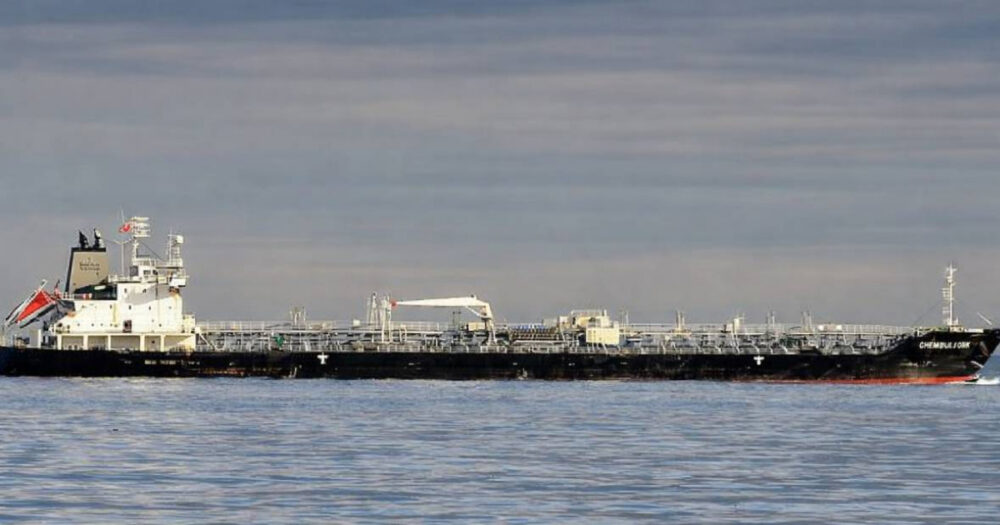
In the meantime, the Russian tanker ‘Anatoly Kolodkin’, owned by the state shipping company Sovcomflot and subject to sanctions from the United States, the European Union, and the United Kingdom, is sailing loaded with 730,000 barrels of crude oil towards the oil terminal in Matanzas, with an expected arrival on Monday, March 23, marking the first major energy supply to Cuba in over two months. The vessel loaded fuel at the Russian port of Primorsk on March 8 and was located this Wednesday in the eastern Atlantic, according to data from the analysis firm Kpler, collected by DW.
She is backed up by A second vessel, the ‘Sea Horse’, flying the flag of Hong Kong, which is also heading to the island carrying about 200,000 barrels of Russian diesel —approximately 27,000 tons— which it loaded through a ship-to-ship transfer off the coast of Cyprus in late January.
A Caribbean Reckoning
For the Caribbean, this convoy carries significance that extends well beyond humanitarian logistics. Cuba is not a distant abstraction — it is a neighbour, a partner in regional health infrastructure, and a symbol of Caribbean sovereignty that has refused, at enormous cost, to bend to external dictate.
The same hemisphere that recently celebrated ‘international cooperation’ must now grapple with what genuine cooperation demands when a member of the human family is being deliberately suffocated.
The convoy does not answer every question. It cannot replace the structural resolution that only an end to the blockade can deliver. But it answers the most urgent one: when institutions fail and governments look away, do people still have the capacity to act? On Wednesday, nineteen nations answered that question from the tarmac of José Martí International Airport. On Friday, they will answer it again from the waters of the Caribbean Sea.