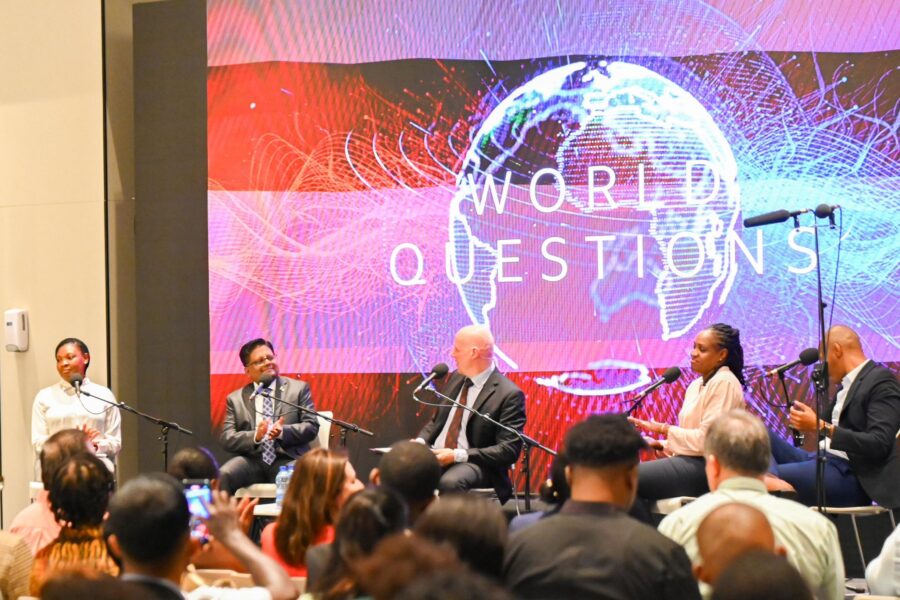
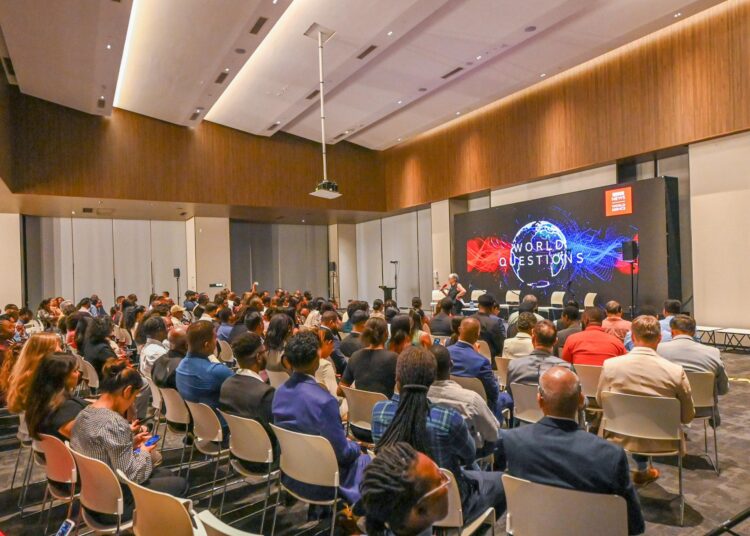
A packed audience gathered in Georgetown on Tuesday evening as the BBC World Service recorded a special edition of its global debate programme, BBC World Questions, placing Guyana’s political direction and economic future under international scrutiny.
The event, held at the Pegasus Suites and Corporate Centre, brought together government, opposition, business and civil society voices for a spirited exchange moderated by BBC correspondent Jonny Dymond.
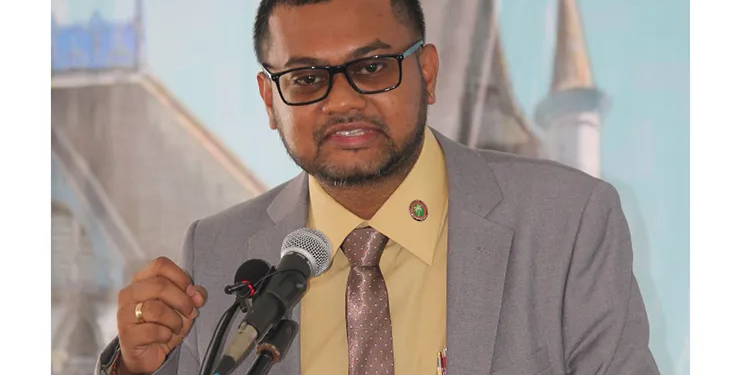
The panel featured Finance Minister Dr. Ashni Singh, We Invest in Nationhood (WIN) Member of Parliament and Opposition Chief Whip Tabitha Sarabo-Halley, business leader Clinton Urling, and activist and entrepreneur Ayodele Dalgety-Dean. The hour-long forum was driven by questions from a live audience, many of whom raised issues ranging from governance and economic transformation to Guyana’s foreign policy as the country navigates its rapid oil-driven growth.
One of the most animated moments of the evening came during a discussion of Guyana’s evolving relationship with Cuba. An audience member asked whether Guyana was “being ungrateful by trading friends for the USA,” referencing the decades-long partnership between the two countries.
Pressed by moderator Dymond on whether Guyana supported regime change in Cuba, Finance Minister Singh firmly rejected that suggestion.
“We have no reference to regime change whatsoever,” Singh said, adding that President Irfaan Ali had simply called for improvements in the lives of the Cuban people.
The issue has gained prominence following remarks made by President Irfaan Ali during a March 7, 2026 interview in which he said the “status quo” in Cuba needed to change in order to ensure democracy and better conditions for its citizens.
Observers have noted that the comment appeared to echo broader United States criticism of the Cuban government, prompting debate about whether Guyana may be drifting away from the traditional CARICOM policy of non-interference in the internal affairs of fellow member states.
The controversy comes at a time of wider tensions surrounding Guyana’s relationship with Havana, including the recent end of the nearly five-decade Cuban medical brigade programme that had supplied doctors and healthcare support to Guyana since the late 1970s.
Taken together, the statements have fueled questions about an apparent policy contradiction: while the government insists it does not support regime change in Cuba, critics argue that the President’s call for altering the island’s “status quo” signals a possible shift in Georgetown’s diplomatic posture.
Despite the contentious exchange, the BBC forum underscored Guyana’s growing international attention as the country grapples with the opportunities and pressures of rapid economic transformation, with audience members pressing panelists on governance, accountability and the direction of the nation’s foreign policy.