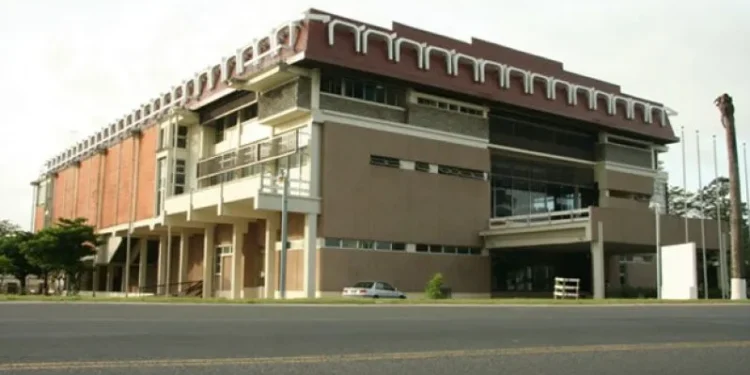
Political analyst and former Minister in the People’s Progressive Party (PPP) government), Dr. Henry Jeffrey, has raised concerns over the growing weakness of Guyana’s parliamentary opposition, warning that the system remains dominated by the executive and continues to marginalise opposition voices. In an op-ed published in Village Voice News, Jeffrey noted that “since independence and even after the so-called ‘return to democracy’ in 1992, the system has been underpinned by majoritarian ethnic voting,” a dynamic that prioritises form over substance and leaves calls for inclusive governance largely unheeded.
Jeffrey highlighted the ongoing sidelining of Azruddin Mohamed, the presumptive Leader of the Opposition, whose We Invest in Nationhood (WIN) party holds 16 parliamentary seats, making it the largest opposition group in the National Assembly, while APNU holds 12 seats and FGM has one He observed, “Some argue that the PPP is refusing to appoint Mr. Mohamed because his party poses a significant political threat to it, but this was not demonstrated at the most recent elections.”
Jeffrey cautioned that Mohamed’s ongoing legal challenges in the United States make the matter complex, noting it would be “morally proper and more sensible if none of those under Mr. Azrudin Mohamed’s leadership had any relationship with the abovementioned parliamentary activities/information until this entire matter has been resolved.”
Dr. Jeffrey also stressed the importance of parliamentary oversight, citing Article 119 of the Constitution, which mandates sectoral committees on natural resources, economic services, foreign relations, social services, and the security sector. He warned that the opposition must be empowered to participate meaningfully in these committees to scrutinise government policy, but systemic obstacles continue to undermine their role.
The analyst further criticised the Guyana Elections Commission (GECOM) for focusing on preparations for upcoming local government elections rather than implementing long-overdue electoral reforms. He referenced the Commonwealth Monitoring Group’s 2025 report, which noted that “these elections occurred against the backdrop of several unimplemented recommendations” and emphasised the need for domestic mechanisms to improve electoral accountability.
Jeffrey concluded that Guyana’s political system is ill-suited for fostering true democracy and urged the opposition, civil society, and other stakeholders to “develop a comprehensive strategy to force meaningful constitutional reforms that will make governments inclusive and accountable.”