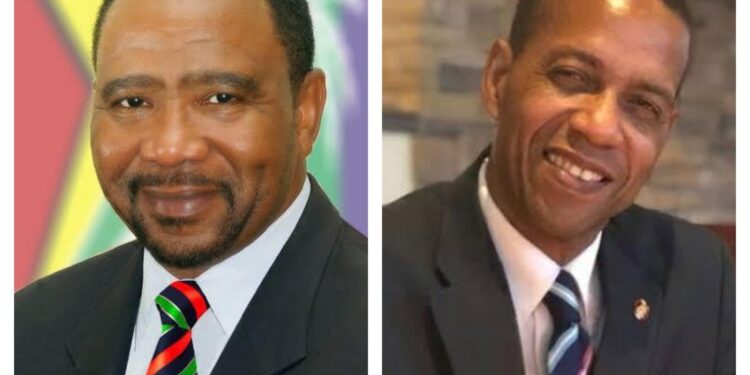
The Prosecution’s request to advance the continuation of extradition proceedings against gold traders Azruddin Mohamed and Nazar Mohamed has raised procedural concerns, coming hours after all parties had agreed in open court to hearing dates set by the magistrate.
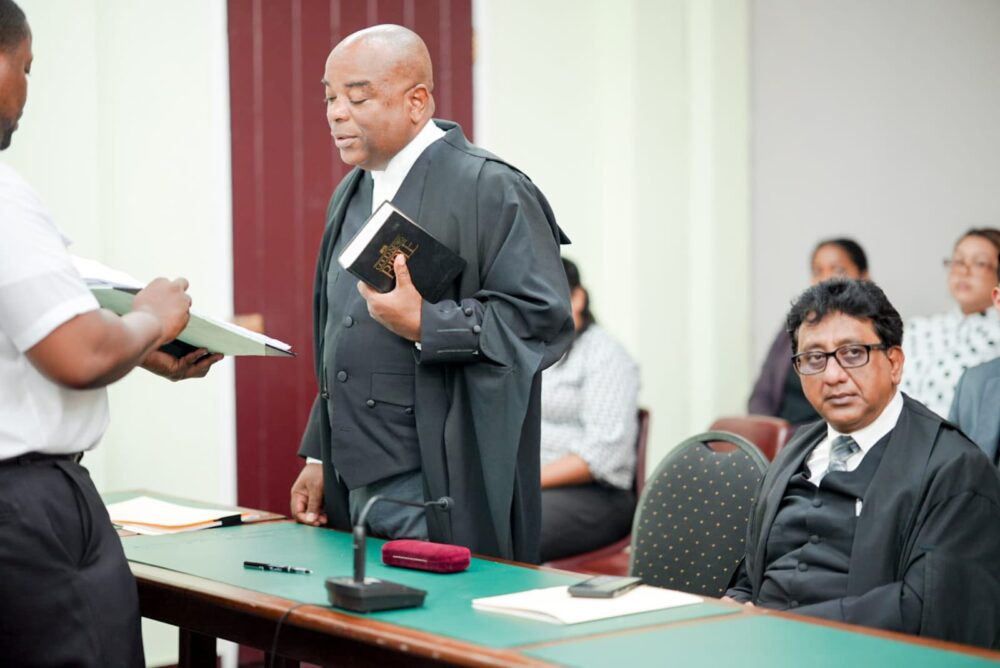
Last Thursday, January 8, 2026, following extended submissions, Principal Magistrate Judy Latchman adjourned the matter to February 5 and 6, dates that were expressly confirmed as suitable to both the prosecution and the defence. No objection was raised at the time. Later that same day, however, counsel for the requesting state (United States) sought to have the hearing brought forward, without offering an explanation for the change.
In a January 8 letter to Clerk of Court, Destiny Woodman, Terrence Williams KC, appearing for the United States, asked that consideration be given to rescheduling the matter to a date before January 20 or during the week of January 26.
“In the circumstances, and with due respect for the court’s processes, we respectfully ask that Her Worship considers convening, with notice to all parties, to the earliest fixture hearing date that is convenient to all parties and the court’s diary,” Williams wrote.
The defence objected, pointing to the importance of certainty in court-ordered fixtures and the reliance placed on dates agreed after judicial deliberation. In its response, the defence said Roysdale Forde SC has “inflexible professional and personal commitments” that make him unavailable during the periods proposed. Attorneys Siand Dhurjon and Damien Da Silva were also described as unavailable, while Rajiv Persad SC was said to be unavailable due to prior court and judicial obligations.
“It is material to recall that the adjournment orders made today (Thursday) followed an extended discourse, culminating in the fixture of the present dates which were expressly confirmed as suitable to all parties. No explanation has been advanced for Mr Williams KC’s subsequent change of position on this night,” the defence stated.
The defence added that it would remain amenable to dates after February 5 and 6, if that proved more convenient to the requesting state.
The extradition proceedings arise from a request by the United States for the surrender of Azruddin Mohamed and his father Nazar Mohamed, who face multiple charges in the United States District Court for the Southern District of Florida. The charges include allegations of wire fraud, mail fraud, and money laundering in connection with gold export transactions. Both men are contesting the extradition.
At Thursday’s hearing, Magistrate Latchman admitted into evidence a prosecution document submitted in the name of Minister of Foreign Affairs Hugh Todd but ruled that no further disclosures would be permitted. The matter was adjourned to February 5 and 6 to allow the defence to reorganise and advance its case.
The prosecution’s attempt to revisit dates already fixed by the court underscores the procedural weight attached to agreed fixtures, which are intended to safeguard fairness, preparedness, and the orderly administration of justice in extradition proceedings.
Meanwhile, Attorney General and Minister of Legal Affairs Anil Nandlall, S.C has publicly rejected claims that the extradition proceedings against Azruddin and Nazar Mohamed are politically motivated, arguing that the matter is governed strictly by international treaties and domestic law, the surrounding circumstances have continued to draw scrutiny. The government’s former close relationship with the Mohameds, Azruddin Mohamed’s rapid political rise, and his party’s emergence as the largest opposition bloc in the National Assembly have all heightened public scepticism.
These concerns have been amplified by the continued delay in convening Parliament to elect a Leader of the Opposition, a position for which Mohamed is widely regarded as the presumptive nominee given that his We Invest in Nationhood (WIN) party holds 16 of the 29 seats allocated to the Opposition based on declaration by the Guyana Elections Commission (GECOM).
Against that backdrop, the prosecution’s sudden effort to advance hearing dates, after raising no objection when the February fixtures were set in open court, has intensified questions about whether political urgency, rather than purely legal necessity, is driving the case’s momentum.