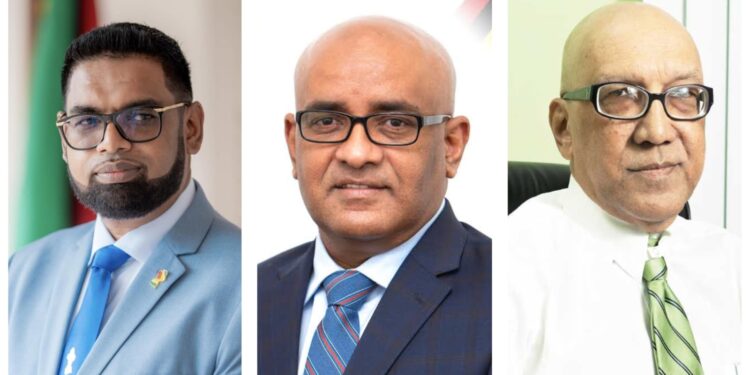
As Guyana prepares to mark its 60th anniversary of independence on May 26, 1966—achieved under the People’s National Congress (PNC) government led by Prime Minister and later President Forbes Burnham—President Irfaan Ali has positioned the milestone as a launchpad for the country’s Orange Economy. In a recent interview, he said the celebration offers an opportunity to unleash “people‑centred development and long‑term wealth creation,” with major investments planned in culture, tourism, film, entertainment, and national infrastructure. He described the anniversary as a chance to “kickstart investment in the Orange Economy” by showcasing Guyana’s culture, food, artists, and creative ecosystem at a scale and magnitude never seen in this region before.”
The Orange Economy is the part of the economy driven by creativity, culture, and the arts, where ideas and artistic expression create value and income. It spans sectors such as music, film, fashion, design, cultural tourism, and digital content, offering opportunities for jobs, innovation, and national branding. These sectors, if harnessed strategically, can create new streams of economic activity beyond traditional resources.
Yet, critical questions remain about whether the country’s foundational infrastructure and inclusive environment are ready to support such an ambitious pivot. Key pillars of economic activity, such as reliable electricity and water supply, remain persistent challenges that could undermine the viability of creative industries and broader economic diversification.
Infrastructure Bottlenecks and Economic Readiness
President Ali himself has acknowledged ongoing issues with electricity supply, noting that although there have been “improvements…still not where we want them to be,” weaknesses persist in management and infrastructure, which are not being properly addressed through reinvestment and expansion of capacity. He pointed out that the demand surge coupled with aging distribution networks has posed challenges for Guyana Power and Light (GPL) in keeping the lights on consistently.
Frequent outages in Demerara and Berbice demonstrate that reliability remains problematic. Technical faults, damaged infrastructure and disruptions caused by heavy machinery near transmission lines have led to interruptions in service, prompting emergency responses from the Ministry of Public Utilities and Aviation. Although GPL maintains generation capacity beyond current demand, these incidents highlight vulnerabilities in the grid that could deter investment and impact creative enterprises that depend on consistent power.
Similarly, water supply issues in several communities illustrate that basic services are yet to reach desired reliability. Long‑running shortages and poor quality impacting residents have persisted for years despite public commitments and funding for well projects, forcing locals to struggle for basic access to potable water. Reliable utilities are essential not only for households but also for tourism, cultural events, and hospitality sectors that are central to the Orange Economy vision.
Opportunity vs. Inclusion: Who Benefits?
While the Orange Economy framework holds promise to diversify Guyana’s economic base and create jobs, the environment must be inclusive and supportive of all sectors of society. For creative industries to flourish, both physical infrastructure (like power, water and transport) and soft infrastructure (such as training, financing, and widespread access to digital tools) are necessary. This means not only investing in high‑profile cultural projects, but also ensuring that towns, villages and hinterland regions, where many creative talents reside, have equal access to stable services and opportunities.
President Ali emphasised a shift toward productivity and wealth creation that benefits everyday communities, warning against complacency and attributing national progress to planned economic strategies felt at local levels. Yet, observers argue that the promise of infrastructure improvements must translate into tangible gains on the ground if the broader population is to participate fully in and benefit from the Orange Economy.
Bridging the Gap: What’s Required
For Guyana to truly be ready for an Orange Economy, several key elements must co‑exist:
- Consistent Utilities and Infrastructure:
Reliable electricity and water services are not optional if creative hubs, tech‑based startups, and tourism enterprises are to operate effectively. Expanding and modernising the grid, addressing logistical weak points, and ensuring equitable water distribution must be priorities. - Human Capital and Technical Capacity:
Beyond physical infrastructure, there must be investment in local talents—including engineers, technicians, cultural managers, filmmakers and digital creators—who can sustain growth in creative industries and maintain utility systems. - Inclusive Policy Frameworks:
Policies and laws that support small artistes, regional creative centres, and underrepresented groups will ensure that the Orange Economy does not benefit only urban or elite segments, but strengthens cultural identity and economic participation across society. - Strategic Public-Private-Civil Partnerships:
Mobilising private sector and civil society investment—particularly in education, digital infrastructure, entertainment venues, and tourism services—can amplify government efforts and create an enabling environment for sustained growth.
Conclusion: A Vision with Conditions
President Ali’s vision for the Orange Economy may be bold and transformative, aligning culture with economic potential. However, readiness hinges on addressing persistent service delivery challenges and fostering an environment where all citizens can contribute to and benefit from creative economic growth. Without reliable utilities and inclusive access to opportunities, the promise of an Orange Economy may remain aspirational rather than achievable. Guyana’s move beyond its 60th anniversary into a future shaped by culture and creativity will be defined by whether its infrastructure and institutions evolve to meet this ambition.