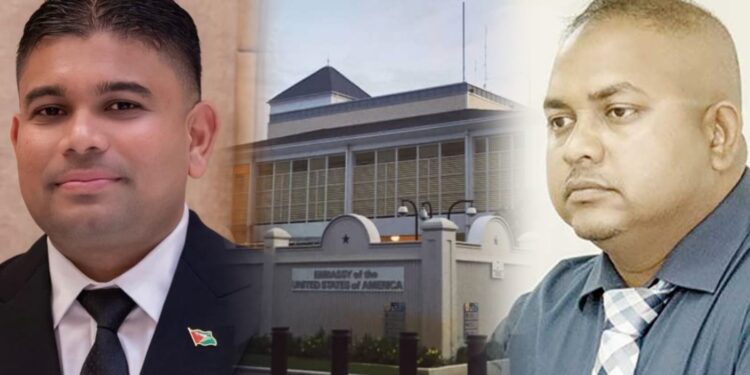
By Mark DaCosta- Billionaire gold traders Nazar and Azruddin Mohamed are fiercely contesting an extradition request to the United States (US), asserting that their plight stems from political targeting rather than legitimate legal concerns. The father-son duo, have approached the High Court, seeking to annul the Authority to Proceed (ATP) issued by Minister Oneidge Walrond, claiming it lacks legitimacy due to her perceived bias against them, rooted in their political affiliations and criticisms of the ruling People’s Progressive Party Civic (PPPC).
The legal representatives for the Mohameds have articulated in recent court filings that the issuance of the ATP is fundamentally flawed, arguing that it should be deemed void. They contend that the Minister is disqualified from making such a decision due to her overt involvement in a political campaign where she was seen expressing hostility towards their views. The lawyers have pointed out that from June 2024 onwards, prominent leaders of the sitting government, including President Irfaan Ali and Vice President Bharrat Jagdeo, have made public statements that reflect a clear bias against the Mohameds, further illustrating the political nature of the case.
Public statements from government officials, as presented by the Mohameds’ counsel, are seen as harmful to the applicants’ right to a fair trial — a cornerstone of legal justice in our country. These declarations are considered prejudicial, undermining the presumption of innocence that should be afforded to anyone facing allegations. It has been argued that such a stance by high-ranking officials creates an environment of persecution aimed specifically at the Mohameds, significantly impacting their business interests and personal freedoms.
Highlighting the Mohameds’ political opposition, the younger Azruddin recently founded a political party, We Invest in Nationhood (WIN), which gained substantial traction in the recent General Elections, gaining 16 seats in the National Assembly per declarations by the Guyana Elections Commission (GECOM). This political achievement has potentially intensified the government’s resolve to suppress their influence, as the Mohameds contend that their extradition would serve the dual purpose of silencing dissent and reducing political competition against the PPPC.
Adding another layer to the proceedings, it has been claimed that Minister Walrond possesses a vested interest in the outcome of the extradition process. The Mohameds argue that if they were to be extradited, the Minister and her political associates would benefit from the diminished capability of the Mohameds to contest against them politically or challenge their authority. Furthermore, it is feared that a protracted legal process in the US could prevent Azruddin from assuming a significant opposition role within the National Assembly.
In a strategic legal move, the Mohameds have not only challenged the legitimacy of the ATP but have also raised questions regarding the constitutionality of the Fugitive Offenders (Amendment) Act, which serves as the legal basis for the extradition request. The Act, they argue, contravenes fundamental principles of justice, particularly the legal doctrine of *nemo judex in sua causa*, which translates to “no one should be a judge in their own cause.” This principle is critical as it highlights the necessity for impartiality in legal proceedings.
As the legal battle unfolds, it raises pressing concerns about political morality and the integrity of the justice system in our country. The allegations of bias from the ruling party against the Mohameds serve as a stark reminder of the ongoing political tensions and the potential for the legal framework to be manipulated for partisan ends. The outcome of this case may not only affect the Mohameds but also set a significant precedent for how political figures can utilise legal mechanisms in their struggles for power and influence.
The persistent clash between political motivations and legal processes continues to shape the landscape of governance in our nation, leaving citizens to ponder the true nature of justice and representation in this turbulent political climate.