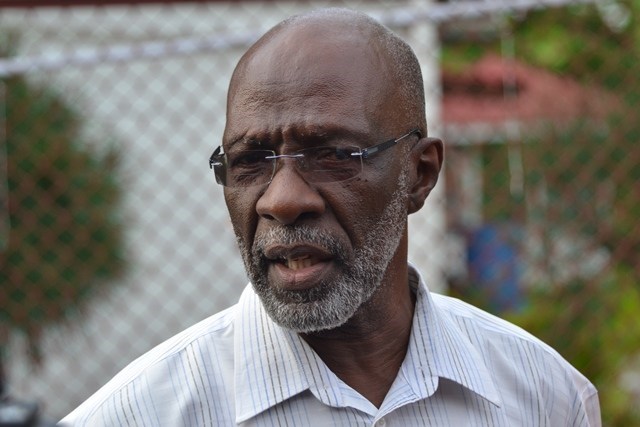
In a sharply worded letter, former University of Guyana Registrar, Vincent Alexander, has challenged what he describes as a growing pattern of historical distortion surrounding President Irfaan Ali’s recent address at the University of Guyana’s 2025 Convocation. His critique targets both the President’s statements and the defence mounted by one D. Gorbardhan, whose assertions Alexander says are factually impossible and “revisionist.”
Alexander argues that Gorbardhan “claims to be a 1980 ‘Engineering School Graduate’ of the University of Guyana, when in fact no such school existed in 1980.” While acknowledging that the Faculty of Technology existed at the time, he stresses that referring to it as an “Engineering School” is historically inaccurate. This, he suggests, is emblematic of a wider attempt “to redefine what is free education” in order “to justify the President’s blatant misrepresentation of Guyana’s History.”
The controversy comes against the backdrop of a well-documented national history of free education. Free education from nursery to university was the brainchild of the Forbes Burnham-led People’s National Congress and was instituted in 1976.
In the 1980 Constitution of the Co-operative Republic of Guyana, this commitment was elevated to a constitutional guarantee, with free education from nursery to university enshrined as a right under Article 27. This article grants every citizen the right to free education from nursery to university and at non-formal places for education and training. That right was later revoked by the People’s Progressive Party government in 1994 and was not restored until January 2025—an achievement resulting from years of sustained advocacy and activism by a broad cross-section of society, including trade unions, civil society organisations, and political parties.
The PPP often seeks to downplay this important part of history and inappropriately claims credit for providing free university education. In reality, it was under a PPP government that this right was denied, only being reinstated as a result of persistent public pressure and heightened militancy.
Against this historical backdrop, Alexander views Gorbardhan’s assertions not merely as personal misstatements but as attempts to rewrite the foundations of Guyana’s educational and political history. His strongest objection concerns Gorbardhan’s claim that Alexander served as University Registrar in 1980. This, he says, is demonstrably false. “In 1980 I was a student in Moscow; joined the University in 1988 as a Research-Fellow; and only became Registrar in 2008, over a decade after the abolition of National Service,” he clarifies.
Alexander argues that such inaccuracies expose a deeper problem in contemporary political discourse, particularly when they are used to shield or legitimise misrepresentations by high-ranking officials. “It is sad that the Gorbadhan’s in their attempts to hail President Ali render themselves to be psychopaths and strangers to the truth as a concept and a fact,” he writes, underscoring the seriousness with which he views what he describes as the erosion of truth in public debate.
Alexander’s intervention highlights enduring tensions over Guyana’s historical record, the legacy of state institutions, and the political ownership of transformative national policies such as free education. His letter serves as a pointed reminder that the accuracy of the national narrative—particularly on issues as consequential as education rights—remains a contested and vital arena in Guyanese political life.