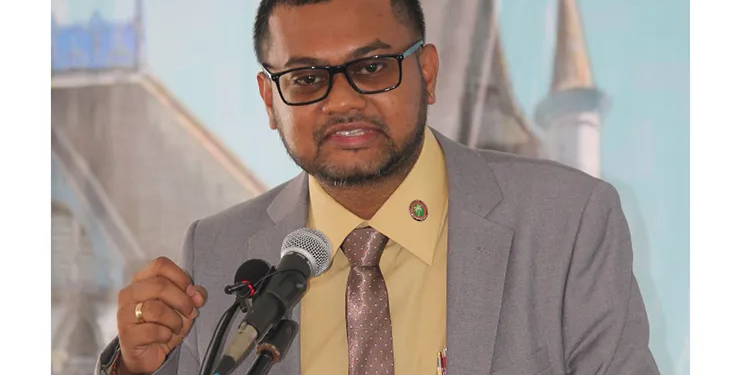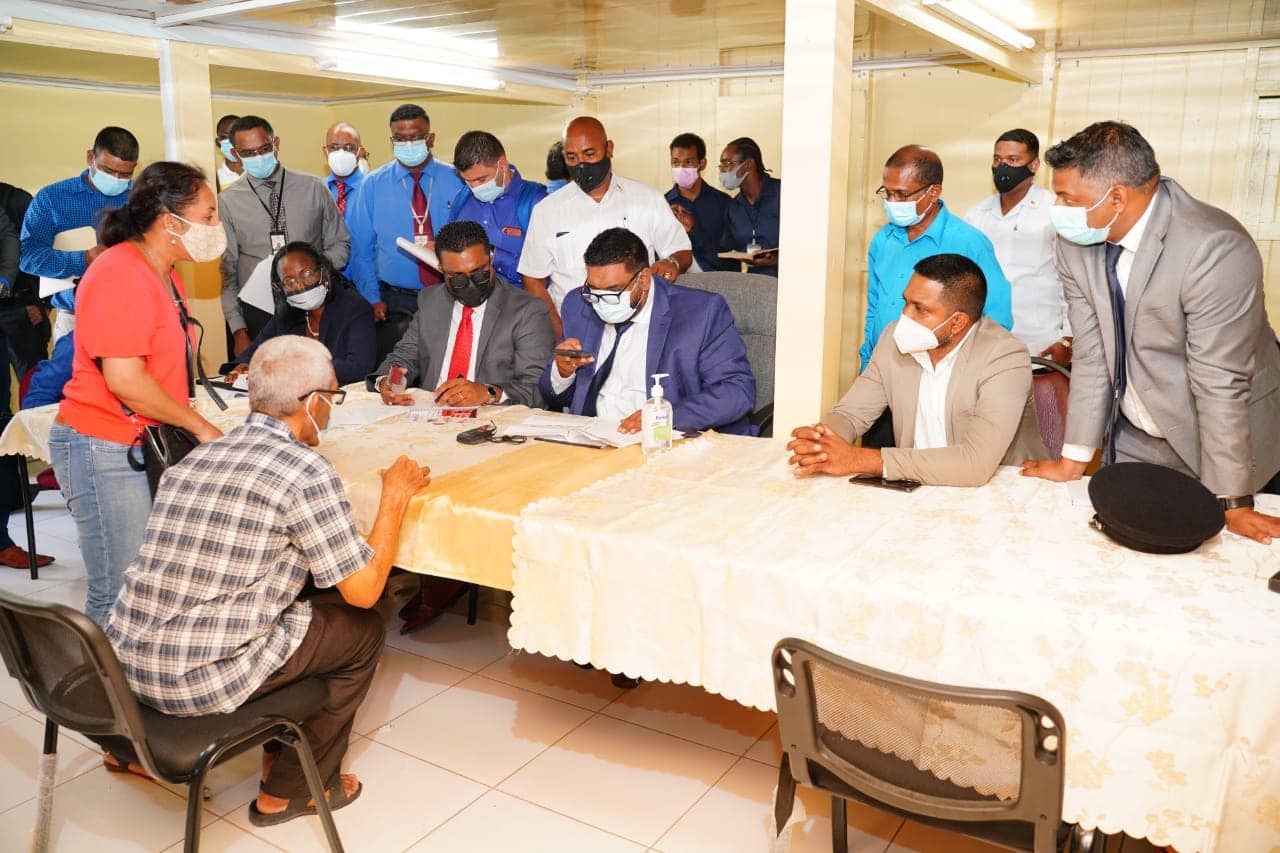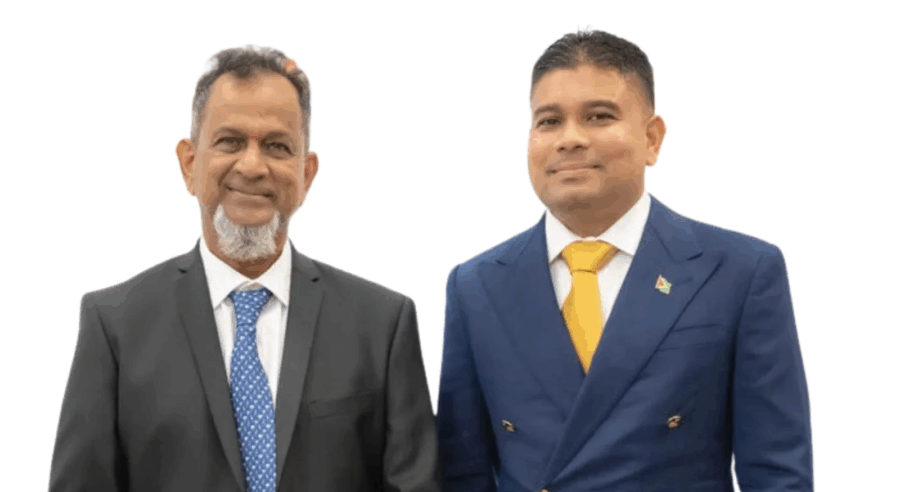
In a revelation stirring political and public outrage, it has been confirmed that the Government of Guyana is footing a US$62,588.78 bill—for just one month—to pay a Jamaican legal team representing the United States of America in the high-profile extradition case against prominent businessmen Nasar “Shell” Mohamed, 76, and his son-turned-politician Azruddin Mohamed, 38.
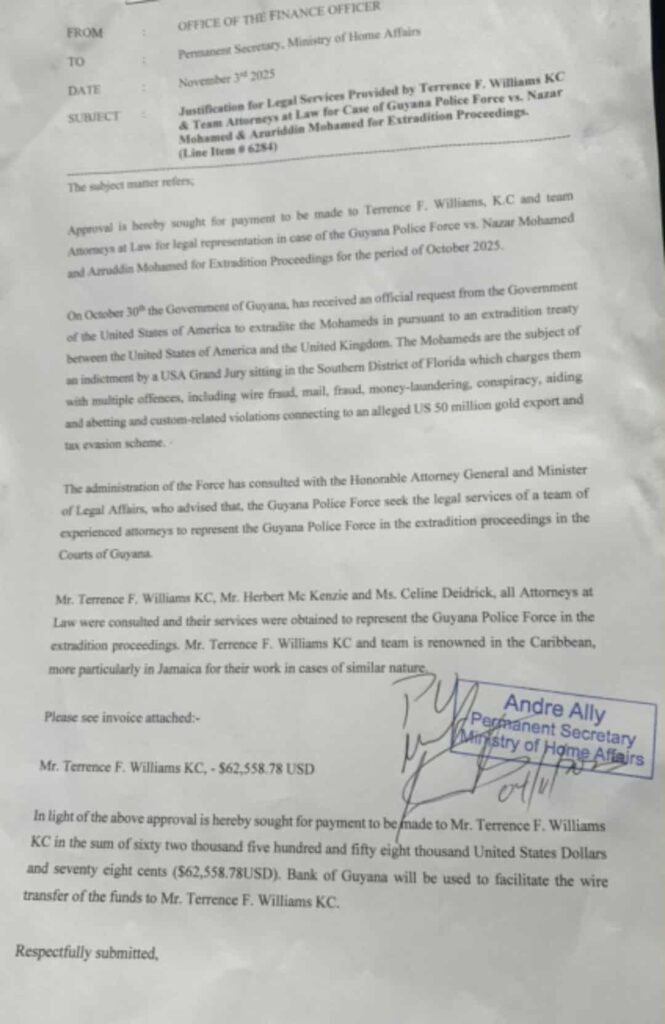
A confidential memorandum from the Finance Officer of the Ministry of Home Affairs, now circulating online, details the October payment, raising sharp questions about why Guyanese taxpayers are funding legal representation for the U.S. government.
Foreign Lawyers, Local Controversy
Speaking to the media yesterday, Terrence Williams, K.C., the Jamaican King’s Counsel leading the U.S. team, confirmed that he and his colleagues—Herbert McKenzie and Celine Deidrick, all non-Guyanese—are representing U.S. interests in the case. Williams added that Guyanese attorney Glen Hanoman is also part of the American side’s legal delegation.
But the arrangement has triggered public scrutiny, with critics arguing that the government could have engaged capable local lawyers at a fraction of the cost—or better yet, left the U.S. to fund its own prosecution.
Political Firestorm
On his social media platform, Azruddin Mohamed, who now leads the We Invest in Nationhood (WIN) Party, the main parliamentary opposition with 16 seats, condemned the expenditure as “outrageous.” He alleged that the US$62,588.78 figure represents only the payment for October, warning that if the case extends over five years, as is common in complex extradition proceedings, taxpayers could end up paying more than GY$810 million (over US$3.8 million) to the Jamaican legal team alone.
“This does not even include fees for the local lawyers working alongside them,” Mohamed noted.
The Case and the Charges
The Mohameds appeared before Principal Magistrate Judy Latchman on October 31, 2025, facing extradition to the United States on a multi-million-dollar indictment handed down by a U.S. Grand Jury in the Southern District of Florida.
They are accused of wire fraud, mail fraud, money laundering, conspiracy, aiding and abetting, and customs violations—charges linked to an alleged US$50 million gold smuggling and tax evasion scheme.
Both men were released on $150,000 bail each and are represented locally by Senior Counsel Roysdale Forde and attorneys Siand Dhurjon and Darren Wade. The case was adjourned to November 24, 2025.
Unanswered Questions
While the U.S. case proceeds, no investigation has been launched in Guyana into the alleged gold smuggling operations that would have required cooperation or oversight from government agencies—from declaration forms to export clearances.
One political analyst told this publication that the government’s silence “raises troubling questions” about whether officials are avoiding scrutiny of their own potential complicity—or whether the extradition case itself is politically motivated.
“The lack of a domestic probe, combined with the government’s decision to bankroll the U.S. legal team, makes it appear less like a pursuit of justice and more like a political vendetta,” the analyst said. “It looks like the state may be weaponizing the system against the Mohameds amid their fallout with leaders of the ruling People’s Progressive Party (PPP).”
Mounting Suspicion
The Attorney General and Minister of Legal Affairs has reportedly approved the payment through the Ministry of Home Affairs, further fueling speculation about direct government involvement in the case.
With public pressure mounting, the PPP administration may soon find it impossible to ignore growing demands for transparency—and for answers as to why Guyanese taxpayers are footing the legal bill for the United States.
The government now faces mounting suspicion that this unprecedented expenditure is not merely a procedural formality but could signal deeper political motivations behind the U.S.-led prosecution of the Mohameds.
For now, the extradition battle continues, with the next hearing set for November 24. But the bigger question lingers:
Is Guyana defending justice—or funding a political war?