(WiredJA) As US warships prowl Caribbean waters and B-52s buzz Venezuelan airspace, Nicolás Maduro brandishes Moscow’s latest gift—enough firepower to turn the region into a shooting gallery
The math is simple and terrifying: seven miles of water separate Trinidad from Venezuela. At Mach 2, a Russian Igla-S missile crosses that distance in 15 seconds—faster than you can dial emergency services.
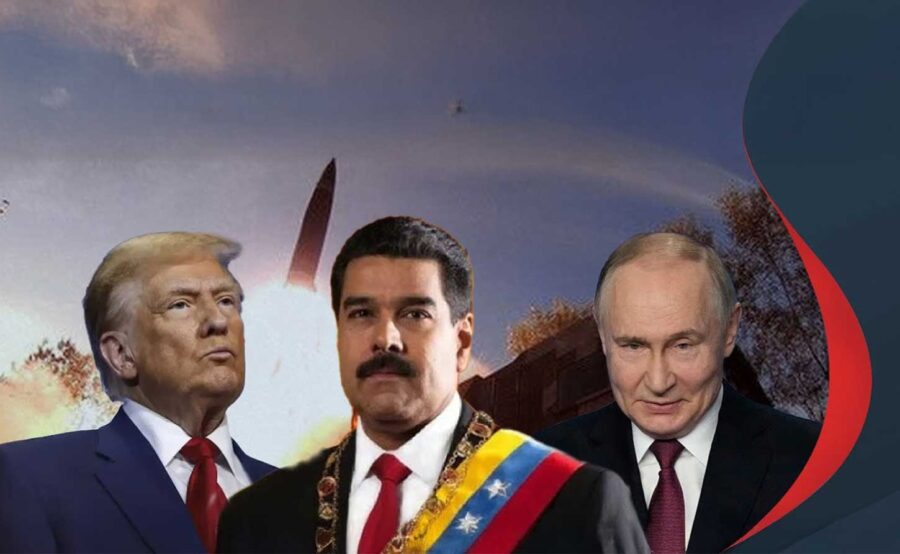
On Wednesday, Venezuelan President Nicolás Maduro stood before military brass and announced his country now possesses “no fewer than 5,000” Russian-made Igla-S anti-aircraft missiles positioned in “key air defense positions” across Venezuelan territory.
The declaration wasn’t a boast. It was a warning shot across Washington’s bow as US military assets mass in the southern Caribbean in the most significant American naval deployment to the region in decades.
The Igla-S systems are short-range, low-altitude missiles similar to American Stingers, capable of downing small aerial targets including cruise missiles, drones, helicopters and low-flying aircraft.
Using dual-band infrared seekers that resist flares and decoys, these Russian-made weapons have a range of up to 6,000 meters and can reach targets at maximum altitudes of 3,500 meters. Light enough for a single soldier to carry, deadly enough to punch through helicopter armor—Maduro claims they’ve been deployed “even in the last mountain, the last town, and the last city of the territory.”
The timing of Maduro’s announcement is no accident. As of Tuesday, a significant percentage of all deployed US naval assets globally are now located in US Southern Command’s area of responsibility, including the Iwo Jima Amphibious Ready Group and the 22nd Marine Expeditionary Unit—more than 4,500 Marines and sailors, three guided-missile destroyers, an attack submarine, and a special operations ship.
The US military has also reopened Naval Station Roosevelt Roads in Puerto Rico after being closed since 2004, and deployed at least three MQ-9 Reaper drones, 10 F-35 fighter jets, and AC-130J Ghostrider gunships to the Caribbean theater. More than 200 military flights were conducted in the region between mid-August and mid-October alone.
Washington claims this massive buildup is about counter-narcotics operations. Since September, US forces have conducted at least five strikes on boats in Caribbean waters, killing 27 people, including nationals from Venezuela, Colombia, and Trinidad and Tobago. President Donald Trump has authorized the CIA to conduct covert operations inside Venezuela and hasn’t ruled out expanding military strikes from sea to land.
But if this is just about drug interdiction, why the nuclear submarine? Why the special operations helicopters training off Trinidad’s coast? Why B-52 bombers flying within 48 miles of Venezuelan territory?
Venezuela has also positioned S-125 Pechora-2M and Buk-M2E surface-to-air missile systems near oil facilities, radar sites and naval approaches, alongside Russian radar arrays and Chinese communication relays. While military analysts acknowledge Venezuela’s conventional forces are “in shambles,” the proliferation of modern shoulder-fired missiles fundamentally changes the operational calculus for any US military action.
The concept isn’t to defeat a modern air force outright but to raise attrition and force higher-risk flight profiles. Every helicopter insertion becomes a gamble. Every low-altitude strike risks a US aircraft spiraling into the Caribbean. Maduro doesn’t need to win a conventional war—he just needs to make victory expensive enough that Trump flinches.
The Caribbean, a zone of peace, is now caught between two incompatible realities.
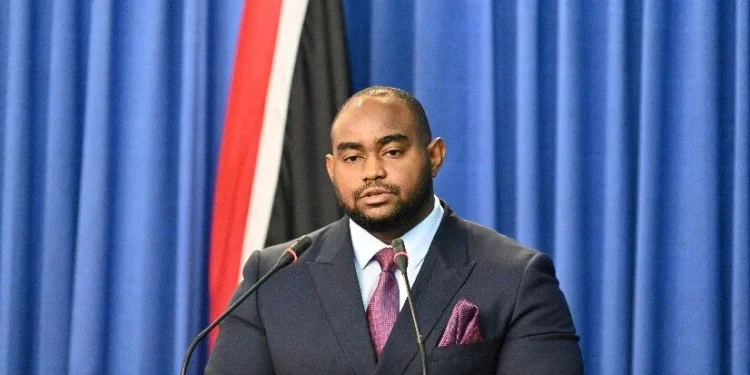
Trinidad’s Prime Minister Kamla Persad-Bissessar has praised US military strikes and said all drug traffickers should be killed “violently,” effectively offering her nation as a staging ground for American operations. Yet Trinidad sits just miles from Venezuelan territory bristling with Russian missiles operated by troops Maduro has placed on full wartime alert in response to the UNited States.
Foreign ministers across CARICOM have written to US Secretary of State Marco Rubio asking that military operations not be conducted without prior notice or explanation. Colombia convened an emergency meeting of Latin American states expressing “deep concern” over foreign intervention. Even Brazil’s President Lula da Silva warned that US forces in the Caribbean have become “a source of tension.”
Moscow knows exactly what it’s doing. By flooding Venezuela with 5,000 Igla-S systems, Russia has effectively militarized America’s backyard, creating a Cuban Missile Crisis in slow motion. Unlike 1962, there will be no dramatic showdown, no blockade, no televised ultimatum. Just a steady accumulation of surface-to-air missiles that makes every US operational plan more complex, more dangerous, more likely to produce American body bags.
The question isn’t whether Maduro can defeat the United States military. He can’t. The question is whether Trump is willing to pay the price Moscow and Caracas have just set—measured in downed helicopters, lost aircraft, and dead Marines—for whatever comes next.
Seven miles. Fifteen seconds. The Caribbean has never been smaller, or more dangerous.