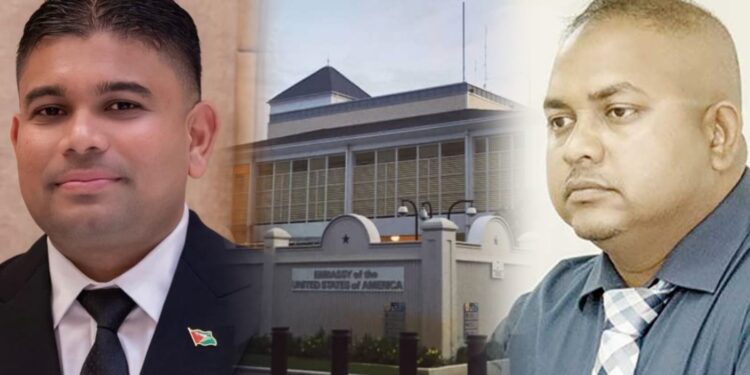
In a stirring tribute to centuries of innovation, former Guyana’s Ambassador Professor Dr. Shamir Ally has spotlighted the monumental contributions of Muslim scholars and inventors whose work laid the foundation for many of today’s scientific, technological, and cultural advancements.
“Muslim innovators have made profound contributions to modern society, shaping various aspects of our lives,” Dr. Ally stated, underscoring the importance of recognising the lasting impact of Muslim ingenuity across fields as diverse as mathematics, medicine, optics, architecture, aviation, and engineering.
A Golden Era of Discovery
At the heart of his reflection is the Islamic Golden Age, a period spanning from the 7th to the 13th century, though some historians extend it as far as the 16th century. This era began with the rise of the Abbasid Caliphate and the founding of Baghdad, which rapidly became one of the world’s greatest centers of learning.
During this time, Muslim scholars and inventors led the world in innovation. They preserved and enhanced classical Greek, Persian, and Indian knowledge, translating it into Arabic and expanding it with their own groundbreaking discoveries.
Among the luminaries highlighted by Dr. Ally:
-
Al-Khwarizmi, the mathematician whose name gave rise to the word “algorithm,” pioneered algebra through his foundational work Al-Kitab al-Mukhtasar fi Hisab al-Jabr wal-Muqabala, shaping modern mathematics and computer science.
-
Ibn al-Haytham, a physicist and polymath, invented the camera obscura, a precursor to the modern camera, revolutionising optics and paving the way for modern photography.
-
Al-Zahrawi, often called the “father of modern surgery,” introduced over 200 surgical instruments—many of which remain in use today—documented in his landmark medical text Kitab al-Tasrif.
“These innovations,” Dr. Ally notes, “have had a lasting impact on science, engineering, and economics.”
Inventions That Touched Everyday Life
Beyond the academic and scientific breakthroughs, Ambassador Ally draws attention to several Muslim inventions that continue to shape our daily lives:
-
Coffee, first brewed in Yemen, is now a global staple and cultural phenomenon.
-
The crankshaft, developed by Al-Jazari, powered early machinery and led to the development of modern engines.
-
Public bathhouses, known as hammams, promoted hygiene and influenced European spa culture.
-
The first hospitals, built in Baghdad, served as prototypes for modern healthcare systems.
-
Mapmaking, refined by Muslim cartographers like Al-Idrisi, laid the groundwork for global navigation and exploration.
Other lesser-known but influential innovations include the windmill, fountain pen, three-course meal, pinhole camera, pointed arch (which influenced Gothic cathedrals), and quilting techniques that evolved into armor worn by Crusaders.
Even chess, popularised and refined during the Islamic Golden Age, owes part of its modern form to Muslim contributions.
A Call for Global Recognition
Dr. Ally’s op-ed is not just a history lesson—it’s a call for appreciation, unity, and education. In an increasingly fractured world, his message celebrates the shared human legacy of innovation, reminding us of the diverse roots of modern civilisation.
“The ingenuity and creativity of Muslim innovators,” he wrote, “have shaped our modern world, influencing various aspects of our lives, from technology and medicine to art and architecture.”
His message comes at a time when knowledge of this pivotal era is often overlooked. By reclaiming and honouring this history, Dr. Ally hopes to inspire new generations to build on the values of curiosity, collaboration, and respect that defined the Islamic Golden Age.
This reflection stands as a testament to how the pursuit of knowledge—when embraced across cultures—can leave a legacy that changes the course of humanity.