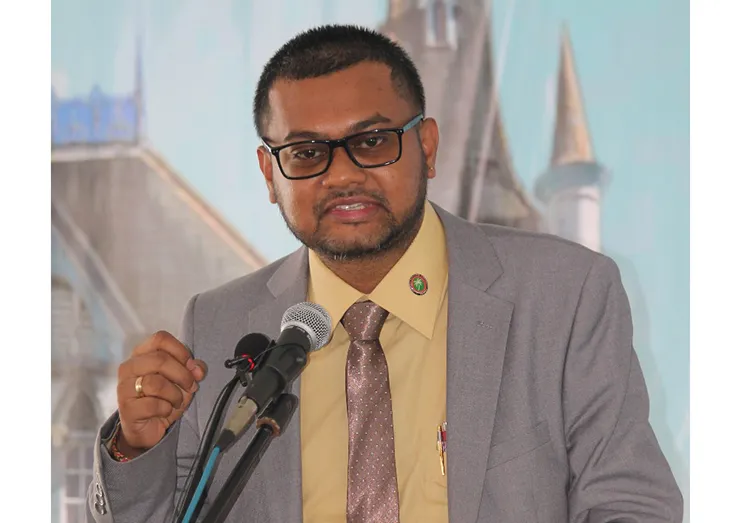
Former Mayor of Georgetown and former Staff Sergeant of the Guyana Defence Force, Pt. Ubraj Narine, is calling on the Government of Guyana to proceed with extreme caution as it considers joining a new free-movement pact recently implemented by four CARICOM states.
On October 1, 2025, Barbados, Belize, Dominica, and St. Vincent and the Grenadines launched a landmark agreement allowing full free movement of their citizens across each other’s borders — a move that includes indefinite residency, the right to work without permits, and access to public education and basic health care.
While the initiative has been widely praised as a bold step toward regional unity, Narine warns that “the result could be perilous” for Guyana if the government proceeds without robust policy, legal, and security frameworks.
“President Irfaan Ali has correctly observed that some member states will need more time to transition and to find ‘the right language and framework’ before joining such an arrangement. That prudence should not be dismissed as obstructionism,” Narine wrote in a public statement.
“It is a sober acknowledgement that open-borders policies require coordinated legislative, administrative and security frameworks to protect national interests.”
The former mayor laid out five major risks Guyana must weigh before embracing a similar open-border policy:
- Service Overload
Narine cautioned that even a modest increase in migrants could stress schools, clinics, and housing markets.
“Without pre-positioned budgets, staffing plans and data systems to track arrivals, service quality will suffer and public confidence in institutions will erode.”
- Labour Market Shock
The sudden expansion of the workforce could undercut local wages or displace Guyanese workers, he said, unless there are “transparent labour-market tests and enforceable safeguards.”
- Security Risks
While the four-state pact includes vetting and registration procedures, Guyana’s existing systems may not be ready for similar demands.
“Systems that stamp or digitally record passports and that allow swift removal of individuals who pose genuine threats are not optional,” Narine warned.
- Foreign Influence
The intersection of open labour policies and foreign capital could alter land use, economic influence, and even democratic control.
“Our Ministry of Foreign Affairs and the legislature must scrutinise investor protections, land-acquisition rules and whether the existing constitutional and election laws are sufficiently robust against undue external influence.”
- Democratic Integrity
Narine urged legal reforms to safeguard the political process and land rights, arguing that “external actors cannot circumvent the democratic will of Guyanese citizens.”
Action Plan for Preparedness
In addition to highlighting risks, Narine laid out a five-point plan for how Guyana can responsibly assess and, if desired, adopt deeper regional integration:
- Commission Impact Assessments – Including labour, fiscal, health, and security implications.
- Amend Immigration Laws – Creating graduated, conditional pathways to residency and citizenship.
- Strengthen Registration & Vetting Systems – In coordination with regional security partners.
- Reform Investment Agreements – To ensure strategic assets and employment benefits are protected.
- Safeguard Democratic Space – Through campaign finance and land acquisition regulations.
“If the government ever moves recklessly in the direction of open-door policies without these guardrails,” Narine warned, “it will be perilous for Guyanese livelihoods and for the health of our democracy.”
While emphasising the importance of Caribbean unity, the former mayor insists that integration must not come at the expense of national readiness or constitutional integrity.
“Regional integration is a noble and necessary ambition. But nation-building is an even greater duty,” he stated. “Regional unity must be built on mutual preparedness — and Guyana should insist on nothing less.”