

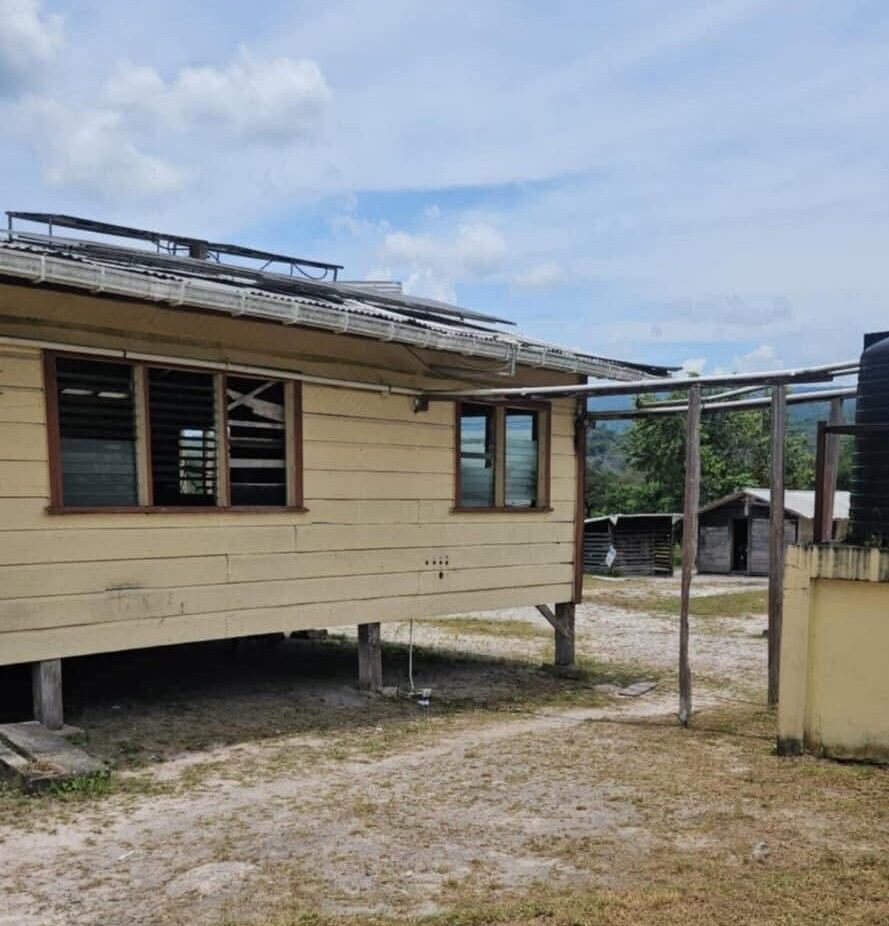
By Mark DaCosta- In a forceful critique of the government’s education policies, incoming Leader of the Opposition, Azruddin Mohamed, has once again drawn attention to the unacceptable state of infrastructure in another one of our nation’s hinterland schools. He highlights the dire circumstances faced by students at Karisparu Primary School, igniting yet another chapter in his relentless, ongoing campaign to expose the neglect that these vital institutions endure.

As accountability continues to be demanded from the reigning PPP government, the disparity between resources allocated to urban schools and those in rural regions remains a troubling issue. And Mohamed is exposing these horrors on a daily basis.
The conditions reported at Karisparu Primary School in Region 8 starkly illustrate the plight of students in these underserved communities. Currently, according to Mohamed, the school operates under what can only be described as inhumane circumstances.
The facilities are so inadequate that the kitchen is deemed unfit for its basic function, and the entire structure is characterised by unsanitary conditions that are far from conducive to learning. “It is unacceptable that children are forced to eat in such poor facilities,” Mohamed lamented, pointing to the inconsistency in treatment that students experience.
Despite our country being rich in resources, including vast oil reserves, young learners in Karisparu continue to be denied the basic rights to a safe and functional educational environment. Mohamed’s statement raises poignant questions about the so-called equal opportunities promised by the government. “Where is the equal opportunity for these children?” he demanded, urging an urgent reassessment of the funding and support allocated to hinterland schools.
The inadequacies at Karisparu are numerous and alarming. Students and teachers alike must contend with a glaring absence of essential amenities. Electricity is non-existent, leaving classrooms stifling without any means to cool down with fans. Essential classroom furniture is sorely lacking; teachers have resorted to using old, repurposed chairs from another establishment, which are described as “old and dirty.”

The educational environment is further strained by a singular blackboard being shared among multiple classes, and the headmaster’s office remains utterly unfurnished, reflecting a glaring lack of respect for the education system in these regions.
Compounding the struggles faced by teachers, many who rely on their phones for educational resources, the school lacks essential technological infrastructure. Prospective educators attending the Cyril Potter College of Education (CPCE) have no access to computers, rendering their educational pursuits even more challenging. Mohamed emphasised this issue, rallying for swift action from the Ministry of Education to remedy the systemic failures that have plagued Karisparu Primary School for far too long.

As the Leader of the Opposition, Mohamed appears to have adopted a proactive approach, consistently holding the ruling PPP government accountable for its perceived negligence of the hinterland. His relentless advocacy sheds light on the critical need for reform in educational policy and infrastructure investment in these often-overlooked areas. By addressing the discrepancies in resource allocation and infrastructure, he is championing a cause that resonates deeply with communities seeking equitable treatment for their children.
As discussions surrounding education equity and infrastructure continue to unfold, Mohamed’s assertion that “the children of Region 8 deserve the same standard of care and infrastructure as any other child in Guyana” encapsulates the urgent need for change.
The voices of the children in these rural areas are calling out, and leaders such as Mohamed are amplifying their pleas. His relentless pursuit for improved conditions is essential not only for the immediate well-being of these students but also for the future of our nation as they aspire to seize opportunities for growth and education.
The contrast between the government’s investment in urban infrastructure versus the plateauing resources designated for hinterland schools underscores a broader narrative of neglect that needs to be dismantled. As the leader of the opposition continues his campaign for hinterland children, it remains to be seen whether the PPP government will respond to the growing call for accountability or further entrench the disparities that hinder our children’s futures. The eyes of the nation are on Karisparu and schools like it, waiting for actions that will meet the dire needs of our youngest citizens.







![Amid mounting protests, the United States, which is Haiti's biggest donor, warned that the government should exercise restraint until the elections take place [File: Andres Martinez Casares/Reuters]](https://villagevoicenews.com/wp-content/uploads/2021/02/Amid-mounting.jpeg)
