


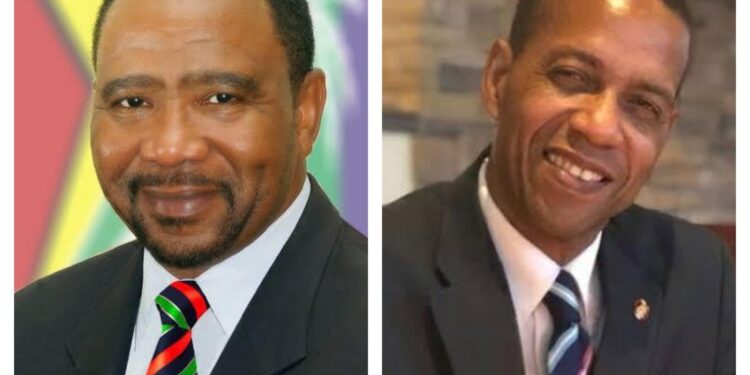
In a powerful and unflinching op-ed released Friday, former Alliance For Change (AFC) parliamentarian Devin Sears issued a stark warning about the state of democracy in Guyana, declaring that the country is teetering on the edge of authoritarianism under the ruling People’s Progressive Party (PPP).
“Guyana today stands at a dangerous political crossroad,” Sears wrote, pointing to what he described as the PPP’s ongoing consolidation of power. According to him, the government has been systematically exploiting weaknesses in the electoral system, leveraging judicial rulings for political advantage, suppressing dissent, and marginalising critical voices in the media.
“These signs are unmistakable: a push towards one-party dominance and an authoritarian model of governance,” Sears cautioned, raising alarm about the long-term implications of the PPP’s grip on both state power and public institutions.

The former parliamentarian’s critique extends beyond government overreach. He called out the judiciary for decisions that appear “politically motivated” and warned that efforts to control or intimidate the press — “the lifeblood of accountability” — are dangerously undermining the pillars of democracy.
But while Sears condemned the ruling party’s tactics, he was equally forceful in challenging the opposition. He argued that opposition parties, particularly those represented in the National Assembly and regional councils, must abandon political point-scoring and unite around a shared mission to “defend constitutional transformation, promote inclusion, and hold the government accountable for its decisions.”
“The parliamentary opposition has before it an opportunity it cannot afford to waste,” he wrote. Failure to act decisively, he suggested, would leave civil society and the press to bear the burden of resistance alone — a fight that cannot be won without political will.
Sears further noted that Guyana’s political challenges are rooted in a deeper cultural issue: dependence on the state. He argued that viewing government as the “sole provider of opportunities, jobs, and development” fosters a dangerous loyalty that fuels political control. “True reform can only happen when Guyanese demand institutions that work for the people rather than a party,” he wrote, “and when they insist on accountability as the cornerstone of governance.”
His most sobering warning, however, was that the PPP’s trajectory — if left unchallenged — could transform Guyana into a one-party state where dissent is stifled, democracy is hollowed out, and the country’s national vision becomes dangerously narrow.
“The choice is before us: passive acceptance of creeping authoritarianism or an active push for reform,” Sears declared. “Guyana cannot afford to wait until it is too late.”
Guyana’s new parliamentary configuration will see three distinct opposition forces occupying seats in the National Assembly:
- The Forward Guyana Movement (FGM), which secured one seat, will be represented by Amanza Walton-Desir.
- A Partnership for National Unity (APNU), which won 12 seats, will be led by Dr. Terrence Campbell.
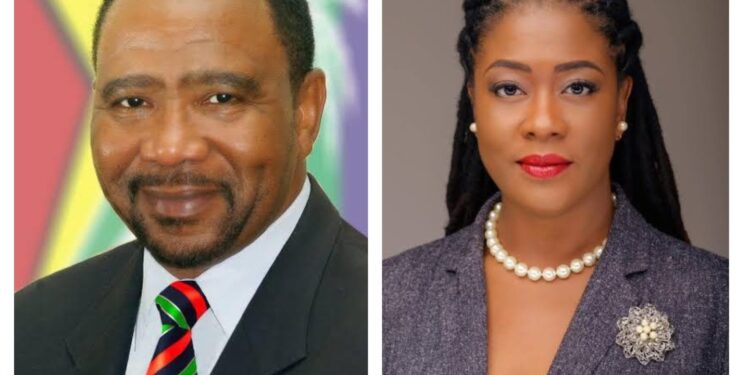
- We Invest In Nationhood (WIN), emerging as the largest opposition bloc with 16 seats, is headed by Azruddin Mohamed, who is widely expected to be elected Leader of the Opposition.
As political tensions rise and public trust in institutions continues to erode, Sears’s message lands as both a call to action and a last-ditch appeal to save Guyana’s democratic future — before it’s irreversibly lost.






![Lin Songtian, a member of the 14th National Committee of the Chinese People's Political Consultative Conference (CPPCC), attends a group interview ahead of the opening meeting of the third session of the 14th CPPCC National Committee at the Great Hall of the People in Beijing, capital of China, March 4, 2025. [Photo by Wang Jing/chinadaily.com.cn]](https://villagevoicenews.com/wp-content/uploads/2025/03/67c6c331a310c240e241c0ca-120x86.jpeg)

