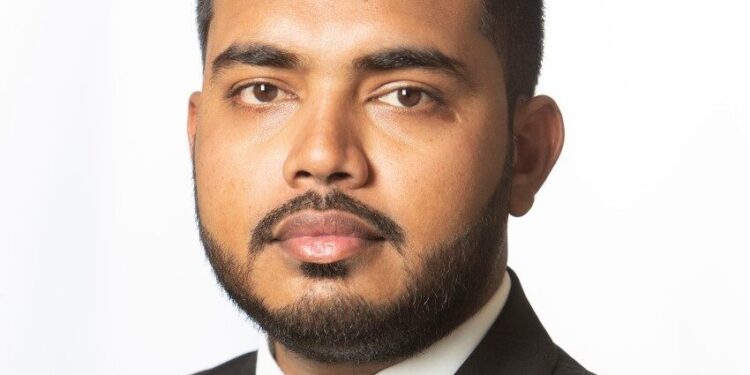
Businessman and philanthropist Azruddin Mohamed, leader of the We Invest in Nationhood (WIN) party, has confirmed that he is preparing to take on the mantle of Leader of the Opposition following the September 1, 2025 General and Regional Elections. With the Guyana Elections Commission (GECOM) declaring WIN as the second-highest vote-getter, Mohamed is poised to assume the constitutional role traditionally reserved for the largest non-governmental bloc in the National Assembly.
Speaking in an interview with Sunday Stabroek, Mohamed outlined his vision for a new era of political accountability and public service. “Being an opposition is not a difficult task. I will be holding the government accountable and continue to work for the interest of the people of Guyana,” he stated.
As part of his commitment to ethical leadership, Mohamed reaffirmed a campaign promise he made months ago — to forgo his parliamentary salary in favour of charitable causes. “My salary as Leader of the Opposition will be used to help different communities, along with my personal monies,” he said. He had previously pledged to donate his presidential salary if elected to the highest office, and now intends to maintain that promise as he assumes the opposition leadership.
A central theme of Mohamed’s political platform is transparency. “I will be on the Government every single day for transparency,” he emphasised, pointing to decades of poor governance and opacity in public affairs that have affected the lives of ordinary Guyanese.
With his list of parliamentarians finalised and preparations underway for WIN to take up its 16 seats in Parliament, Mohamed sees his party as more than just a political alternative. He described it as a movement with a mission to break Guyana’s long-standing pattern of race-based political alignment.
“Come 2030, the WIN Party will continue to represent all of the people,” Mohamed declared, reinforcing the party’s message of unity and inclusive representation. He positioned WIN as a third-force alternative, having launched the party just three months before the 2025 elections — a move that stunned many political observers when it went on to secure 109,000 votes, edging out the A Partnership for National (APNU), which ended with 12 seats.
WIN has consistently pledged to advocate for all Guyanese — regardless of race, class, or religion — and Mohamed has been vocal in his belief that national progress depends on moving beyond the country’s entrenched ethnic partisanship, especially in an era shaped by newfound oil wealth.
With his party now in Parliament and commanding significant influence, Mohamed faces a critical test. Analysts note that the coming months will reveal whether WIN can maintain its momentum and truly shift Guyana’s political discourse towards one that prioritises accountability, inclusivity, and national unity.