Trump’s deadly strike off Venezuela exposes the brutal calculus of American empire disguised as law enforcement
(WiredJA)- The missiles struck without warning, tearing through a vessel in international waters off Venezuela’s coast. Eleven people died instantly. Within hours, Donald Trump was boasting on Truth Social about the “successful interdiction,” while international law experts recoiled in horror at what they recognized as state-sanctioned murder dressed up as drug enforcement.
“Drug trafficking is a crime, not an act of war,” former Human Rights Watch director Kenneth Roth declared, cutting through the administration’s triumphant rhetoric. “Traffickers must be arrested, not summarily executed, which US forces just illegally did.”
The stark assessment exposes a fundamental truth Washington prefers to obscure: Tuesday’s attack wasn’t law enforcement—it was extrajudicial killing on the high seas.
The Numbers Don’t Add Up

The Trump regime’s narrative begins crumbling under basic operational scrutiny. Eleven to twelve people aboard a single vessel allegedly carrying cocaine raises immediate red flags for anyone familiar with drug trafficking operations.
Professional narcotics smugglers operate with minimal crews—typically two to four people—to reduce risk and maximize profits. A dozen people on one boat suggests something entirely different was occurring.
The crew size is more consistent with human trafficking operations, where smugglers pack desperate Venezuelan migrants into overcrowded vessels for dangerous Caribbean crossings.
If the boat carried refugees rather than drugs, Tuesday’s missile strike represents the mass murder of asylum seekers fleeing economic collapse—not the execution of criminal suspects.
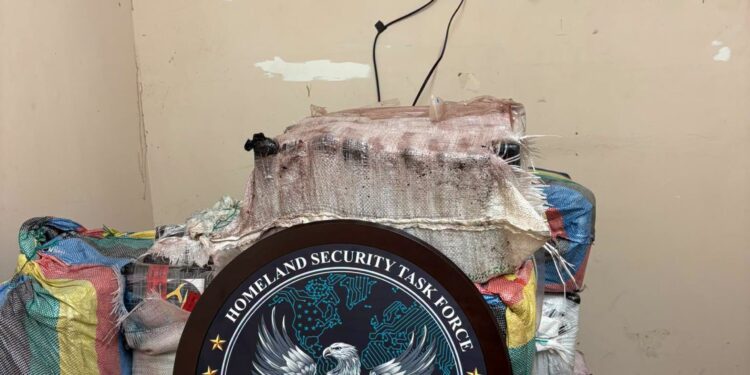
More damning is what Washington won’t show: no photographs of alleged cocaine, no manifest of seized contraband, no identification of victims. The administration that normally celebrates drug seizures with press conferences has gone conspicuously silent when it comes to evidence.
Standard interdiction procedures generate mountains of documentation—laboratory analysis, chain of custody records, detailed inventories. None has materialised from this “successful interdiction.”
Shredding International Law
The legal framework governing maritime drug interdiction is clear, even if the Trump administration chooses to ignore it. Michael Becker, an international law professor at Trinity College Dublin, told the BBC that designating drug trafficking groups as terrorist organizations “stretches the meaning of the term beyond its breaking point.” The semantic sleight of hand matters because it determines whether suspects deserve arrest and trial or summary execution by missile.
“The US is not engaged in an armed conflict with Venezuela or the Tren de Aragua criminal organization,” Becker explained. Luke Moffett from Queens University Belfast emphasized that while force can be used to stop vessels, it must involve “nonlethal measures” and be “reasonable and necessary in self-defense.”
The missile strike meets neither criterion, making it “unlawful under the law of the sea.”
Beyond international law violations, the strike represents a constitutional crisis. The peace group CodePink correctly noted that “the Constitution gives Congress, not the president, the power to authorize war.”
Trump’s unilateral action lacks both legislative approval and UN Security Council authorization, making it illegal under both domestic and international law.
Violating the Zone of Peace
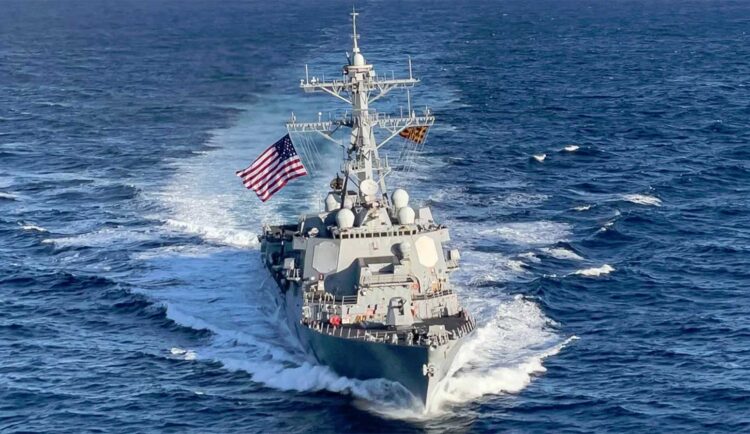
For Caribbean nations, Tuesday’s attack shatters more than legal frameworks—it destroys the region’s hard-won designation as a zone of peace. The Caribbean has been formally recognized as a Zone of Peace through multiple declarations, most notably CARICOM resolutions that explicitly reject militarization of regional waters and call for peaceful dispute resolution.
The strike’s hypocrisy becomes more glaring when contrasted with selective enforcement patterns. Venezuela produces no cocaine yet faces military intervention. Colombia and Peru—the world’s two largest cocaine producers—enjoy partnership agreements and billions in US aid.
Ecuador, now a leading trafficking hub, faces no similar blockade. The message is unmistakable: geography determines guilt, and proximity to American interests determines punishment.
This pattern reveals drugs as “pretexts, shaped to fit the contours of empire,” as peace activist Michael Morrill noted. Manuel Noriega was “first a CIA asset, then branded a narco-dictator.”
The Taliban enjoyed partnership in Afghanistan’s opium trade before being recast as traffickers when strategic needs changed. When allies traffic drugs, they become intelligence assets. When enemies engage in similar behavior, they become targets for summary execution.
A Hemisphere at the Crossroads
Tuesday’s bloodshed forces a choice between two visions of hemispheric order. One respects sovereignty, international law, and due process—even for alleged criminals. The other embraces unilateral violence disguised as law enforcement, where American missiles determine guilt and punishment without trial or appeal.
For Caribbean leaders who have advocated humanitarian responses to Venezuelan displacement, the strike represents a betrayal of regional values. It transforms human suffering into targets for military intervention, criminalizing desperation and turning survival into a capital offense.
Small island states that depend on maritime security for economic survival now face a terrifying precedent: American commanders can order strikes based on unverified intelligence and post-hoc justifications.
CARICOM faces an impossible calculation—condemning American actions risks economic retaliation, while remaining silent legitimizes the transformation of Caribbean waters into America’s execution ground.
The organization that spent decades building consensus around peaceful conflict resolution must now decide whether those principles matter when challenged by imperial violence.
The dead cannot testify about their guilt or innocence. That’s precisely why civilized nations arrest suspects rather than executing them from afar. The Caribbean deserves peace, not militarization.
The hemisphere deserves law, not imperial violence disguised as drug enforcement. Tuesday’s missile strike in Venezuelan waters marks a dangerous escalation that demands unified regional condemnation and concrete steps toward accountability—before summary execution becomes standard operating procedure in Caribbean waters.