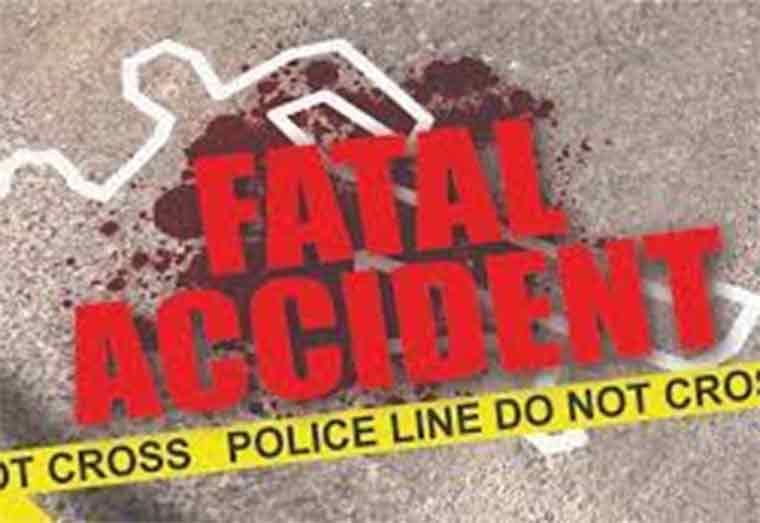
By Mark DaCosta- A tragic incident has rocked the Guyanese community as a motorcyclist lost his life following a collision with a car in the early hours of Sunday. The victim, identified only as Sookram, aged 60, was a resident of Barr Street in Kitty, Georgetown, and succumbed to his injuries after the accident which occurred around 6:30 am on the Mocha Access Road.
The details surrounding the accident are harrowing. Reports indicate that Sookram was travelling on his motorcycle when he was struck by a motorcar, PNN 5140, driven by 25-year-old Shawn Alleyne. Preliminary investigations suggest that Alleyne was travelling at a considerable speed in the same direction when the collision occurred. Tragically, the impact caused Sookram to be thrown onto the roadway, where he was later found unconscious by emergency medical responders. Sadly, despite being rushed to the Georgetown Public Hospital Corporation for treatment, he was pronounced dead at approximately 9:50 am.
Following the collision, it is reported that Alleyne did not stop to render assistance to the injured motorcyclist but fled the scene instead. This reckless behaviour has understandably stirred outrage within the community, raising concerns not only about the safety of our roads but also about accountability in traffic incidents. The police apprehended Alleyne later and brought him into custody at the Providence Police Station, where he underwent breathalyser tests revealing blood alcohol levels of 0.058% and 0.054%. While these readings are just below the legal limit, experts have long warned that any amount of alcohol can impair judgment and reaction times. Dr. Marlene Gregory, a toxicologist, states, “Even minimal alcohol consumption can significantly affect a driver’s capabilities, making roads unsafe for everyone.”
This tragic loss reiterates the urgent need for stricter enforcement of traffic laws in Guyana, particularly regarding driving under the influence. The Guyana Police Force has been repeatedly called upon to take a more proactive approach in preventing such disasters rather than merely conducting breathalyser tests following deaths. The enforcement of laws against reckless driving should not be relegated to reactions after the loss of life, but should instead aim to prevent such heart-wrenching occurrences from happening in the first place.
Although a breathalyser test conducted post-accident can ascertain culpability, there is a growing sentiment among citizens that the police must enhance their preventative measures. Citizens deserve safer roads, which will not only deter reckless behaviour but also safeguard the lives of vulnerable road users, such as motorcyclists and pedestrians.
As outrage grows over the circumstances surrounding this tragic event, at least one commentator is calling for the current administration to prioritise road safety initiatives. Some citizens feel let down by government inaction on this matter, asserting that more can and should be done to protect them. The public expects heightened awareness campaigns, stricter penalties for offenders, and a more rigorous commitment to regular traffic patrols that can intervene before accidents occur.
It is crucial to reflect on our communal responsibility for road safety; ensuring that every vehicle operator is mindful of their conduct. The responsibility lies not only on individual drivers but also on the structures in place to regulate their behaviour. As our country mourns the loss of a citizen due to negligence, it is hoped that the authorities will treat this incident as a grave wake-up call rather than a mere statistic.