Forty years after the passing of Guyana’s first Executive President, Linden Forbes Sampson Burnham, veteran journalist Adam Harris says the late leader’s development record still outshines that of today’s oil-rich government.
Burnham, who died on August 6, 1985, at age 62 while undergoing throat surgery at the Georgetown Public Hospital, was preparing to address the biennial congress of the People’s National Congress (PNC), the party he founded. “His heart did not withstand the anaesthetic and he died on the operating table,” Harris recalled.
Harris credited Burnham with laying the foundations for free education in Guyana, noting that the policy was introduced in 1976. “Bharrat Jagdeo is one beneficiary. Burnham paid for his education in Moscow,” Harris wrote, pushing back against claims that the ruling People’s Progressive Party (PPP) should be credited for the initiative.

Burnham introduced free education from nursery to university in 1976.This policy made Guyana one of the first countries in the Caribbean to offer completely free public education at all levels, including the University of Guyana. In the 1980 Guyana Constitution, free education from nursery to university became a right per Article 27.
Burnham introduced free education from nursery to university in 1976, making Guyana one of the first countries in the Caribbean to offer completely free public education at all levels, including the University of Guyana. In the 1980 Guyana Constitution, this policy was entrenched as a right under Article 27. Free education formed part of Burnham’s broader socialist vision to develop human capital and reduce inequality.
However, in 1994, the People’s Progressive Party (PPP) removed free university education, saddling students with debt even before many had secured their first job. It was persistent agitation by the masses that ultimately forced the restoration of free university education in January 2025.
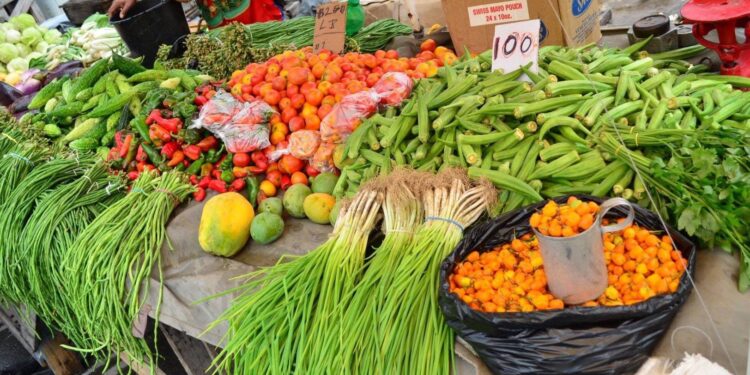
He said Burnham’s economic policies, often derided at the time, were designed to promote self-sufficiency. “His was the motto that Guyana should feed, house and clothe itself,” Harris stated, adding that the late president encouraged the production of local crops over imports, supported multilateral schools and industrial training, and oversaw the creation of housing communities without the benefit of oil revenues.
Under Forbes Burnham’s leadership, Guyanese were able to unleash their talents during the feed, clothe, and house drive through a spirit of collective effort and self-reliance that Burnham championed. His vision of empowering the people encouraged local initiative and community participation, with citizens using their skills in agriculture, craftsmanship, and organisation to support those in need. This grassroots mobilization reflected Burnham’s emphasis on building a self-sufficient nation.
At the same time, the rise in global oil prices and the scarcity of foreign exchange presented significant economic challenges, impacting Guyana’s ability to import essential goods and slowing development. Despite these obstacles, Burnham’s policies aimed to strengthen local production and reduce dependency, helping the country navigate difficult economic conditions while fostering national pride and resilience.
Harris dismissed as “fallacy” the claim that Burnham banned flour, explaining that the 1970s cash-strapped government could not afford certain imports, leading to domestic alternatives. He cited similar political spin around split peas, noting Burnham’s insistence that “split peas were not the only peas that make dhal.”
Former Speaker of the National Assembly, Sase Narain, addressing the long-debated flour and split peas controversies, asserted that Forbes Burnham never banned wheat flour, dismissing such claims as a myth—a point he made during a speech at a Burnham Foundation event. He explained that while the importation of certain items, including flour, was restricted during Burnham’s administration, it was never outright banned, a distinction he repeatedly emphasised in response to criticisms.
During his presidency, Burnham promoted the use of rice flour as part of his broader self-sufficiency drive. According to Kit Nascimento, Burnham was influenced by India’s extensive use of rice flour in everyday diets, which he reportedly observed during a visit there. This experience was said to have reinforced his push for Guyana to reduce reliance on imported wheat flour and instead utilise locally produced rice, aligning with his government’s “feed, clothe, and house” policy.
Harris also highlighted major infrastructure projects from the Burnham era, including the Soesdyke-Linden and Corentyne highways, and the Demerara Harbour Bridge — still in use decades later despite being “mocked at” when built.
On governance, Harris argued that “the law was the law” under Burnham, pointing to cases where high-ranking officials, including members of his own party, were prosecuted for corruption. “No one was above the law,” he wrote.
Harris contrasted that approach with current politics, accusing Burnham’s critics of “protect[ing] the corrupt” and selectively invoking U.S. sanctions while keeping sanctioned individuals “close to their bosoms.”
“For all the wealth that the present government has, it has done nothing to match what Burnham did in Guyana, and in less time,” Harris concluded.