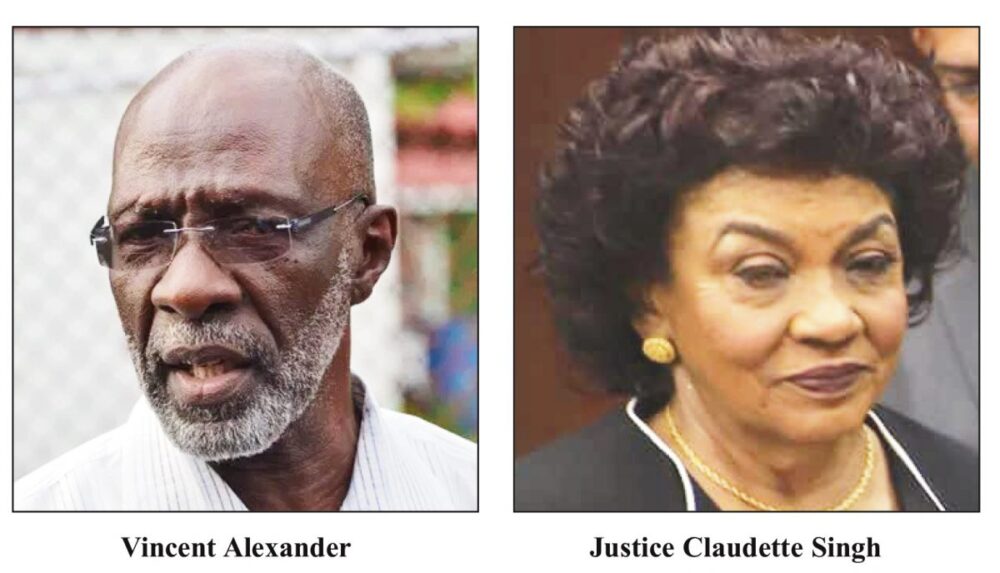
With less than a month before Guyanese head to the polls, Vincent Alexander, a long-serving opposition-nominated Commissioner on the Guyana Elections Commission (GECOM), has issued a stark warning that the upcoming 2025 General and Regional Elections may lack the necessary conditions for credibility, transparency and fairness.
In a detailed public statement, Alexander raised concerns that GECOM is moving forward with an election plan that fails to implement critical safeguards, thereby placing the electoral process and public trust at serious risk.
“GECOM is implementing a list of activities… that will facilitate the conduct of an election on September 1, 2025. However, the extent to which GECOM has consciously omitted to put certain safeguards in place… is the extent to which GECOM will not be conducting a free, fair and transparent election,” he stated.
Among the failings outlined were:
• The absence of robust registration and identification systems
• The refusal to clean the voters’ list of reported deceased and overseas-residing individuals
• The denial of voting rights to incarcerated persons and poll-day workers
• The decision to allow voters to carry phones into voting compartments, a move Alexander says enables vote-buying and ballot verification coercion
Despite his efforts to raise these alarms, Alexander’s voice is increasingly being described as a voice in the wilderness. Critics argue that the parliamentary Opposition has been too passive in addressing the issues he repeatedly flags — issues that, if left unchecked, could seriously undermine the integrity of the entire electoral process.
“There can be no verification or certification of a free, fair, and transparent election,” Alexander warned, “when GECOM consciously refuses to observe constitutional provisions and best practices in election conduct.”
He also criticised what he described as GECOM’s deliberate attempt to deceive both the Guyanese public and international observers into believing the Commission is committed to a fair process. GECOM is headed by ret’d Justice Claudette Singh whose voting record is aligned to the government-nominated commissioners.
“GECOM would wish to portray… its sincerity and commitment… That deception has, however, been exposed,” he said, referencing not only the institutional shortcomings but also GECOM’s dismissive posture toward citizen concerns.
The specific issue of cell phones in polling booths has especially drawn criticism. While international partners raised red flags about voters photographing their ballots — a method that could be used to prove how someone voted in exchange for money — GECOM, supported by its government-aligned majority, refused to ban the practice.
He warned whilst GECOM issued a public statement about the illegality of disclosing how one voted, the agency is still allowing the presence of phones during voting.
Alexander slammed the justification offered — concerns about storing phones or disenfranchising voters who refuse to part with their devices — as untenable, arguing it opened the door to electoral manipulation.
“They are unprepared to take responsibility… while with open eyes facilitating coercive voting, to wit the buying of votes,” he said.
Observers now worry that while GECOM continues to ignore calls from the citizenry for genuine electoral reform, the international community appears more focused on checking the box of participation rather than ensuring the actual credibility of the election.
“Rigging can happen anywhere along the continuum,” one civil society figure noted. “What’s alarming is that GECOM in this election cycle seems unmoved by clear indicators of weakness and worse, is being allowed to get away with it under the international radar.”
As Guyana edges toward what may be its most pivotal election in a generation, Alexander’s warnings cast a long, dark shadow over the process. If ignored, they may echo in the aftermath as the cries that foretold a democratic collapse. With each passing day and each unaddressed flaw, the stage is being set for an election whose legitimacy could be shattered—long before a single ballot is marked.