In a blistering critique of Guyana’s current leadership, UK-based Guyanese medical doctor and social analyst, Dr. Mark Devonish, has condemned the People’s Progressive Party (PPP) administration for presiding over a country where luxury and deprivation sit side by side—and where those in power appear deaf to the suffering of the people they govern.

Writing in today’s Mark’s Take column, Dr. Devonish, who holds advanced qualifications in medicine and public health, accuses the government of ignoring the country’s worsening cost-of-living crisis while flaunting opulence at lavish events like its recent Diamond Gala.
“Even as single mothers grapple with overwhelming bills and families struggle to put food on the table, those installed to care are tuxedo dressed toasting at their extravagant Diamond Gala,” he writes. “Our children—officially the most malnourished in Latin America and the Caribbean—are left to face another hungry day, forgotten in the poverty-stricken 50%.”
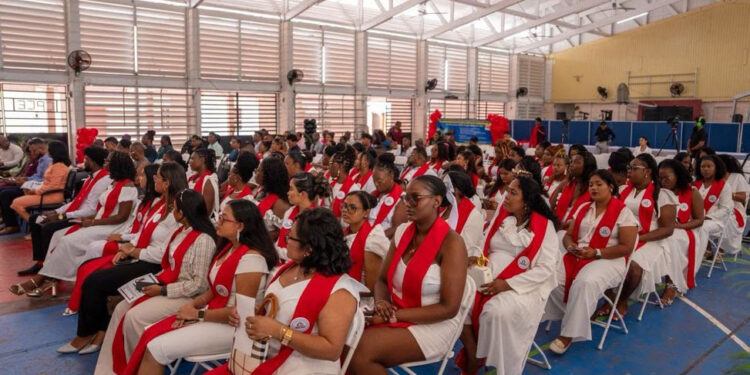
Last December, First Lady Arya Ali hosted an extravagant Diamond Ball. While the country grapples with inequality, a growing cost of living crisis, and widespread poverty, the staging of this glitzy affair has sparked legitimate outrage, especially amid allegations that public funds may have been used to bankroll it.
Rather than address these concerns with the seriousness and transparency the public deserves, PPP General Secretary Bharrat Jagdeo casually dismissed the accusations. According to him, the Diamond Ball was simply a fundraiser for the First Lady’s charitable projects, including the Menstrual Hygiene Programme and Orphanage Adoption Project. Yet, he provided no evidence to clarify the sources of funding, the costs involved, or the allocation of proceeds—only platitudes.
It is telling that in a country where nurses are underpaid, teachers protest for fair treatment, and basic infrastructure in many regions remains underdeveloped, critics said government officials find it appropriate to host high-profile events dripping with wealth and exclusivity. Whether or not taxpayer money was directly used, the optics of such an event reek of elitism and disconnect.
Dr. Devonish’s critique is not merely rhetorical he draws on New Guyana Marketing Corporation data showing food prices have skyrocketed across all categories. Vegetable prices have more than doubled, and basic fruits are now unaffordable for most Guyanese. Meat prices, he adds, have followed a similarly devastating trend.
“With families forced to survive on as little as US$5.50 per day, it is impossible—no matter how thrifty—to maintain even the most basic diet,” he states.
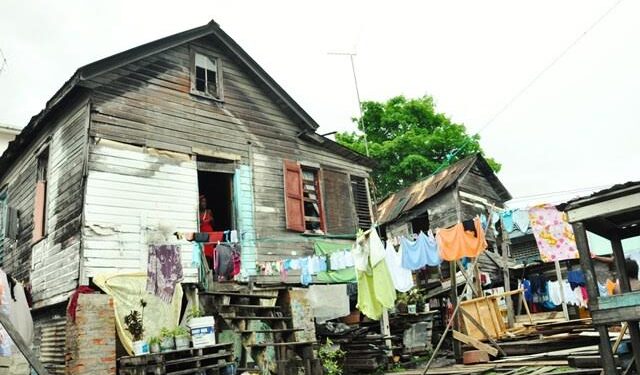
According to the World Bank, 48% percent of the population live on less than US$5.50 (GY $1200) per day. Analysts said the figure could be higher given Guyana’s poor data gathering techniques. Against this backdrop, Devonish slams what he calls the government’s “cruel contradictions.” He cites reports of Education Minister Priya Manickchand flaunting a $500,000 diamond-encrusted Louis Vuitton handbag, while thousands of teachers work for what he describes as “slave wages.” He argues that such stark disparities are not just symbols of inequality but are indicative of deeper, systemic injustice.
“This contrast goes far beyond designer bags and Range Rovers, with the gated Pradoville, of unmatched Hollywood swimming pool mansions, communicating their unmistakable message of affluence”
Devonish is especially concerned about the long-term impact on children. Malnutrition, he explains, begins before birth, and low birth weights caused by undernourished mothers lead to higher infant mortality. Those who survive face hunger-induced stunting, wasting, and academic underperformance.
“These children arrive at school consumed by raging hunger pangs, would on average, do less well academically, like the NGSA. And registering tragic under performances, have them less likely to matriculate, even as securing Queen’s, Bishops, St Roses, Saints or St. Joseph, represents an unobtainable reality,” he warns.
This cycle of malnutrition and poor academic outcomes, Devonish contends, traps children in poverty and robs them of any hope of upward mobility. He accuses the PPP of “intentionally tying the hands” of the working class and youth to a life of minimum wage labor.
He further argues that the consequences of this economic mismanagement go far beyond the individual, noting broader national implications: rising crime, declining health, lower life expectancy, weakened social trust, and looming political instability.
This is not governance—it is organised neglect. The largest budgets in Guyana’s history have been reduced to hollow boasts, while the supposed ‘Dubai of the Caribbean’ dream remains a cruel misnomer. the analyst notes.
Dr. Devonish ends his op-ed with an unflinching call for change—not just in policy, but in leadership. The devastation Guyanese are witnessing, driven by a reckless and uncaring administration, demands more than a recalibration of priorities, he declares. It requires the ouster of this installed government.