by Simone James
GEORGETOWN, Guyana — In a stunning display of corporate tone-deafness, the board of Demerara Distillers Limited (DDL) had to have known that Demerara Bank’s actions would have exposed its prized portfolio of local and international brands to a potential massive consumer boycott following the politically charged closure of bank accounts belonging to WIN party candidates and supporters by Demerara Bank, a company in which DDL holds significant influence.
At the center of the controversy are WIN candidates Duarte Hetsbeeger and Natasha Singh, whose accounts were terminated without explanation. Multiple other WIN candidates and affiliates reportedly received similar notices. According to Odessa Primus, WIN Campaign Manager, the action appears targeted, as addresses used to identify candidates came from the WIN official nomination list, not from the candidates’ personal banking files.
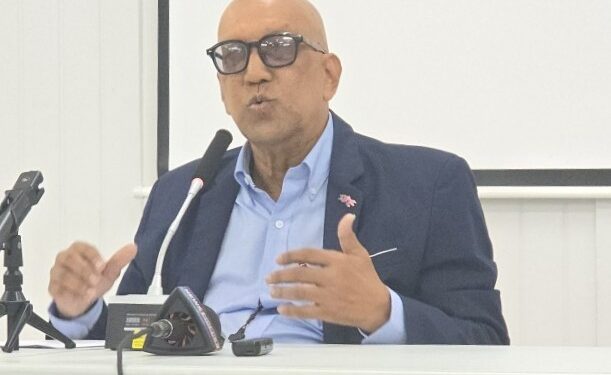
“The only thing these individuals have in common is their affiliation with WIN,” Primus said at the press conference. “We have not seen PPP supporters face anything similar. This feels like political punishment.”
DDL Brands Now at Risk
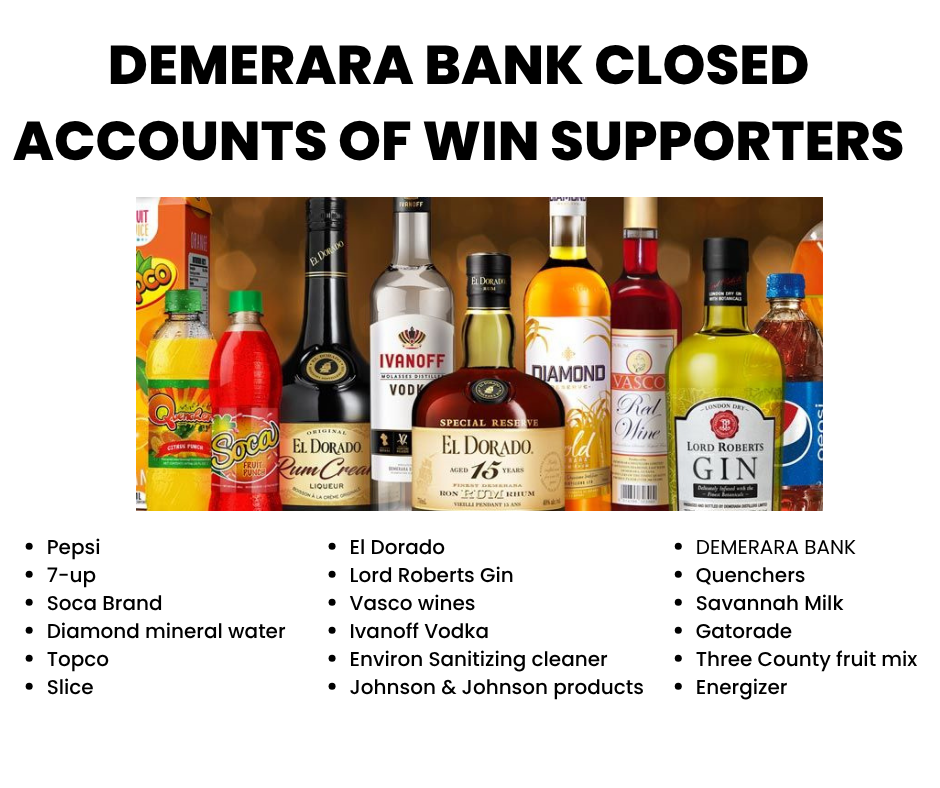
Will WIN’s leadership exercise their right to call for a full boycott of Demerara Bank and any businesses or brands associated with it? It would be a remarkable response, putting immediate pressure on the product portfolio of Demerara Distillers Limited (DDL). A call to action of this magnitude would pose a serious threat to the sales and public image of DDL’s widely distributed brands, which include Pepsi, 7-Up, Gatorade, Energizer, Johnson & Johnson products, Topco juices, Diamond mineral water, El Dorado rums, Ivanoff Vodka, Lord Roberts Gin, Soca soft drinks, Quenchers, Vasco wines, Savannah Milk, Three County fruit mix, Slice fruit drinks, and Environ Sanitizers. These brands now risk becoming collateral damage in a growing political backlash, should WIN supporters mobilize against what some call a campaign of economic victimization.
Such a boycott would come at a time when brand loyalty and consumer trust are everything in Guyana’s rapidly diversifying beverage and personal care markets. A significant dip in goodwill, especially among the energized and mobilized WIN base, can translate into major revenue losses and erosion of brand equity for these products, many of which are imported under global licensing agreements.
Did the Board Think This Through?
It remains unclear whether DDL’s board was involved in what some call a politically stupid decision, and if they were, whether they calculated the reputational and financial fallout of supporting what appears to be politically driven financial suppression. International manufacturers, like those behind Pepsi, Johnson & Johnson, Energizer, and Gatorade, are unlikely to be pleased to see their products swept up in Guyana’s partisan battles, especially when associated with the targeted punishment of opposition political figures.
Is this just a case of arrogance or short-sighted corporate miscalculation?
“Could they really be this stupid?” asked one political analyst. “The leadership of Demerara Bank has displayed a profound stupidity in getting themselves involved with Bharrat Jagdeo’s political machinations. And somehow, it’s always Jagdeo who survives while others carry the cost.”
Market Consequences Loom
In a highly competitive retail environment, where margins are tightening and new players are entering the market, brand damage and consumer backlash can have long-term consequences. Distributors, retailers, and even small shopkeepers may soon feel the impact if sales slump across these now-politicized products.
No public comment has yet been issued by DDL’s executive leadership or board, but serious questions are already being raised by business insiders. Did the board consider the potential loss of consumer trust? Are shareholders comfortable seeing their investments entangled in what appears to be a political vendetta? And what contingency plans, if any, are in place to manage reputational damage across multiple brand channels now caught in the crossfire? Ultimately, this may prove to be much more than a conflict between WIN and Demerara Bank, it could become a cautionary tale about the risks companies face when they abandon neutrality and allow themselves to become instruments of political power.