When Donald Trump threatened Brazil with punishing 50% tariffs this week, demanding the halt of former President Jair Bolsonaro’s coup trial, he may have miscalculated. Instead of capitulation, he got defiance. Instead of submission, he sparked a masterclass in sovereignty from President Luiz Inácio Lula da Silva that could reshape how emerging economies respond to American economic coercion.
“We don’t want an emperor — we are sovereign nations,” Lula declared at the BRICS summit in Rio, firing back at Trump’s extraordinary attempt to weaponize trade for political ends. The Brazilian leader’s response was swift, unequivocal, and cutting: “Brazil is a sovereign country with independent institutions that will not accept being lectured by anyone.”
Trump’s letter, posted on Truth Social, represents perhaps the most brazen attempt to use tariffs as a political cudgel in modern trade history. Unlike his standard-issue trade complaints to other nations, the Brazil ultimatum explicitly linked economic punishment to domestic political demands — specifically, ending what Trump called the “Witch Hunt that should end IMMEDIATELY!” against Bolsonaro, who faces trial for allegedly plotting to assassinate Lula and overturn Brazil’s 2022 election.
But Trump’s gambit rests on a foundation of falsehoods. The United States has a goods trade surplus with Brazil, which totaled $7.4 billion in 2024, according to the Office of the U.S. Trade Representative. Lula didn’t hesitate to call out this basic factual error, undermining Trump’s economic justification and exposing the purely political nature of the threat.
“We don’t want an emperor — we are sovereign nations. Brazil is a sovereign country that will not be dictated to by anyone. ”
More crucially, Trump appears to have handed Lula a political gift. Brazil’s Congress, anticipating exactly this scenario, passed the Economic Reciprocity Law in April — a mechanism allowing the government to impose proportional countermeasures against unilateral trade actions that harm Brazilian interests.
“If they charge us 50%, we’ll charge them 50%,” Lula declared, activating a legal weapon designed precisely for this moment.
The timing couldn’t be worse for Trump’s broader strategic objectives. Brazil has already been deepening ties with fellow BRICS members (China, India, Russia, South Africa) and newer partners in the bloc.
This dispute only strengthens the case for accelerating such integration. Where Trump hoped to isolate Brazil, he may instead be accelerating its pivot away from Washington.
Markets reacted predictably to the uncertainty, with Brazilian exporters taking an immediate hit. But the deeper damage may be to American consumers, who could soon face breakfast staples like coffee, eggs and orange juice spiking in price. Brazil dominates global coffee exports, and any sustained trade war would hit American wallets hard.
Perhaps most tellingly, Trump’s intervention may backfire even on his stated goal of helping Bolsonaro. Trump’s past influence abroad has often backfired, with right-wing candidates in countries like Canada and Australia paying the price.
By framing Brazil’s judicial process as foreign interference, Trump risks making Bolsonaro look like an American puppet rather than a Brazilian patriot.
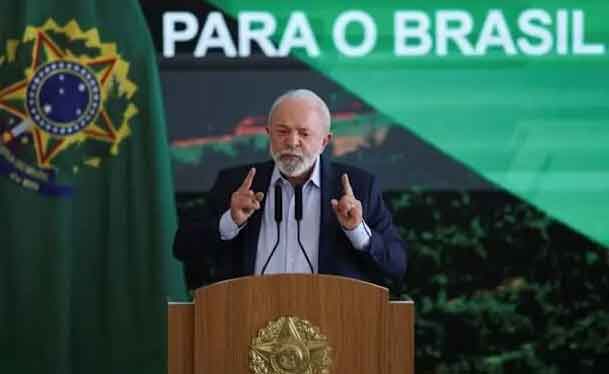
Lula, meanwhile, has positioned himself as the defender of Brazilian democracy and sovereignty.
His response threading the needle between firmness and diplomacy — rejecting interference while leaving room for dialogue — resonates with a country that has long memories of American intervention in Latin American affairs.
Finance Minister Fernando Haddad captured the sentiment perfectly: “We want to find a solution through diplomacy, but we won’t allow our democracy to be held hostage by foreign interests.”
The broader implications extend far beyond bilateral trade. Trump’s tariffs would be imposed using the International Emergency Economic Powers Act, or IEEPA, a White House official said.
But using emergency powers to punish a country for its domestic judicial decisions stretches executive authority to breaking point, inviting legal challenges and international condemnation.
For emerging economies watching this confrontation unfold, Lula’s response offers a template: economic sovereignty backed by legal mechanisms, diplomatic engagement without capitulation, and the leverage that comes from diversified partnerships. Brazil is not standing alone — it has alternatives, markets, and allies that previous generations of Latin American leaders could only dream of.
Trump’s letter warned that “there will be no Tariff if Brazil, or companies within your Country, decide to build or manufacture product within the United States.” But this carrot-and-stick approach ignores a fundamental shift in global power dynamics. Brazil in 2025 is not the banana republic of American imagination — it’s the world’s fourth-largest democracy, a technological powerhouse, and a leader in the Global South’s push for multipolarity.
As tensions escalate toward the August 1 deadline, the world watches a defining moment unfold. Will economic coercion still work in an age of emerging alternatives? Lula’s defiant response suggests those days may be ending. In standing firm against Trump’s ultimatum, Brazil isn’t just defending its sovereignty — it’s writing the playbook for how sovereign nations respond to economic bullying in the multipolar era. (WiredJA)