MONTEGO BAY, – The government’s bombshell announcement that it will not renew JPS’s electricity licence under existing terms has triggered a fierce political backlash and urgent concerns about a potentially expensive government takeover that could ultimately hurt consumers.
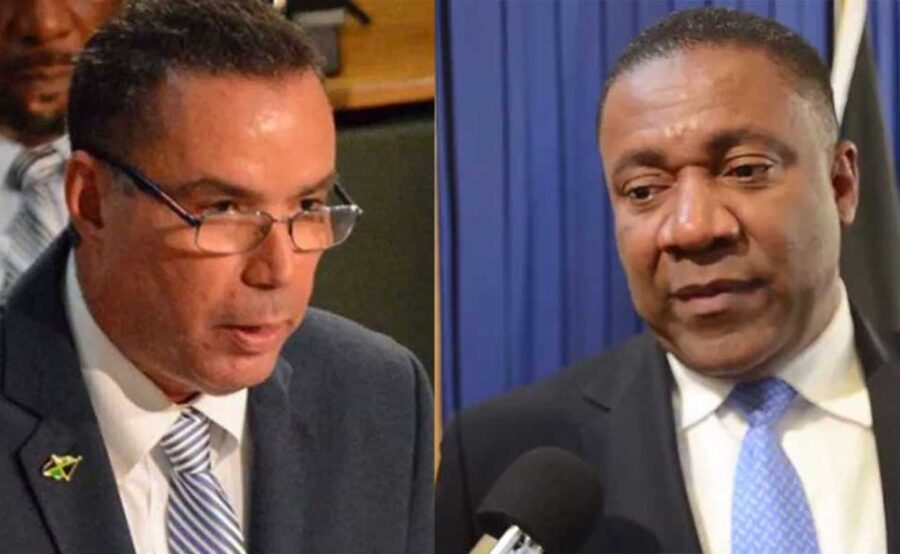
Opposition energy spokesman Phillip Paulwell delivered a blistering attack on the Andrew Holness administration Tuesday, accusing Energy Minister Daryl Vaz of “last-minute” decision-making after years of neglecting Jamaica’s energy crisis. “After nine years in office, the Government is only now waking up to the reality that the high cost of electricity is strangling growth,” Paulwell charged.
JPS Raises Red Flag Over Acquisition Costs

While politicians traded barbs, Jamaica Public Service Company (JPS) issued a carefully worded but pointed response expressing “grave concern” about the government’s formal notification of its intention to acquire the utility’s business when the licence expires on July 8, 2027.
The utility confirmed it received formal notification indicating the government’s “intention of acquiring the Licensed Business at the expiration of the term of the Licence” – a move that could prove extraordinarily expensive for taxpayers and questionable for consumers.
Under Condition 27 of the existing licence, the government has the right to acquire JPS’s operations, but crucially, it must pay market rates for the takeover.
This isn’t just about buying a few office buildings – JPS owns massive infrastructure including 300,000 utility poles across its islandwide distribution network, 14,000 kilometres of distribution lines and 3,000 kilometres of transmission lines, plus twelve major transformers and 54 substation transformers.
The financial implications are staggering. JPS was last valued at over US$700 million when Marubeni purchased an 80% stake in 2007, and later transactions valued portions of the company at hundreds of millions more. Today’s market value would likely be significantly higher, meaning any government acquisition could cost Jamaican taxpayers well over a billion dollars.
The Opposition’s “I Told You So” Moment

Paulwell, who has been sounding the alarm about the impending licence expiration since 2023, didn’t hold back in his criticism. The veteran politician accused Vaz of failing to prepare adequately for negotiations that were always scheduled to begin by July 2025 – exactly two years before the licence expires.
“I have repeatedly alerted the Government of the impending expiration of the JPSco licence and urged the Minister to establish a team to assess the environment and prepare for negotiations from as early as 2023,” Paulwell stated, adding that he has “long held the view that the conditions under which the JPSCo licence was granted in 2001 have changed substantially.”
The opposition spokesman pointed to the dramatic increase in electricity costs under the current government’s watch – from US$0.25 per kilowatt-hour in 2016 to US$0.40 today, a 60% jump that has far outpaced wage growth and squeezed household budgets across the island.
Perhaps most damning, Paulwell accused Vaz of abandoning the Energy Council, which was designed to shape policy with stakeholder input. “The Energy Council, created in 2012 to guide policy with stakeholder input, remains abandoned,” he said, charging that the government now rushes “to outsource advice from international experts instead of consulting with local stakeholders.”
What the Government Is Really Proposing
Energy Minister Vaz made clear Tuesday that while the government has formally notified JPS of its intention to acquire the business, “it is not the intention of the Government to take charge of the operations of JPS.” Instead, Vaz indicated plans to “negotiate new licensing terms and conditions with potential investors that are favourable to the people of Jamaica.”
This raises critical questions about the government’s actual strategy. If it doesn’t intend to operate the electrical grid directly, why trigger the expensive acquisition clause? The answer likely lies in leverage – by formally notifying JPS of acquisition intent, the government gains maximum negotiating power for new licensing terms.
However, this strategy carries enormous financial risk. If negotiations with “potential investors” fail to produce acceptable terms, the government could find itself forced to complete an acquisition that would cost taxpayers billions while taking on the complex challenge of operating Jamaica’s electrical grid.
The Infrastructure Reality Check

The scope of what the government would be acquiring cannot be understated.
JPS operates as Jamaica’s sole transmission and distribution operator, managing a massive network that includes everything from the high-voltage transmission lines that carry power across the island to the neighborhood poles and transformers that deliver electricity to homes and businesses.
The company provides service to more than 603,350 residential and business customers through an integrated system that includes several power plants and an island-wide transmission and distribution network.
Any new operator would need to take on not just the physical infrastructure but also the complex regulatory environment, operational expertise, and customer service obligations.
The financial burden extends beyond the initial acquisition cost.
JPS has been investing heavily in grid modernization and renewable energy infrastructure, including a US$300 million solar and battery storage project currently underway and ongoing network upgrades designed to improve reliability and reduce losses.
Opposition’s Reform Blueprint
Rather than expensive government acquisition, Paulwell outlined the PNP’s alternative vision for energy sector reform.
The opposition proposes removing JPS’s controversial “right of first refusal” on new generation projects, implementing mandatory competitive tenders for all new power generation, and expanding rights for Special Economic Zones to generate and distribute their own power.
Most appealingly for consumers struggling with high electricity bills, the opposition promises “stronger consumer protections” and “better incentives for rooftop solar expansion through fair feed-in tariffs” that would allow homeowners to sell excess solar power back to the grid at fair prices.
The Economic Context That Matters
The timing of this announcement isn’t coincidental. Jamaica’s electricity prices rank among the highest in the world, with residential customers paying 195% of the world average and businesses paying 164% of the global average. The country’s energy mix remains heavily dependent on fossil fuels at 87.6%, with only 12.4% from renewable sources despite ambitious targets of 50% renewable energy by 2030.
This fossil fuel dependence has left Jamaica vulnerable to global price shocks, with electricity costs fluctuating based on international oil and gas markets. The 2022 Russian invasion of Ukraine and subsequent energy crisis highlighted these vulnerabilities, with Jamaican consumers bearing the brunt through higher electricity bills.
What Could Go Wrong
The government’s strategy carries significant risks that could ultimately harm the very consumers it claims to protect. If the acquisition proceeds and new investors aren’t found, taxpayers would be on the hook for massive purchase costs plus the ongoing operational challenges of running a complex electrical grid.
Even if new investors are found, there’s no guarantee they would deliver the promised lower costs and better service. Previous privatizations in Jamaica and across the Caribbean have shown mixed results, with some delivering efficiency gains while others have led to service deterioration or higher costs.
The transition period itself poses risks. Any disruption to electrical service during ownership changes could have devastating economic consequences for a country heavily dependent on tourism and manufacturing that require reliable power.
The Bottom Line for Jamaicans
For families already struggling with electricity bills that can exceed $15,000 monthly and small businesses where energy costs eat into thin profit margins, this political and corporate maneuvering raises a fundamental question: will this actually make electricity cheaper and more reliable?
The opposition’s criticism highlights a troubling pattern of reactive rather than proactive energy policy. If Paulwell’s timeline is accurate, the government has had years to prepare for this transition but is now scrambling to develop a strategy with just over two years remaining.
JPS’s expression of “grave concern” signals that the utility believes the government’s approach is flawed and potentially costly. As the company’s leadership, shareholders, and legal teams review their options, Jamaicans can expect this battle to intensify.
The stakes couldn’t be higher. Jamaica’s economic competitiveness depends heavily on affordable, reliable electricity. Tourism, manufacturing, and even basic services like hospitals and schools require stable power to function effectively.
Whether the government’s gambit leads to the promised “modern and efficient electrical power system” with lower costs, or an expensive government takeover that burdens taxpayers while failing to deliver meaningful improvements, remains to be seen. What’s certain is that ordinary Jamaicans – already paying some of the world’s highest electricity rates – deserve better than last-minute political posturing and expensive government experiments with their power supply.
The countdown to 2027 has begun, but with billions of dollars at stake and the country’s electrical future hanging in the balance, the real negotiations are just getting started. WiredJA