Friday, October 2, 2026
Village Voice News
ADVERTISEMENT
  • Home
  • News
  • Sports
  • Editorial
  • Letters
  • Global
  • Columns
    • Eye On Guyana
    • Hindsight
    • Lincoln Lewis Speaks
    • Future Notes
    • Blackout
    • From The Desk of Roysdale Forde SC
    • Diplomatic Speak
    • Mark’s Take
    • In the village
    • Mind Your Business
    • Bad & Bold
    • The Voice of Labour
    • The Herbal Section
    • Politics 101 with Dr. David Hinds
    • Talking Dollars & Making Sense
    • Book Review 
  • Education & Technology
  • E-Paper
  • Contact Us
No Result
View All Result
  • Home
  • News
  • Sports
  • Editorial
  • Letters
  • Global
  • Columns
    • Eye On Guyana
    • Hindsight
    • Lincoln Lewis Speaks
    • Future Notes
    • Blackout
    • From The Desk of Roysdale Forde SC
    • Diplomatic Speak
    • Mark’s Take
    • In the village
    • Mind Your Business
    • Bad & Bold
    • The Voice of Labour
    • The Herbal Section
    • Politics 101 with Dr. David Hinds
    • Talking Dollars & Making Sense
    • Book Review 
  • Education & Technology
  • E-Paper
  • Contact Us
No Result
View All Result
Village Voice News
No Result
View All Result
Home News

“The Sudden Improvements in (NGSA Results) Do Not Align with Known Policy Shifts, Investments, or Professional Development Efforts” – UNC Researcher

Staff Writer by Staff Writer
June 30, 2025
in News
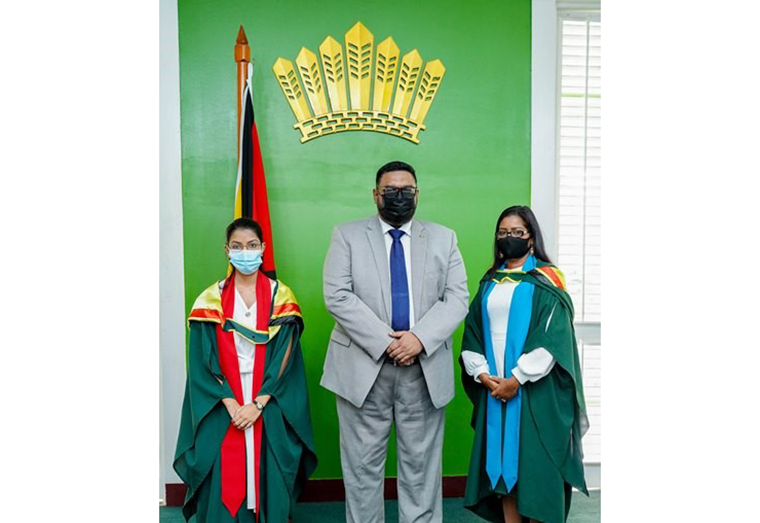
Priya Manickchand, Minister of Local Government and Regional Development

Priya Manickchand, Minister of Local Government and Regional Development

0
SHARES
0
VIEWS
Share on FacebookShare on Twitter

When Education Minister Priya Manickchand announced Guyana’s “best NGSA performance yet,” the nation was expected to celebrate. A jump in national pass rates from 49% in 2024 to 63% in 2025 is no small feat. And compared to 2020, the improvement is even more dramatic, a 14-percentage point surge in just five years. But while the headlines scream progress, the numbers raise more questions than answers.

Between 2020 and 2025, Guyana’s education system faced unprecedented turmoil. Schools shut down for nearly two years due to COVID-19, online learning was sporadic and uneven, and students, particularly in rural and underserved regions, struggled with lost time, inadequate support, and deepening inequality. Against that backdrop, the government now claims not only recovery but record-breaking academic achievement. The Ministry reports that English, Social Studies, and Science all now boast pass rates above 63%, while Mathematics, a long-standing Achilles’ heel, has allegedly climbed to 55.5%.

READ ALSO

Giddings Testimony Rocks 2020 Election Trial-No Written Authorisation, Four Hours With SOPs

Corentyne High Male Students Sent Home Over Hairstyles, Face Transfer Threat

As one education researcher at the University of North Carolina put it, “The math scores are too consistently bad for a nation that claims educational advancement. The sudden improvements in 2023–2024 do not align with known policy shifts, investments, or professional development efforts.” If such rapid gains were legitimate, they would reflect the impact of sweeping reforms, intensive tutoring programs, teacher development at scale, curriculum modernization, and systemic infrastructure investment. None of that has happened.

Instead, the Ministry attributes the gains to textbook distribution, school meals, quizzes, and classroom monitoring, initiatives that have existed for more than a decade with only modest impact. There is no revolutionary intervention to explain the leap. And disturbingly, there is little transparency. Disaggregated data by region, income, gender, and school type remains unavailable. Independent audits of marking practices are nonexistent. And access to raw data is tightly controlled by the Ministry.

This raises the uncomfortable possibility that what we are witnessing is not a leap in learning, but a carefully curated political narrative.

At the school level, the story is different. Teachers across the country continue to report that incoming high school students lack basic reading fluency, foundational math skills, and the ability to think critically. These learning gaps cannot be smoothed over with PR campaigns and photo ops.

The lack of transparency masks deeper issues, overcrowded classrooms, underpaid educators, poor internet access, and the chronic underfunding of interior schools. If the education system were truly improving, we would expect to see evidence in literacy rates, CSEC results, and improved outcomes across the board, not just a one-time spike in NGSA pass rates.

The Ministry’s triumphalism, however, risks undermining the urgency of education reform. By over-celebrating questionable results, we distract from the hard work still needed, real investments, evidence-based teaching practices, accountability systems, and meaningful support for struggling learners.

Guyanese youth, parents, and educators deserve better than spin. They deserve truth, progress they can feel, and policies that address the roots of the crisis, not just its symptoms.

If we are serious about building an education system for the future, we must begin with clarity, humility, and honesty. Because if we keep celebrating inflated metrics over meaningful change, we’re not raising our children’s achievement, we’re raising false hope.

ShareTweetSendShareSend

Related Posts

Aneal Giddings
News

Giddings Testimony Rocks 2020 Election Trial-No Written Authorisation, Four Hours With SOPs

by Admin
October 2, 2026

The People’s National Congress Reform (PNCR) and A Partnership for National Unity (APNU) are renewing their claim that the March...

Read moreDetails
Corentyne Comprehensive High School holding placards this morning on the matter of male  students. October 2, 2026
News

Corentyne High Male Students Sent Home Over Hairstyles, Face Transfer Threat

by Admin
October 2, 2026

Students at Corentyne Comprehensive High School gathered outside the school compound on Friday morning with placards to voice their concerns...

Read moreDetails
Waramadong Protest (APA photo)
News

Protest Puts Indigenous Rights, Mining and Barima Accountability in Focus

by Admin
October 2, 2026

Residents of the Indigenous community of Waramadong in the Upper Mazaruni, Region Seven, joined members of the Amerindian Peoples Association...

Read moreDetails
Next Post

10 Reasons Why Guyanese Youth Are Struggling to Prosper Under This Government


EDITOR'S PICK

GPA flays police for ducking crime reports  

May 19, 2021
Former Minister Jaipaul Sharma

Sharma Demands Clarity, Integrity on Voters’ List Ahead of Crucial Elections

July 25, 2025
Chinese Foreign Minister Wang Yi

Wang Yi highlights BRICS cooperation amid global security challenges

July 25, 2023

Venezuela/Guyana dispute over Essequibo

May 6, 2026

© 2024 Village Voice

No Result
View All Result
  • Home
  • News
  • Sports
  • Editorial
  • Letters
  • Global
  • Columns
    • Eye On Guyana
    • Hindsight
    • Lincoln Lewis Speaks
    • Future Notes
    • Blackout
    • From The Desk of Roysdale Forde SC
    • Diplomatic Speak
    • Mark’s Take
    • In the village
    • Mind Your Business
    • Bad & Bold
    • The Voice of Labour
    • The Herbal Section
    • Politics 101 with Dr. David Hinds
    • Talking Dollars & Making Sense
    • Book Review 
  • Education & Technology
  • E-Paper
  • Contact Us

© 2024 Village Voice