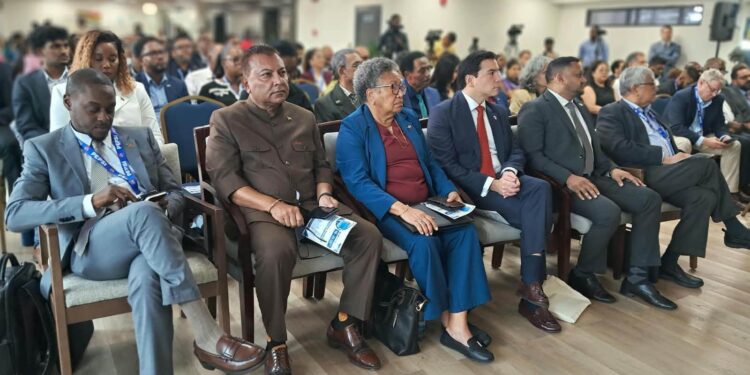
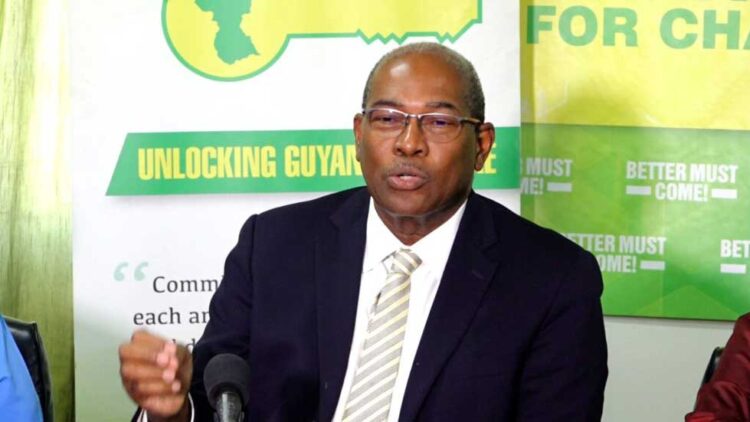
In a decisive break with the recent past, Alliance for Change (AFC) leader Nigel Hughes has ruled out any future coalition talks with A Partnership for National Unity (APNU), bluntly describing the chances of meaningful engagement as “marginal at best.”
His statement brings a dramatic close to six months of tense and ultimately unproductive negotiations—talks that began with hope in January but unraveled into a deepening rift, leaving Guyana’s opposition more divided than before.
Hughes’ blunt assessment came as APNU leader Aubrey Norton continued to insist his party remained “willing to continue discussions,” creating an almost farcical disconnect between the two former coalition partners. The AFC leader’s declaration that “we have moved on and are heading straight to the elections” represents a dramatic reversal for a party that just weeks ago was desperately scaling back its demands in a last-ditch attempt to salvage the partnership.
The negotiations, which originally carried a March 31 deadline, became a masterclass in political miscalculation. What began with the AFC’s audacious demand for 55% of parliamentary seats eventually reduced to a 35% offer that APNU still rejected. This dramatic climb-down exposed the AFC’s weakened bargaining position and Hughes’ political naivety in a game where Norton proved the shrewder operator.
The most damaging blow came not from APNU’s rejection of proposals, but from within the AFC’s own ranks. In a move that blindsided Hughes, three prominent AFC parliamentarians—Juretha Fernandes, Sherod Duncan, and Deonarine “Ricky” Ramsaroop—defected to APNU without warning, with Fernandes immediately being named as Norton’s prime ministerial candidate. The defections were so sudden that Hughes admitted he hadn’t even received resignation letters, learning of the betrayals through media reports.
“ Six months of negotiations crumble as opposition parties choose ego over unity, leaving Guyana’s fractured opposition in deeper disarray ”
Hughes attempted to portray the AFC as the reasonable party throughout the failed negotiations, claiming his organisation “compromised on many of its positions and proposals.” Yet this narrative rings hollow when examined against the party’s erratic negotiating positions. PNC executive Sherwood Lowe acidly observed that the AFC went “berserk” during talks, constantly changing positions and making impossible demands.
The AFC leader’s claim that it was “perceived” his party was being unreasonable suggests a troubling disconnect from political reality. When Hughes detailed how the AFC initially proposed discussing policies before addressing the presidential candidate issue, it revealed a fundamental misunderstanding of political negotiations where power distribution typically precedes policy discussions.
Perhaps most tellingly, Hughes appeared genuinely surprised by his own MPs’ defections, claiming he was “unaware of any dissatisfaction they might have had” despite noting their frequent absences from party meetings and events. This admission paints a picture of a leader dangerously out of touch with his own organisation’s internal dynamics.

The broader implications extend far beyond these two parties. The opposition hemorrhaging continues with former APNU MP Amanza Walton-Desir’s dramatic resignation from Norton’s PNC to launch “Forward Guyana,” citing leadership issues.
People’s Progressive Party (PPP) General Secretary Bharrat Jagdeo described the opposition’s collapse as a “tragedy,” but for the ruling party, this opposition chaos represents a political gift that keeps giving. While government ministers announce infrastructure projects and development initiatives, the opposition remains mired in what critics call “grudge and greed politics.”
The failed coalition talks have exposed uncomfortable truths about Guyana’s opposition landscape. Rather than focusing on policy alternatives or governance vision, the negotiations devolved into crude power-sharing arithmetic. The revelation that businessman Dr. Terrence Campbell promised to “break Norton’s hand” to force a deal exemplifies the desperation and lack of principled leadership that characterised these discussions.
For Hughes, who assumed the AFC leadership less than a year ago with promises of renewal, this collapse represents a devastating early failure. His party now faces the prospect of electoral irrelevance, having lost key personnel to APNU while failing to articulate a compelling alternative vision for Guyana’s future.
The opposition’s fragmentation extends beyond the AFC-APNU debacle. Former APNU MP Amanza Walton-Desir has launched her own “Forward Guyana” movement after her shock resignation from Norton’s PNC, citing dissatisfaction with existing leadership. Ironically, while Hughes shuts the door on coalition talks, Walton-Desir now finds herself in the same position the AFC once occupied—a smaller political entity that may need coalition partners to remain relevant.
As nomination day approaches on July 14, the opposition’s fragmentation appears complete. Norton has secured the defectors he wanted while maintaining his presidential ambitions, Hughes leads a diminished AFC toward what many observers predict will be electoral humiliation, and Walton-Desir faces the challenge of building a credible alternative from scratch. In politics, as in poker, knowing when to fold is crucial—Hughes may have learned this lesson too late, while the opposition’s musical chairs continue to play on.
Extracted and edited from WiredJA